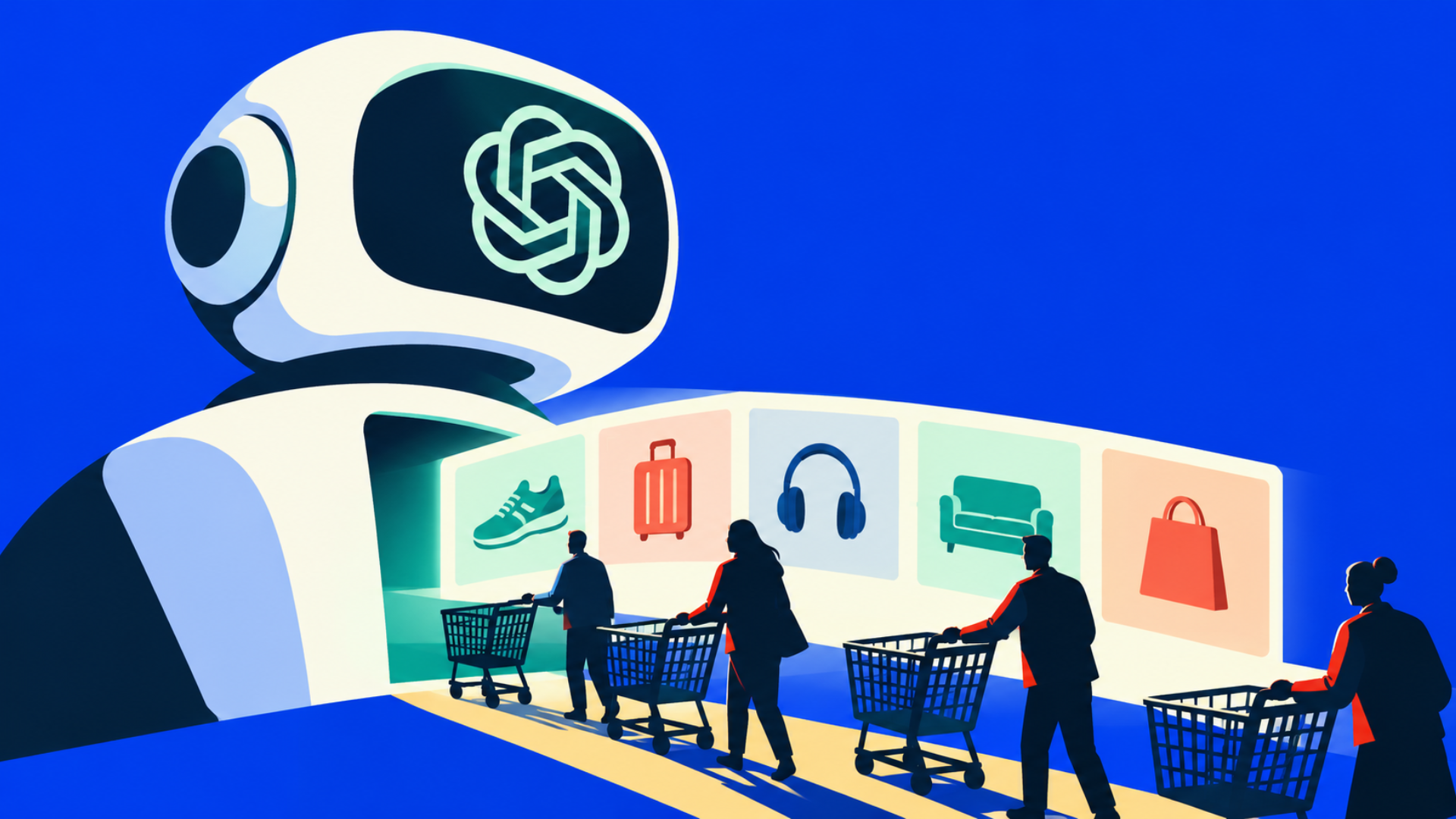
OpenAI expanded ChatGPT Ads into 26 more countries on October 21, bringing the business to 89 markets after more than 100,000 advertisers ran campaigns in eight months. The company reached a $1 billion annualized advertising revenue run rate in August, less than 200 days after launch.
With self-service buying, conversion measurement and conversation-based targeting in place, OpenAI can sell advertising alongside discussions where consumers are defining what they want, what they can spend and which products meet their needs. That puts ChatGPT into competition for performance budgets already contested by search, social, retail media and ad-supported streaming.
Self-Service Gives OpenAI Access to Recurring Performance Budgets
OpenAI began selling advertising through direct sales, agencies and technology partners. The introduction of Ads Manager in May gave smaller advertisers a way to launch campaigns without negotiating individual agreements with OpenAI’s sales organization.
More than 50 technology and measurement partners now support the business. Advertisers can use cost-per-click and outcome-optimized bidding, upload product feeds, target geographic markets and custom audiences, and connect conversions through Pixel and Conversions API.
OpenAI says cost-per-click and outcome-optimized bidding account for most campaigns. Small and medium-sized businesses also represent a material share of its advertising operation.
These capabilities reduce the cost of acquiring and servicing advertisers. A local business can create a campaign, set a budget, measure conversions and determine whether ChatGPT deserves another allocation. OpenAI can expand its advertiser base without adding a dedicated sales relationship for every account.
The company’s initial partner-led ad strategy provided access to existing advertiser demand and measurement infrastructure while OpenAI developed its own buying systems. Self-service now lets the company participate in smaller campaigns and recurring performance budgets.
The latest geographic expansion extends that opportunity into 14 additional Latin American countries, including Argentina, Chile, Colombia and Peru, alongside new markets across Europe, the Middle East, Africa and Asia.
International availability increases the number of advertisers OpenAI can serve. The actual revenue opportunity depends on how many eligible users generate commercially relevant conversations in each market.
Relevance Filters Limit How Many ChatGPT Conversations Become Ad Impressions
OpenAI has built a separate advertising system that uses a specialized language model to interpret commercial intent across multiple conversational turns.
The system evaluates what a user is trying to accomplish, retrieves potentially relevant campaigns, checks eligibility and relevance, and sends qualified candidates into an auction. It can also incorporate nonsensitive context from previous conversations when the user enables ad personalization.
A consumer might begin by asking how to prepare for a marathon, then move into questions about running shoes, prices and preferred brands. The commercial opportunity becomes more specific as the conversation develops.
The system also decides when an advertisement shouldn’t appear.
An ad can fail to qualify because the conversation is unsuitable, the available campaigns don’t meet relevance requirements, or the auction doesn’t produce an eligible placement. An ad can also miss the opportunity entirely if it isn’t ready before ChatGPT finishes generating its response.
OpenAI deliberately allows those conversations to proceed without advertising.
That creates different inventory economics from a conventional streaming ad break. A streaming service can establish advertising opportunities around video playback and estimate available impressions from viewing behavior.
ChatGPT must align commercial intent, advertiser demand, placement eligibility and response timing before an impression reaches the user.
The conversational context could make an individual placement more valuable to an advertiser. OpenAI still has to determine how much inventory it can reliably deliver without weakening relevance or slowing the product.
OpenAI’s $1 Billion Run Rate Leaves Ad Reach and Margins Unknown
ChatGPT’s 1.2 billion weekly users provide OpenAI with substantial potential reach. Only users on the Free and Go plans are eligible to receive ads.
OpenAI hasn’t disclosed the distribution of weekly users across subscription plans or how many eligible users live in the 89 advertising markets.
The company also hasn’t disclosed eligible advertising impressions, average click prices, fill rates or revenue generated per advertising-supported user.
Its advertiser count has similar limitations.
More than 100,000 advertisers have run campaigns since launch. That cumulative figure doesn’t establish how many remain active, how frequently they buy or how spending is distributed between large advertisers and smaller businesses.
The $1 billion annualized revenue run rate offers a stronger indication of commercial demand. It measures the revenue pace OpenAI reached in August, rather than the total advertising revenue collected during the product’s first 200 days.
It also leaves the cost structure unresolved.
OpenAI operates a dedicated language-model-based system for advertising selection, alongside campaign infrastructure, measurement systems, moderation and external technology partnerships. The company hasn’t disclosed the incremental cost of serving ads or the contribution margin of its advertising business.
Revenue growth establishes that advertisers are willing to purchase the inventory. The profitability of those placements depends on serving costs, advertiser retention and the amount of revenue OpenAI can generate from each eligible conversation.
Incremental Sales Will Determine How Much Advertising Spend ChatGPT Captures
OpenAI is expanding the infrastructure advertisers need to compare ChatGPT with established performance channels.
Its October measurement expansion added integrations with companies including Hightouch, Tealium and LiveRamp, alongside attribution and reporting partners that help advertisers connect ChatGPT campaigns to website and app activity.
The company is also working with measurement partners on geographic experiments designed to assess incremental advertising impact. OpenAI describes that work as early-stage.
Click attribution can show that a consumer visited an advertiser’s website after engaging with an ad. Incrementality measurement addresses whether the advertising produced additional purchases that would otherwise have been lost.
That evidence determines how aggressively advertisers can shift budgets.
OpenAI has highlighted individual campaigns with encouraging acquisition costs and new-customer performance. It hasn’t released a broad performance distribution showing typical returns, advertiser renewal rates or conversion efficiency across categories.
The company is also expanding placement controls. Qualifying advertisers can use Negative Phrases to help exclude unsuitable contexts, while DoubleVerify and Integral Ad Science are participating in brand-suitability evaluation pilots.
Those safeguards give brands additional ways to assess placements without receiving private ChatGPT conversations.
OpenAI has already built many of the tools advertisers expect from a performance advertising business. Sustained budget growth will depend on independently measurable results across a wider range of campaigns.
Answer Independence Protects the Trust Behind ChatGPT’s Ad Business
OpenAI says its advertising selection system operates separately from ChatGPT’s answer generation, using different models, services and code.
The ad system can evaluate the conversation and select a sponsored placement. It cannot change the organic response ChatGPT generates.
Advertisers also don’t receive users’ private conversations.
A delivered advertisement can include a short, model-generated introduction explaining its relevance to the discussion. The sponsored content remains labeled and appears separately below the answer.
OpenAI has to maintain that visible separation as it introduces additional advertising formats.
In October, the company announced plans to begin testing visual advertising alongside image generation in the United States. Those placements expand the creative options available to advertisers, while introducing another interaction where users must be able to identify paid content.
The economic incentive to increase advertising volume has to coexist with the value of an assistant that users trust to answer questions independently.
If users begin to suspect that advertisers influence product comparisons or recommendations, OpenAI risks degrading the interactions that generate its valuable commercial signals.
Ad load, relevance, labeling and answer independence are therefore operating constraints on how much revenue the company can extract from conversational activity.
ChatGPT Pressures Streaming on Advertising Budgets and Discovery Control
ChatGPT introduces another destination for advertisers seeking measurable customer acquisition.
A streaming service sells advertising against viewing activity. ChatGPT can reach consumers earlier, while they research products, compare offers, plan purchases or decide which entertainment options interest them.
Advertisers evaluating those opportunities can compare the cost of generating a customer through ChatGPT with search, social, retail media and CTV campaigns.
OpenAI hasn’t disclosed cross-channel spending data establishing that ChatGPT is already taking significant budget from streaming. Its growing buying and measurement capabilities give advertisers another option when allocating performance spending.
Streaming companies also have a distribution interest in conversational AI.
Fox-owned Tubi launched a native discovery app inside ChatGPT in April, allowing users to describe what they want to watch and receive playable recommendations from Tubi’s catalog.
That integration operates separately from ChatGPT Ads. It demonstrates how a conversational interface can become the entry point to a streaming session.
Tubi gains exposure to consumers before they open its app. It can turn successful recommendations into additional viewing and advertising inventory. OpenAI controls the initial interaction where the consumer expresses viewing intent.
For streaming services, these integrations introduce an additional customer-acquisition route while reducing direct control over the discovery experience.
They also increase the importance of measuring how conversational referrals translate into app opens, completed viewing sessions, advertising impressions and eventual revenue.
OpenAI can participate in the economics surrounding consumer decisions through both advertising placements and its growing role as an interface for discovery.
The Streaming Wars Take
Conversational advertising increases the pressure on streaming sellers to demonstrate incremental results against performance-oriented media buys.
An advertiser that can connect a ChatGPT campaign to an app installation, subscription trial or completed purchase gains another acquisition-cost benchmark. That evidence can influence how the advertiser evaluates CTV inventory, especially when budgets are allocated against measurable business outcomes.
Streaming distributors face a related calculation around discovery. Integrations such as Tubi’s can lower the friction between a consumer expressing interest and beginning playback, but they place a third-party interface ahead of the streaming service’s own experience.
That makes referral measurement, access to customer signals and control of the playback relationship increasingly important in distribution partnerships.
OpenAI’s advertising architecture also creates a commercial constraint. Its system can withhold an ad when the context is unsuitable or no relevant campaign qualifies. The business must generate sufficient revenue from those qualified opportunities without increasing ad volume to the point that users lose confidence in the answers.
Independent conversion measurement will determine how much advertisers are willing to pay for that access and how much of their existing media budgets they reallocate.
For ad-supported streaming, the consequence is a more demanding comparison between the cost of reaching an audience and the economic results that exposure produces. ChatGPT has established another market for advertising near the consumer decision, and streaming sellers now have another acquisition channel to outperform when defending their rates.
The Streaming Wars is intentionally ad-free
We don’t run display ads. Not because we can’t, but because we don’t believe in them.
They interrupt the reading experience. They cheapen the work. And they burn advertisers’ money on impressions nobody actually wants.
So we chose a different model.
We say the things people in this industry are already thinking but don’t say out loud. We connect the dots beyond the headline and focus on explaining why things matter to the people working in this business.
If you believe industry coverage can exist without clutter and interruption, you can support it here → SUPPORT TSW.
Support is optional. But it directly funds research and continued coverage — and helps prove this model can work.
Support TSW →