

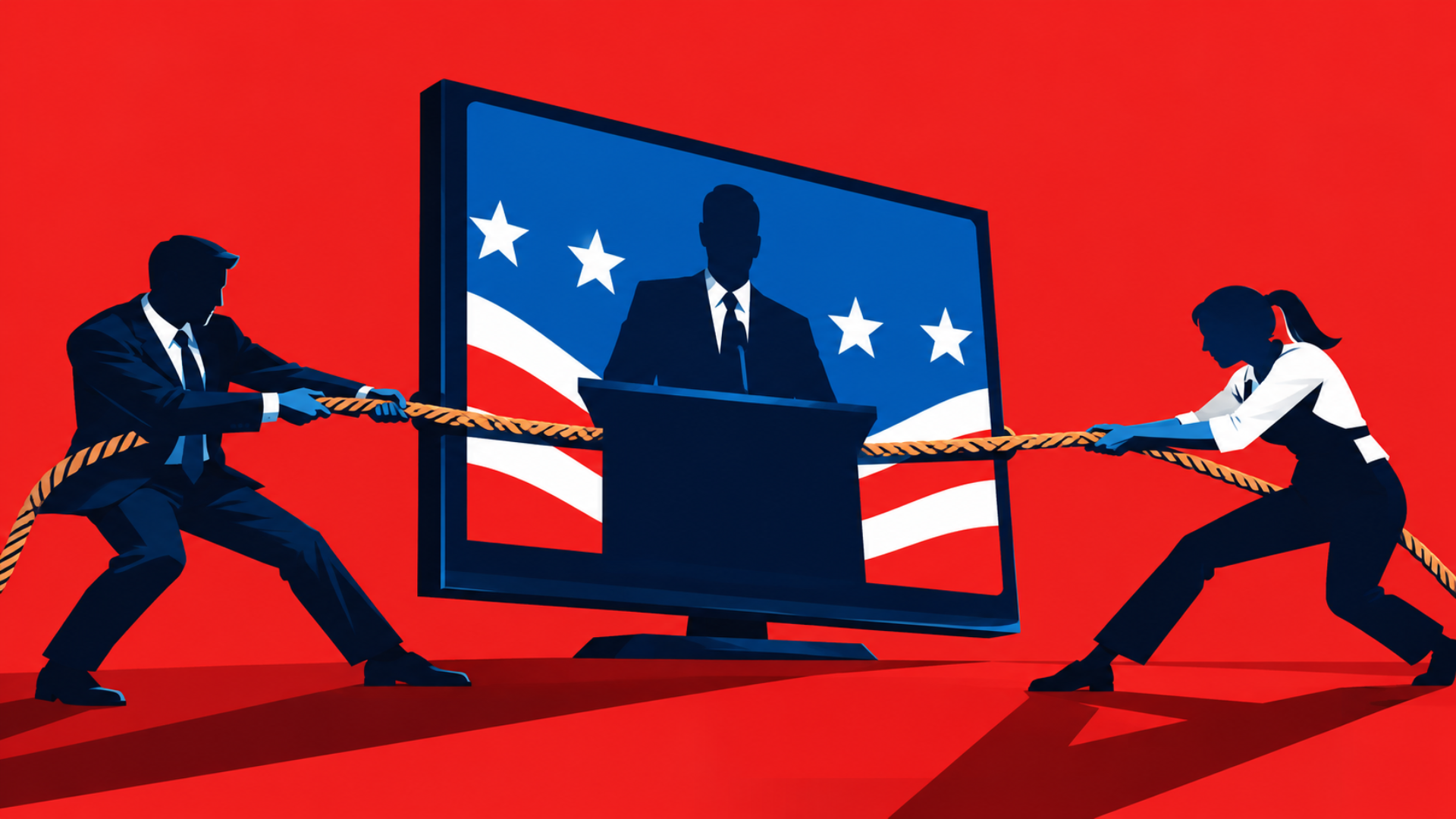
Political campaigns are consuming local TV and streaming inventory ahead of the November 3 midterms, pushing premium CTV CPMs as high as $43 in targeted markets and displacing regional advertisers from valuable programming.
AdImpact projects $11.6 billion in political advertising during the 2025–2026 election cycle, including $5.6 billion for broadcast TV and $2.7 billion for CTV. The spending is concentrated in competitive states during the same quarter retailers and other consumer businesses depend on advertising to generate holiday sales.
Broadcasters and streaming sellers are benefiting from the additional demand. Regional advertisers are paying higher rates, accepting less valuable placements or reducing campaigns when they can least afford to lose customers.
Political Buyers Concentrate Spending in Battleground Markets, Raising CPMs and Reducing Local Advertising Reach
Political campaigns and regional businesses are competing for many of the same viewers, particularly in states with competitive Senate, gubernatorial and congressional races.
Texas, Wisconsin, Michigan and Maine have become especially difficult markets for advertisers seeking local TV and streaming inventory. Campaigns need to reach voters before November 3, while retailers and other consumer businesses need to reach customers during the fourth quarter.
Media buyers in Texas have seen linear-TV CPMs increase 10% to 15% across typical buys, with some programming commanding increases of 30% to 50%.
The pressure extends into streaming. Collective Measures has seen premium CTV and streaming CPMs increase from approximately $34 or $35 to $43 in some targeted markets.
At a $35 CPM, a $100,000 campaign buys approximately 2.86 million impressions. At $43, that same budget buys 2.33 million impressions, a reduction of nearly 19%.
Advertisers either increase spending to preserve delivery or accept fewer impressions during a critical sales period.
The geographic concentration also explains why rising local rates can coexist with declining national streaming prices.
Media Dynamics estimates that average streaming CPMs fell 4.9% to $25.90 during the 2026–27 primetime upfront, even as streaming commitments increased nearly 30% to $17.2 billion.
Those national upfront averages reflect broad inventory commitments negotiated months in advance. Premium CTV inventory targeting specific battleground audiences in late October operates under different supply and demand conditions.
The 2026 upfront shift toward streaming expanded advertisers’ access to video inventory. It didn’t eliminate the scarcity of particular audiences inside competitive election markets.
Campaigns targeting persuadable voters and regional brands targeting likely customers can overlap at the household level. Narrow geographic targeting concentrates competition for the same available impressions.
National advertisers can reduce spending in an expensive state or shift into broader national inventory. Businesses whose sales depend on customers inside a particular market have less flexibility.
A Texas grocery chain still needs Texas shoppers, regardless of what campaigns are willing to pay to reach them.
TV Stations Preempt Reserved Advertising for Political Demand, Undermining the Value of Holiday Campaigns
Higher prices are only part of the disruption.
Regional advertisers are also losing placements they reserved before the political buying intensified.
Moroch Partners described a Texas grocery client displaced from live college-football coverage in September as political buyers consumed the remaining inventory. Agencies serving Wisconsin advertisers have also encountered repeated preemptions.
Local TV contracts often distinguish between preemptible and nonpreemptible advertising. Stations can reschedule certain commercial placements when demand exceeds available inventory, subject to the terms of the original purchase.
Political advertising rules add another layer of complexity. Qualified candidates receive lowest-unit-charge protections for comparable broadcast inventory during the 60 days before a general election, while political action committees and other advertisers operate under different pricing rules.
Not every political advertiser pays a higher rate than every commercial buyer. Concentrated demand still exhausts available placements and increases the risk that preemptible commercial advertising will be moved.
Advertisers typically receive make-good inventory when their spots are displaced.
The replacement can satisfy an impression commitment while delivering a different commercial outcome.
A grocery chain buying college football ahead of a weekend promotion wants access to viewers during that specific event. Replacement spots later in the schedule may reach a different audience or arrive after the promotion ends.
Even when the total impression count remains intact, the advertiser loses control over the timing and context of delivery.
That creates additional costs for agencies managing the campaigns. Buyers have to locate alternative inventory, revise schedules, coordinate creative and evaluate whether replacement placements still support the original advertising objective.
Broadcasters receive substantial political revenue during a compressed buying window. Repeated preemptions also expose their relationships with commercial advertisers that purchase inventory throughout the year.
Those customers will still be making media decisions after the campaigns disappear.
Advertisers Shift to Political-Free Streaming Services, Raising Premium CPMs and Making Alternative Inventory More Expensive
Netflix, Prime Video and Disney+ don’t accept political advertising.
Their policies give commercial advertisers a way to avoid having their ads placed in commercial breaks alongside campaign messaging.
Demand for those services is increasing as advertisers move away from crowded local TV inventory and politically saturated programming.
The additional commercial spending is putting upward pressure on premium streaming rates, even though the services themselves aren’t accepting campaign budgets.
Political exclusions have become a commercial differentiator.
Netflix, Prime Video and Disney+ can attract advertisers looking for more predictable advertising environments without selling space to candidates or political committees. However, the additional buyers still compete for finite premium inventory.
An advertiser moving money out of local news into a political-free streaming service may escape preemptions while paying a higher CPM for the replacement audience.
The distinction within Disney’s own portfolio is revealing. Disney+ excludes political advertising, while Hulu accepts political candidate and issue ads under separate policies.
The services operate under the same corporate parent but offer advertisers different commercial environments during election season.
The influx of displaced advertisers creates a pricing opportunity for premium streaming sellers, although converting that demand into revenue still depends on available inventory, buying-system access and campaign execution.
Netflix recently cut $300 million from its 2026 advertising forecast, citing delays in advertising products and partner integrations.
Additional buyer demand can support higher pricing, but sellers still need the infrastructure to make that inventory accessible and deliver campaigns as purchased.
Political Campaigns Increase YouTube and Meta Spending, Adding CPM Pressure to Brands’ Digital Alternatives
Political demand is also increasing competition outside traditional TV and premium streaming.
AdsMom measured $149 million in political advertising spending across YouTube and Meta during the week beginning October 11, compared with $34 million during the final week of July.
Approximately $97 million went to Google, with 95% of that spending directed toward YouTube video ads.
One media agency saw its average YouTube CPM increase 20% in recent weeks as political spending accelerated.
YouTube is particularly valuable to advertisers seeking an alternative to conventional TV because it combines substantial TV-screen viewing with audience targeting capabilities.
Its growing viewing share among adults 50 and older has also made Google more competitive for budgets traditionally directed toward broadcast and cable.
Those same capabilities attract political campaigns.
A retailer moving out of local TV and into geographically targeted YouTube advertising can encounter political buyers competing for similar households. The inventory changes, but the geographic demand remains concentrated.
Some advertisers have enough scale to buy broader national inventory, which has been less exposed to localized election-driven inflation.
Others are reducing spending in expensive markets or temporarily suspending linear-TV campaigns.
Going dark remains a minority response, but the financial tradeoff is substantial. Continuing at inflated rates increases acquisition costs and reduces the number of impressions a fixed budget can purchase. Suspending advertising protects the immediate budget while sacrificing exposure during a high-value sales period.
The political campaigns have a fixed purchasing deadline. Their commercial competitors have sales targets that extend through Thanksgiving and Christmas.
The Streaming Wars Take
Broadcasters could face greater demand for nonpreemptible inventory, fixed-position guarantees and time-sensitive make-good provisions after this election cycle.
Regional advertisers have seen how quickly a reserved placement can lose value when political spending intensifies. Future negotiations may place more weight on protections against preemption, replacement inventory of comparable quality and guarantees tied to specific promotional windows.
Those terms affect seller economics.
Stronger placement guarantees limit a broadcaster’s ability to reallocate inventory when political buyers create a sudden increase in demand. They also give advertisers greater confidence that premium sports and news placements will deliver as purchased.
Streaming services that exclude political advertising have an opportunity to convert temporary spending shifts into longer-term commercial relationships. To retain those budgets, they’ll need to demonstrate consistent audience delivery, usable targeting and reliable access through the buying systems advertisers already operate.
The immediate pressure should ease after November 3 as election demand falls and more inventory becomes available to ordinary advertisers.
Lower prices won’t recover promotional opportunities lost during September and October. Broadcasters will have to compete for those advertisers again, including clients whose reserved placements were displaced during the political buying surge.
Political advertising can deliver exceptional short-term revenue to TV sellers. Protecting the relationships that produce recurring revenue requires a different commitment: ensuring commercial advertisers receive the programming, timing and audience they purchased.
A station that repeatedly replaces valuable placements with less useful inventory gives its customers a financial reason to redirect future spending toward sellers offering stronger delivery guarantees.
The Streaming Wars is intentionally ad-free
We don’t run display ads. Not because we can’t, but because we don’t believe in them.
They interrupt the reading experience. They cheapen the work. And they burn advertisers’ money on impressions nobody actually wants.
So we chose a different model.
We say the things people in this industry are already thinking but don’t say out loud. We connect the dots beyond the headline and focus on explaining why things matter to the people working in this business.
If you believe industry coverage can exist without clutter and interruption, you can support it here → SUPPORT TSW.
Support is optional. But it directly funds research and continued coverage — and helps prove this model can work.
Support TSW →