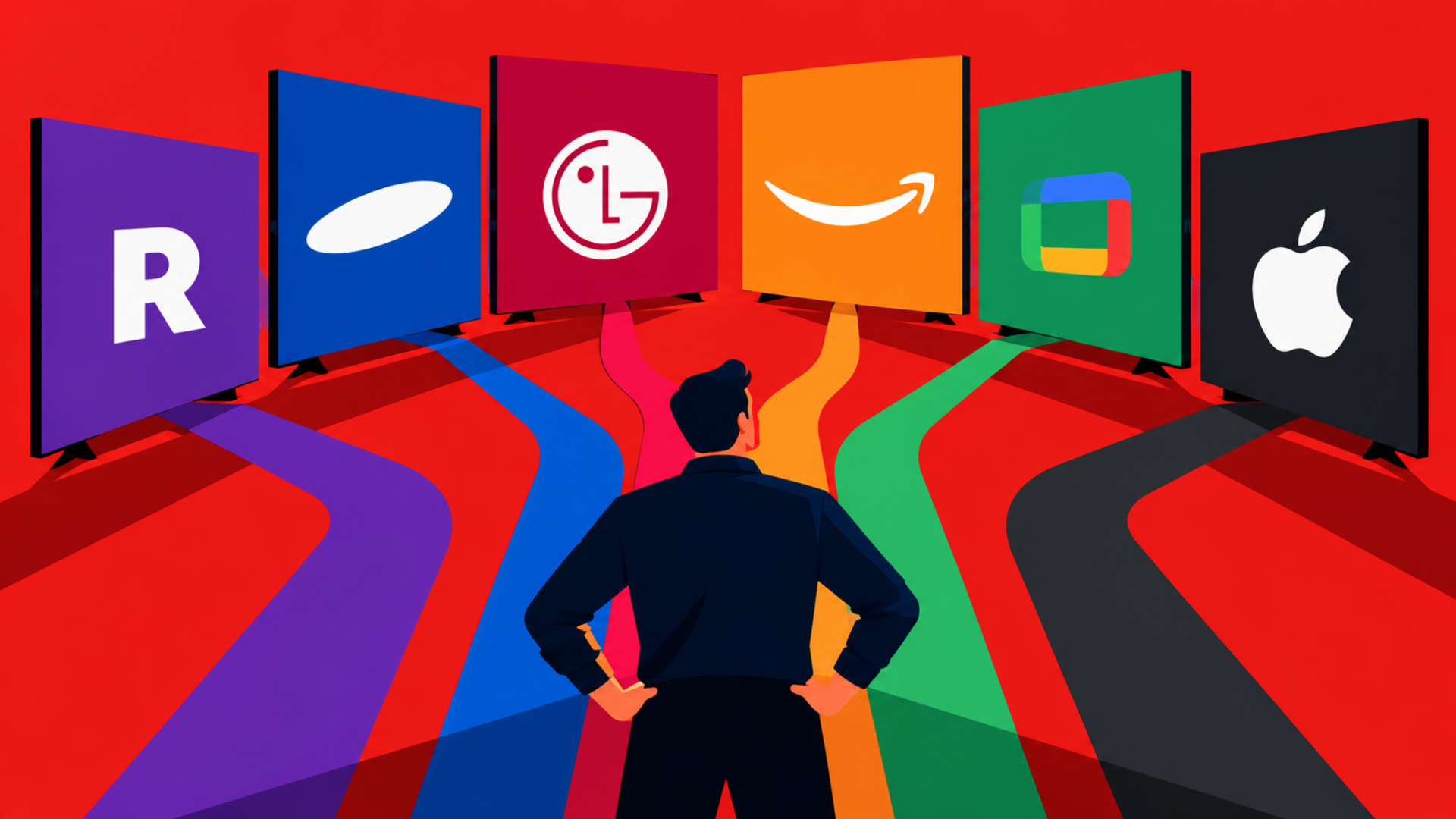
Supporting another TV operating system creates an ongoing expense that starts with application development and continues through maintenance, testing, certification, and software updates. A streaming service can have one content library, one subscriber database, and one video delivery backend, yet still need separate applications to reach viewers on Roku, Samsung, LG, Fire TV, Google TV, and Apple TV.
Each ecosystem comes with its own software requirements, playback integrations, approval processes, and hardware limitations. New device-facing features can require additional compatibility work. Every OS update introduces another opportunity for something to break.
The financial problem is straightforward: each additional device ecosystem increases potential distribution, but the associated engineering costs continue whether that ecosystem attracts new customers or simply gives existing subscribers another screen.
That makes the cost of supporting another TV operating system a capital allocation decision. The relevant numbers are incremental revenue, retention, and advertising contribution weighed against the full cost of maintaining access.
A Shared Backend Still Needs Different Apps
Most streaming services centralize the infrastructure that handles their content catalogs, authentication, subscription entitlements, recommendations, playback authorization, and video delivery.
That architecture allows multiple apps to communicate with the same underlying systems. A subscriber can begin a show on a Roku device and continue watching on an LG TV because both apps can access the same account and viewing history.
The device apps still need to translate those services into experiences that work within their respective operating systems.
Roku uses BrightScript and SceneGraph. Samsung’s Tizen and LG’s webOS have web-based application environments with their own APIs and playback capabilities. Android TV uses Google’s Android application architecture. Apple TV operates within tvOS.
Those differences extend into video playback, digital rights management, advertising, subscription purchases, remote-control behavior, and device-level features.
Amazon provides a particularly useful example. Fire OS apps use Android application packages, while Amazon’s Vega OS requires a different application package format and development environment. Supporting both can create separate development work even though the apps reach customers through Amazon’s distribution ecosystem.
Cross-platform frameworks, shared components, and reusable integrations can reduce duplication. Developers can maintain common business logic and user-interface elements instead of rebuilding every feature independently.
Platform-specific work still remains. Playback, DRM, native billing, performance, and certification requirements must be handled for each environment.
The fragmentation of CTV devices creates the initial engineering challenge. Maintaining compatibility across those environments turns it into a recurring financial obligation.
Certification Creates a Release Calendar the Streaming Service Doesn’t Control
Developing an application doesn’t guarantee that viewers can install it. TV OS operators establish the requirements apps must satisfy before publication.
Roku, for example, evaluates apps against technical, performance, advertising, authentication, and user-experience requirements. Developers must conduct certification testing and validate performance across multiple Roku devices with different processing capabilities and memory constraints.
Roku’s certification rules also distinguish content updates from software updates. A service can generally change the programming available through its application without recertifying it. Changing the application’s implementation code requires recertification and republication.
That means a new season of a show can arrive without a new app release. Updating the video player, adding a purchase workflow, or modifying account authentication can introduce an entirely different release process.
Samsung operates its own certification system, including testing across selected TV model groups. An application may pass certification for one group while another requires additional work. Samsung allows releases by model group, creating flexibility alongside another layer of release management.
LG requires developers to complete an application self-checklist before submission. Missing or insufficient information can trigger rejection before formal QA begins. Its requirements also cover specific remote-control navigation and interface behavior.
Google maintains separate Android TV application-quality requirements, including minimum publishing criteria and additional quality tiers. Its 2026 guidelines address compatibility, navigation, playback, performance, and device architecture requirements.
Each ecosystem has an approval process that can affect when a feature reaches customers.
A streaming service might complete an advertising integration across its apps only to encounter certification problems on one operating system. Product teams then face a choice: delay the feature everywhere, release it on approved devices first, or spend additional engineering resources addressing the outstanding issues.
Staggered releases can create their own problems. Customer support needs to understand which devices have received the feature. Marketing must avoid promising functionality that isn’t universally available. Engineering may have to maintain multiple versions of the same experience.
The approval process also gives OS operaters continuing influence over distribution. Their rules can change after an application launches, forcing streaming services to allocate resources to compliance rather than new product development.
Hardware Generations Multiply the Testing Expense
Supporting six TV operating systems doesn’t mean testing six devices.
Each ecosystem contains multiple hardware generations, OS versions, memory configurations, processing capabilities, and media playback implementations.
An application that performs well on a new TV may struggle on a device manufactured several years earlier. Older hardware can have less memory, slower processors, different browser capabilities, or limited support for newer video formats.
DRM adds another set of variables.
LG’s webOS documentation identifies different streaming and content-protection capabilities across OS generations. Its simulator and emulator don’t support testing PlayReady or Widevine DRM playback, even though actual webOS TVs support those technologies.
Developers therefore need physical hardware to validate protected playback.
The testing burden expands further when services support multiple subscription plans, advertising formats, live programming, alternate audio tracks, captions, and different user-authentication methods.
Consider a streaming service adding a new live sports feature. The team may need to validate playback startup, DVR controls, ad breaks, stream recovery, account entitlements, captions, and navigation across several device generations.
A successful test on one Roku model doesn’t establish that the feature performs correctly on every supported Roku device. The same applies to Samsung, LG, Fire TV, and other environments.
Automated testing can catch repeatable failures and reduce manual effort. Physical-device testing remains necessary for hardware-specific playback, memory, performance, and DRM behavior.
Those requirements don’t disappear after launch.
Operating-system updates, third-party SDK changes, video player upgrades, and new product features can introduce defects into previously stable apps. A regression that prevents authentication can lock paying subscribers out of programming. A broken ad integration can eliminate monetizable impressions. A playback failure can generate customer-support costs and increase cancellation risk.
QA becomes a standing operating function because the apps and the devices running them continue to change.
Every Additional Ecosystem Creates Three Types of Spending
The financial model for device support becomes clearer when the expenses are separated into initial development, recurring operations, and unplanned compatibility work.
Initial development includes adapting or building the application, integrating backend services, implementing playback and DRM, supporting purchases and advertising, configuring analytics, testing hardware, and completing certification.
A shared application framework can reduce this investment, particularly when much of the business logic and design already exists.
Recurring operations include engineering maintenance, QA automation, test-device management, performance monitoring, SDK updates, release coordination, defect resolution, and certification for subsequent application updates.
Those costs continue even when the streaming service isn’t adding significant new functionality.
Event-driven spending comes from changes that require additional work outside the normal maintenance schedule. An OS update may break an integration. A deprecated API may force a player upgrade. New advertising requirements may introduce extra testing. A major redesign can require substantial work across the supported device portfolio.
There’s also a cost that rarely appears as a separate line item: engineering capacity.
A developer spending time fixing an older device’s playback problem isn’t working on the next product feature. A QA team handling an unexpected certification failure may delay another release. Product managers must coordinate compatibility, approvals, and feature availability across several environments.
The expense can show up as slower development rather than a larger vendor invoice.
The cost structure also depends on how the service builds its apps. Maintaining independent development teams creates different economics from licensing a common application framework or contracting with a specialist to manage multiple device environments.
Shared architecture can spread engineering expense across the portfolio. Managed services can convert some internal staffing requirements into recurring vendor fees.
Neither approach eliminates platform dependencies, testing obligations, or the need to maintain compatibility.
The Break-Even Calculation Starts With Incremental Contribution
A streaming service evaluating another device ecosystem needs to estimate how much additional economic value that distribution will generate.
Device market share provides a starting point. It doesn’t establish how many new paying households will arrive or how much incremental viewing the application will produce.
Consider a hypothetical service evaluating a new TV operating system.
Assume the investment looks like this:
- Initial application development, integrations, testing, and certification: $100,000.
- Annual engineering maintenance, QA, releases, and support: $80,000.
- Monthly contribution from each genuinely incremental paying household: $6, after relevant variable costs.
These are illustrative assumptions, not industry cost benchmarks.
The initial investment and first year of ongoing operations total $180,000.
At $6 in monthly contribution, each incremental paying household generates $72 over a full year.
The service would therefore need an average of 2,500 incremental active paying households throughout its first year to cover the $180,000 investment.
In subsequent years, assuming no additional major development investment and the same $80,000 operating expense, the ecosystem would need approximately 1,112 incremental active paying households to cover annual support costs.
Those calculations assume subscribers remain active and generate the stated contribution for the relevant period. If adoption builds gradually, the number of subscribers required by year-end could be substantially higher than the annual average.
The more difficult part is determining which households are genuinely incremental.
Suppose 20,000 existing subscribers install the streaming service on the newly supported TV ecosystem. Those installations increase availability and may improve engagement. They don’t automatically generate 20,000 new subscription payments.
Some customers might watch more programming because the service is now available on their preferred device. That additional engagement could improve retention. Others may simply move viewing from an existing Roku application to their new smart TV.
The second group increases usage on the new ecosystem without necessarily increasing total revenue.
Advertising-supported services face the same attribution problem. More viewing on a newly supported device may produce additional advertising inventory, but some of those impressions could replace viewing that would otherwise have occurred elsewhere.
The contribution calculation should account for incremental monetized viewing, advertising yield, technology fees, delivery costs, and any spending attributable to the additional device.
A streaming service with substantial ad-supported viewing may recover device-support costs through advertising contribution even if the ecosystem generates relatively few new subscriptions.
A subscription service might justify support because the additional device availability reduces churn among valuable existing customers.
Both require evidence of incremental contribution.
Downloads, registered accounts, and total viewing hours can help explain device adoption. They need to be connected to customer acquisition, retention, and monetization before they justify continued investment.
Device Support Also Determines Which Features Get Built
Supporting a broad device portfolio influences the pace of product development.
A service introducing a new advertising format may discover that some operating systems require different implementations. A new playback feature may perform poorly on older hardware. A redesigned application may satisfy newer device specifications while exceeding the memory limits of older models.
Product teams can choose to support different features across devices where operating-system rules allow it. They can also invest additional engineering resources to preserve a consistent experience.
Both approaches have costs.
Feature inconsistency complicates marketing, customer support, and analytics. Supporting every feature on every compatible device can slow releases and increase development expense.
In some ecosystems, the OS provider limits the choices available. Roku requires apps to support devices receiving the current Roku OS and makes content-availability requirements part of certification.
Maintaining the Roku application therefore includes meeting those hardware-coverage obligations, even when individual devices contribute relatively little viewing.
The financial case for supporting an ecosystem should reflect the hardware and software commitments that accompany distribution.
Services can also improve their decisions by tracking operating costs alongside audience behavior.
Engineering hours, certification delays, platform-specific defects, playback failures, customer-support contacts, subscription conversions, advertising contribution, and retention can reveal which ecosystems deliver economic value relative to their maintenance burden.
That information helps establish where additional development spending is justified and where product complexity needs to be reduced.
Specialized Providers Can Change the Cost of Device Coverage
The economics of TV app development have created opportunities for companies that spread technical expertise, software components, and maintenance capabilities across multiple streaming customers.
Streaming services can build apps internally, commission custom development, use cross-platform frameworks, or license configurable apps from specialist providers. Each approach changes the balance between upfront investment, recurring expenses, product flexibility, and operational control.
Cross-platform frameworks allow developers to reuse business logic, interface components, and integrations while adapting apps to different TV operating systems. This reduces duplicated development work, although platform-specific playback, DRM, billing, certification, and testing requirements remain.
Templated or white-label apps take that approach further by providing configurable products built on shared software infrastructure. Some providers offer these apps through SaaS subscriptions or managed-service agreements that include ongoing maintenance, updates, testing, and platform-specific support. By spreading common development and operational work across customers, these models can reduce the engineering investment required from individual streaming services.
A modular technology stack offers another option. Streaming services can retain existing backend infrastructure while adopting application components, playback capabilities, or delivery systems that would otherwise require custom development.
The financial tradeoffs depend on customization requirements, integration complexity, licensing structures, and the services included in each agreement. Custom development can provide greater control over functionality and release priorities. Templated apps can reduce initial development costs and make ongoing expenses more predictable. Neither approach eliminates device-specific requirements, and the total cost depends on how responsibilities are divided between the streaming service and its technology providers.
Specialist engineering and QA companies can support any of these models by providing testing, automation, integration expertise, and experience across device generations. Their services can reduce the need to maintain those capabilities entirely in-house while supporting the quality and reliability of each application release.
The Companies Behind CTV Development, Integration, and Testing
CTV application operations span several distinct capabilities, from constructing device-specific interfaces to integrating shared infrastructure and validating releases across hardware generations.
Three companies in The Streaming Wars Industry Directory illustrate how those functions can be handled.
Foxxum develops and maintains TV apps across major smart TV and streaming-device environments. Its Core App offering combines configurable apps, platform adaptation, certification, maintenance, and support under a recurring commercial model, reducing the need for streaming services to manage independent application-development programs for each ecosystem.
Hypersolid provides modular streaming technology through HyStream, its live and on-demand infrastructure, and HyView, its customizable application layer for CTV, web, and mobile. Media companies can deploy those components individually or together, allowing them to preserve existing technology investments while adapting application and delivery capabilities to different distribution requirements.
Integrated Digital Solutions provides software engineering, streaming technology, and quality-assurance services covering functional testing, performance, accessibility, and automation. Those capabilities support the testing and maintenance work required to identify device-specific defects, validate integrations, and reduce the operational risk associated with application releases.
Together, these companies represent three areas of the CTV application cost structure: developing and maintaining apps, integrating reusable infrastructure, and ensuring software quality throughout the release lifecycle.
Their services offer different ways to manage the resources required for device coverage. The streaming service still needs to determine which ecosystems deserve continued support, how much flexibility it requires, and how those investments affect operating expenses.
For a deeper look at the companies building the future of streaming technology, visit our Industry Directory, which spotlights the operators driving the next phase of streaming.
Want your company listed in the TSW Industry Directory? Email us to learn more about eligibility, profile options, and how to get included.
The Streaming Wars Take
Broad device coverage can constrain the product roadmap when device-facing updates require another cycle of integrations, testing, and certification. Engineering capacity spent maintaining compatibility is capacity unavailable for features that could improve engagement, monetization, or retention. That opportunity cost belongs in the financial calculation alongside direct application expenses.
Each additional TV ecosystem should have a defined operating budget and measurable contribution target. Streaming services need to distinguish genuinely incremental subscriptions and advertising revenue from viewing that simply shifts between devices. Retention improvements can justify continued support, but those benefits need to be evaluated against the full cost of maintaining the application.
Specialized application developers, infrastructure providers, and QA companies can improve these economics by spreading technical expertise, reusable software, and operational capabilities across multiple customers. A recurring managed-service fee may be more economical than maintaining dedicated internal engineering resources, particularly when it covers ongoing updates, certification support, and device-specific testing. The appropriate comparison is the total cost and quality of the services delivered, the responsibilities each party assumes, and the available alternatives.
Commercial agreements should clearly establish supported operating systems and device generations, maintenance obligations, certification responsibilities, incident response, application ownership, and how additional development work is priced. These provisions help streaming services plan their expenses while allowing technology providers to scope and price technically demanding work appropriately.
TV OS owners retain significant influence over these economics through their certification rules, compatibility requirements, and technical policies. Changes to those requirements can introduce new engineering obligations for both streaming services and their technology providers. Neither party controls every condition under which an application must operate.
The most effective device strategy balances audience reach with the resources required to sustain it. Some ecosystems justify substantial investment through subscriber acquisition, advertising contribution, or retention. Others may warrant a narrower feature set or a different support model where platform policies permit.
The goal is to maintain distribution that contributes measurable economic value while preserving enough engineering capacity to improve the streaming service itself.
The Streaming Wars is intentionally ad-free
We don’t run display ads. Not because we can’t, but because we don’t believe in them.
They interrupt the reading experience. They cheapen the work. And they burn advertisers’ money on impressions nobody actually wants.
So we chose a different model.
We say the things people in this industry are already thinking but don’t say out loud. We connect the dots beyond the headline and focus on explaining why things matter to the people working in this business.
If you believe industry coverage can exist without clutter and interruption, you can support it here → SUPPORT TSW.
Support is optional. But it directly funds research and continued coverage — and helps prove this model can work.
Support TSW →