Canal+ launched CanalPlay Infinity in France in November 2011, nearly three years before Netflix entered the country. For €9.99 per month with no long-term commitment, SFR customers could access thousands of films and hundreds of TV titles through a multiscreen subscription service. Canal+ had the brand, the content relationships, a major film library through StudioCanal, and an existing pay-TV customer base.
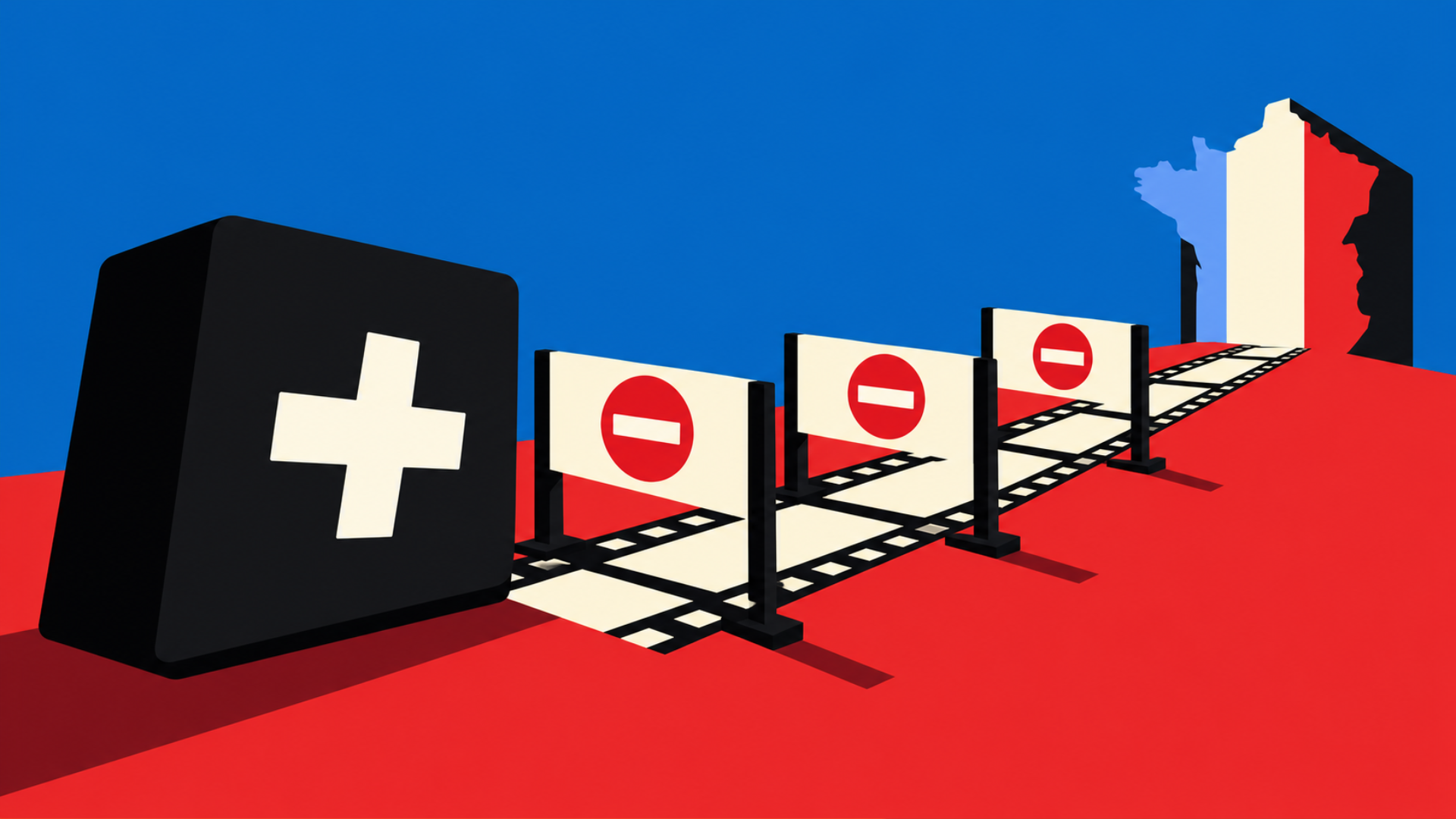
Then the rules governing the old market followed Canal+ into the new one. France’s media chronology kept subscription services from showing theatrically released movies until 36 months after their cinema debut. Competition remedies imposed after Canal+’s takeover of TPS separately restricted how the group could acquire exclusive streaming rights, use StudioCanal’s catalog, and secure privileged ISP distribution. Each policy had a defensible purpose. Together, they narrowed the advantages CanalPlay could use precisely as global SVOD competition accelerated.
France Made Recent Movies a Three-Year Wait
French media chronology organizes film distribution as a sequence of windows designed to support theatrical exhibition and the financing system around French cinema.
Under the 2009 rules in effect when CanalPlay Infinity launched, transactional VOD could offer a theatrical film after roughly four months. Pay-TV movie services received earlier windows after that. Subscription VOD had to wait 36 months from theatrical release.
That created a strange product constraint for Canal+. Its legacy pay-TV business had associated the brand with premium cinema, yet its new SVOD service couldn’t build a catalog around recent theatrical movies. A three-year-old film can still be valuable, but it doesn’t give a €9.99 subscription service the same urgency as a recent release.
The rule applied broadly to qualifying SVOD services and reflected an economic bargain designed to protect earlier windows that financed French filmmaking. CanalPlay still absorbed the commercial consequence.
SVOD services could build consumer value around series, international programming, originals, and deep catalog access while the regulatory framework treated subscription streaming largely as the last major paid stop in a film’s distribution cycle.
The TPS Remedies Neutralized Canal+’s Adjacent-Market Advantages
Canal+ faced another constraint that Netflix wouldn’t inherit.
After competition authorities revisited Canal+’s acquisition of rival pay-TV operator TPS, the Autorité de la concurrence approved the transaction again in 2012 subject to 33 injunctions. The remedies were designed in part to prevent Canal+ from extending its dominant pay-TV position into emerging VOD and SVOD markets.
For non-linear services, the restrictions were specific. Canal+ had to negotiate VOD and SVOD rights separately from linear pay-TV rights and on a non-exclusive basis. StudioCanal had to make its VOD and SVOD rights available non-exclusively to interested competitors. Canal+ also couldn’t use ISP distribution agreements to give CanalPlay an exclusive or privileged position.
Competition authorities had a rational concern. Canal+ possessed immense purchasing power, premium rights relationships, StudioCanal, and deep distribution ties. Allowing the company to bundle those assets aggressively into CanalPlay could have foreclosed smaller domestic streaming competitors before they had a chance to develop.
The result left Canal+ operating as both a powerful incumbent and a constrained SVOD challenger. Several assets that could strengthen CanalPlay against emerging global competitors were also the assets regulators wanted to stop Canal+ from using to dominate the domestic market.
Netflix Arrived With Different Inputs
Netflix launched in France in September 2014 and faced the same French film chronology for theatrical releases. It didn’t face the Canal-specific competition remedies.
Netflix could spread technology investment, recommendation systems, content acquisition, and eventually original production across an expanding international subscriber base. Series didn’t face the same theatrical chronology as films, giving Netflix room to build a fresher programming proposition around episodic content and originals.
CanalPlay had strong domestic recognition and content relationships, but the regulatory system limited its ability to turn some of those relationships into exclusive SVOD differentiation.
By 2017, the Autorité recognized how much the market had changed. Its review cited heavy investment from international VOD and SVOD operators and relaxed several Canal+ restrictions. The group could once again offer series it had pre-financed exclusively on CanalPlay, restrictions involving American studio rights were loosened, and StudioCanal gained more flexibility around exclusive rights. Some protections remained, particularly for French-language films and privileged ISP distribution.
The 2017 changes restored some of CanalPlay’s ability to differentiate, but they arrived nearly three years after Netflix entered France.
In a 2018 French Senate hearing, Canal+ CEO Maxime Saada said CanalPlay had fallen from 800,000 subscribers to 200,000 and argued that the earlier exclusivity restrictions had been fatal to the service. Regulation alone doesn’t explain the collapse. CanalPlay also competed against global rivals with larger technology budgets, broader international content pipelines, and rapidly increasing original-programming investment.
Canal+ Chose Aggregation Over Rebuilding CanalPlay
By 2019, Canal+ was pursuing a different streaming strategy.
It launched Canal+ Series as a narrower standalone service focused on episodic programming, with prices starting at €6.99 per month. Later that year, Canal+ struck a distribution agreement with Netflix, placing the former adversary inside its own subscription bundles. CanalPlay stopped operating in November.
Instead of trying to beat every global streaming service with one standalone catalog, Canal+ increasingly positioned itself as an aggregator that could combine its own channels and programming with third-party subscriptions. That strategy has since expanded across various Canal+ offers and territories to include services such as Netflix, Disney+, Apple TV+, and Paramount+.
France’s media rules evolved too. By 2019, qualifying SVOD services could reach theatrical films after 17 months rather than the 36-month window CanalPlay faced at launch. The 2022 and 2025 frameworks further tied earlier access to financing, regulatory, and industry commitments.
The current framework generally places SVOD at 17 months, allows qualifying services with industry agreements to reach 15 months, and permits negotiated windows as early as six months. Disney+ currently operates with a nine-month window under a three-year agreement that includes increased investment in French and European production.
Earlier access now functions more explicitly as part of an economic exchange between streaming services and the local film ecosystem.
The Streaming Wars Take
Competition remedies built around legacy market power need review mechanisms capable of keeping pace with digital competition.
The 2012 restrictions addressed a real concentration problem. Canal+ had enormous power in French pay TV after TPS, and regulators had legitimate reasons to stop that power from automatically extending into emerging streaming markets.
During the five-year life of the remedies, Netflix entered France with global scale, a different programming mix, software expertise, and an expanding content budget. CanalPlay needed differentiation while regulators were deliberately limiting Canal+’s ability to create it through exclusivity, vertical integration, and distribution.
France’s newer chronology takes a more adaptive approach. Streaming windows can move forward when a service accepts greater financing obligations and reaches agreements with the French film industry. Earlier access becomes something a distributor can earn through investment instead of a benefit determined only by its distribution category.
CanalPlay still had product, execution, and competitive problems that regulation can’t explain away. Its history offers a narrower warning. Rules designed around an incumbent’s power in one distribution model can weaken that same company when competition shifts into another model with different participants, cost structures, and sources of scale.
CanalPlay reached French SVOD early. By the time it gained more freedom to compete like an SVOD challenger, global competitors had already changed what the product needed to be.
The Streaming Wars is intentionally ad-free
We don’t run display ads. Not because we can’t, but because we don’t believe in them.
They interrupt the reading experience. They cheapen the work. And they burn advertisers’ money on impressions nobody actually wants.
So we chose a different model.
We say the things people in this industry are already thinking but don’t say out loud. We connect the dots beyond the headline and focus on explaining why things matter to the people working in this business.
If you believe industry coverage can exist without clutter and interruption, you can support it here → SUPPORT TSW.
Support is optional. But it directly funds research and continued coverage — and helps prove this model can work.
Support TSW →