
We’re seeing creators finance increasingly ambitious productions against their existing YouTube revenue. If they can get the money without giving up ownership, how does that change what streaming services can reasonably ask for in a deal?
— VP, Commercial Strategy
The studio check loses some of its bargaining power when the creator has another place to get the money.
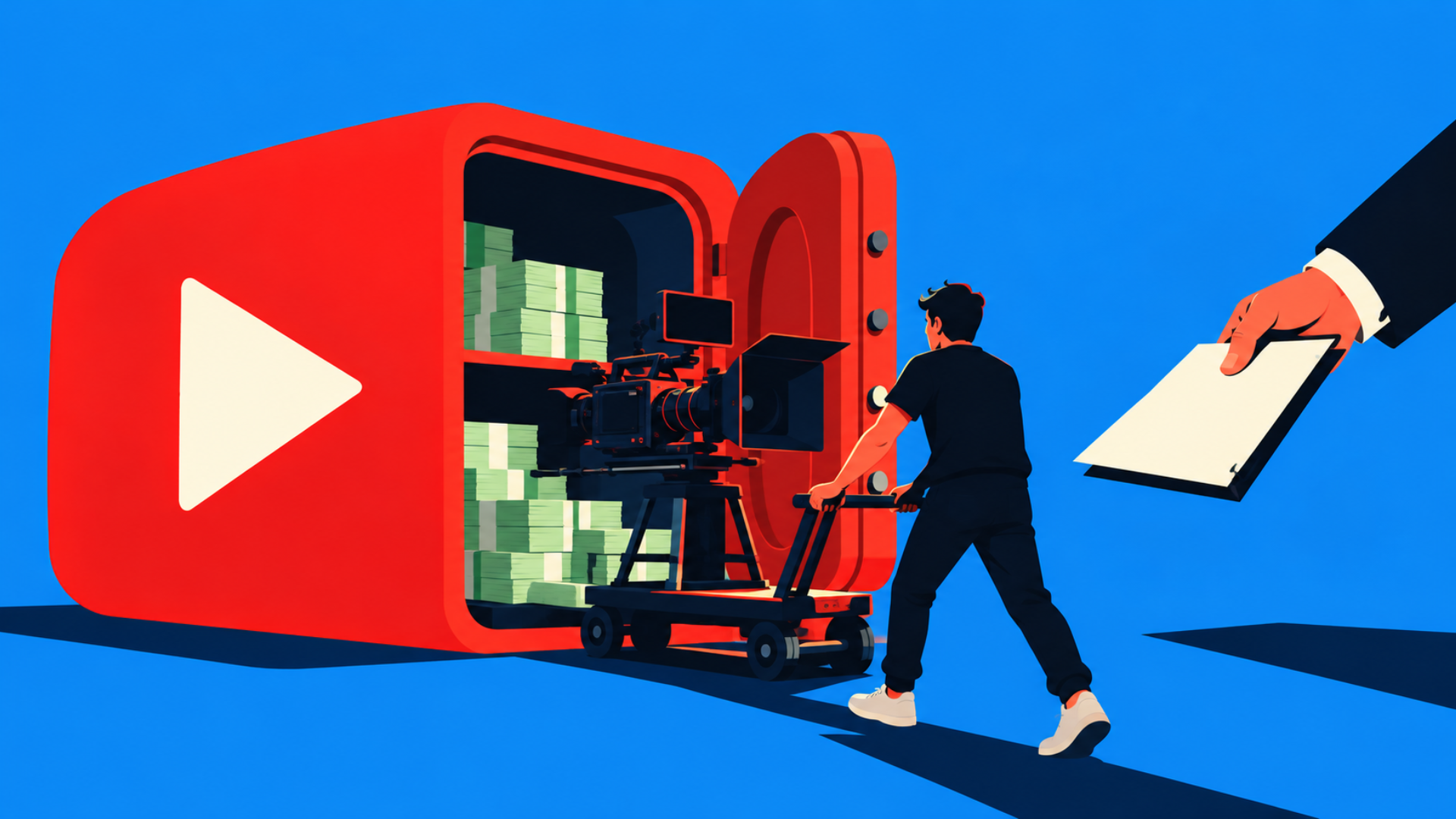
CreatorFi raised $45 million in combined debt and equity financing in September, with capacity for up to another $100 million. The company provides capital against recurring digital income from YouTube AdSense, Spotify royalties, Roblox earnings, and other revenue streams.
Spotter Capital says it has paid $1 billion to creators through licensing arrangements.. Viewture also provides upfront financing tied to YouTube earnings.
The terms differ, but the commercial opportunity is straightforward. Creators with established revenue can fund new productions by committing a portion of future income, often while retaining ownership of their content and IP.
That gives them another option when Netflix, Disney+, or another streaming service wants to finance a show in exchange for exclusive distribution or broader rights.
And once a creator can finance production independently, the conversation shifts to what the buyer is actually getting for its money.
The Creator Already Has a Business the Lender Can Underwrite
Traditional programming development involves a substantial amount of forecasting.
A producer pitches a concept, identifies talent, estimates production costs, and tries to persuade a buyer that enough people will watch to justify the investment.
An established YouTube creator can bring something else into the room: years of revenue from an audience that’s already watching.
The catalog may generate income every month. New uploads drive additional viewing. The creator has historical data showing how individual videos perform, how revenue changes over time, and how much money comes in from advertising.
That gives financing companies a basis for estimating future cash flow.
Viewture uses channel performance data to structure upfront payments against AdSense revenue. Its agreements generally run from one to five years, with payments redirected or shared during the contract period. Spotter Capital currently offers lump-sum funding in exchange for a fixed percentage of long-form YouTube AdSense revenue until an agreed return is reached.
These aren’t identical financial products, and not every arrangement is a conventional loan. What they share is the ability to provide capital without requiring the creator to surrender ownership of the channel.
Of course, the business has to generate enough dependable revenue to support the financing.
A creator with a substantial catalog and consistent monthly earnings presents a different risk from somebody whose entire business depends on one viral video every six months.
But for the established operators, a channel’s revenue history can help finance the next production.
The money may arrive without a programming executive ever seeing the pitch deck.
The Production Check No Longer Settles the Rights Discussion
Consider a creator developing a series with a $2 million production budget.
A streaming service offers to finance the project in exchange for a worldwide exclusive, creative approvals, and potentially additional rights to future seasons or related programming.
That’s a legitimate offer. The streaming service assumes financial risk and brings its distribution, marketing, and production capabilities to the project.
Now suppose the creator can raise the same production money against revenue already being generated by an established YouTube business.
The creator has another way to get the show made.
That changes the negotiation.
If the streaming service wants a worldwide exclusive, it needs to account for the revenue the creator might otherwise earn by distributing the show independently.
If it wants to restrict clips, promotional videos, or companion programming on YouTube, those restrictions may affect the creator’s audience development and sponsorship opportunities.
And if the buyer wants ownership of future seasons, formats, or derivative projects, those rights have value beyond the cost of producing the first season.
The creator can now separate the financing decision from the distribution decision.
A buyer putting $2 million at risk can reasonably ask for meaningful distribution rights. Future-season options, broader IP ownership, and restrictions on the creator’s existing business deserve their own commercial justification.
I’d expect that conversation to get considerably more detailed once the creator has another credible financing offer.
The buyer might still put up the $2 million. But now someone in business affairs has to explain why that money should also buy five years of exclusivity, control over future programming, and restrictions on the creator’s existing distribution business.
Good luck settling that with the standard term sheet.
Keeping the IP Doesn’t Make the Financing Free
There’s an important financial reality here that can get lost in the excitement around creator ownership.
Financing against future revenue has a cost.
A creator might retain ownership of every video while committing a meaningful share of advertising income to the company providing the upfront capital.
That’s money the creator won’t have available for other expenses while the agreement remains in effect.
And YouTube revenue carries risks.
Advertising rates fluctuate. Audience behavior changes. Older videos may generate less viewing than expected. YouTube also controls monetization policies and the systems determining how content gets discovered.
A creator who builds an expensive new series using capital supported by existing channel income is making a financial bet on that business continuing to perform.
The agreement determines how the risk is allocated.
Some arrangements involve defined revenue-sharing terms. Others may include repayment obligations, control over collections, or conditions affecting how future income can be used.
A creator needs to understand those details before concluding that independent financing is automatically preferable to a guaranteed production agreement.
Streaming services also have diligence to perform.
If revenue from an existing catalog has already been committed to a financing company, a proposed distribution agreement needs to account for those obligations.
An exclusive window that removes content from YouTube could interfere with revenue the financing provider expects to collect. Restrictions on future releases may also complicate commitments the creator has already made.
Those are solvable problems when everyone understands the agreements.
They’re considerably less entertaining when legal discovers them two days before closing.
Streaming Services Have More to Offer Than Production Money
Traditional media companies still bring valuable assets to these negotiations.
They have production infrastructure, marketing resources, international distribution, established franchises, and the ability to guarantee meaningful payments for programming.
A creator with a large YouTube audience doesn’t automatically have a successful business reaching Netflix subscribers, selling international rights, or producing an expensive scripted series.
Those capabilities take money and experience.
Disney’s recent partnership with Dude Perfect offers a useful example of how the relationship can work when both parties bring established businesses to the table.
Selected Dude Perfect programming will appear on Disney+, ESPN, and Disney’s social channels. Dude Perfect will also create new content for its own audience tied to Disney properties and events, including Marvel and Star Wars.
Disney gets access to an established creator brand and an audience it can reach through the creator’s channels.
Dude Perfect gets opportunities to produce programming around some of the largest entertainment franchises in the world, with additional distribution and commercial support.
There’s a meaningful exchange of value on both sides.
That kind of arrangement is particularly interesting because the creator arrives with an existing audience, production operation, and commercial relationships.
The streaming service can help expand that business through resources and rights the creator can’t simply acquire by borrowing against YouTube revenue.
A financing company can provide money. It can’t give somebody the rights to make an Avengers-themed series or put their programming in front of Disney+’s entire subscriber base.
Those are different contributions, and they deserve to be priced accordingly.
Buying the Show Can Be More Valuable Than Buying the Creator
One of the mistakes traditional media companies can make is assuming that access to the creator’s audience requires control over the creator’s entire business.
The economics often favor a more selective arrangement.
A streaming service might pay for an exclusive premiere window while allowing the creator to continue publishing other programming on YouTube.
It might license an existing series for a defined period, share production costs on a new format, or purchase international distribution rights while the creator retains domestic distribution.
The creator can preserve a direct relationship with the audience, and the streaming service gets something distinctive to offer its subscribers.
There are also deals where broader ownership makes sense.
If a streaming service finances a high-budget original, assumes substantial production risk, and provides the marketing required to build an entirely new franchise, it has a reasonable argument for greater control and participation in future value.
But the rights should reflect the investment and the contribution.
The buyer needs to understand which rights are essential to its business case and which ones are being requested because they’ve traditionally been included in the deal.
That’s an important question when negotiating with creators who already have profitable distribution businesses.
An exclusivity clause that looks routine to a studio can have a meaningful financial impact on a creator whose revenue depends on regularly reaching an established YouTube audience.
The same applies to promotional restrictions, social clips, companion content, and the ability to work with sponsors.
Those rights may look secondary in a traditional licensing agreement. To a creator, they can be part of how the business makes its money.
Price the Rights, Then Decide Who Should Finance the Show
I’d separate the production financing from the rights negotiation before making the offer.
First, establish what the creator can reasonably earn by producing and distributing the project independently, including any financing costs and existing revenue obligations.
Then identify what the streaming service needs: exclusivity, territories, premiere windows, renewal options, promotional rights, and access to the audience.
Put a price on the restrictions that affect the creator’s existing business.
A streaming service offering substantial guaranteed money, marketing, international distribution, and production resources may justify broader rights than one simply licensing finished episodes.
The contract should reflect those differences.
I’d also be careful about assuming that a creator’s large existing audience automatically converts into paying subscribers. The buyer still needs a credible plan for attracting those viewers and generating enough revenue to justify the agreement.
Creator financing gives established operators another option, but the financing terms, platform dependency, and execution risks still have to make economic sense.
The streaming service can still win the deal. It just needs to demonstrate that the distribution, marketing, guaranteed revenue, and other benefits are worth more than the creator could generate by keeping the rights and financing the project independently.
If the buyer can’t make that case, asking for worldwide exclusivity and control over the next three seasons is going to be a considerably tougher sell.
Ask Me Anything
Whether you’re fed up, fired up, or just want the truth behind the trends, send me your questions using this form. Anonymity guaranteed. Bullshit not included.
The Streaming Wars is intentionally ad-free
We don’t run display ads. Not because we can’t, but because we don’t believe in them.
They interrupt the reading experience. They cheapen the work. And they burn advertisers’ money on impressions nobody actually wants.
So we chose a different model.
We say the things people in this industry are already thinking but don’t say out loud. We connect the dots beyond the headline and focus on explaining why things matter to the people working in this business.
If you believe industry coverage can exist without clutter and interruption, you can support it here → SUPPORT TSW.
Support is optional. But it directly funds research and continued coverage — and helps prove this model can work.
Support TSW →