
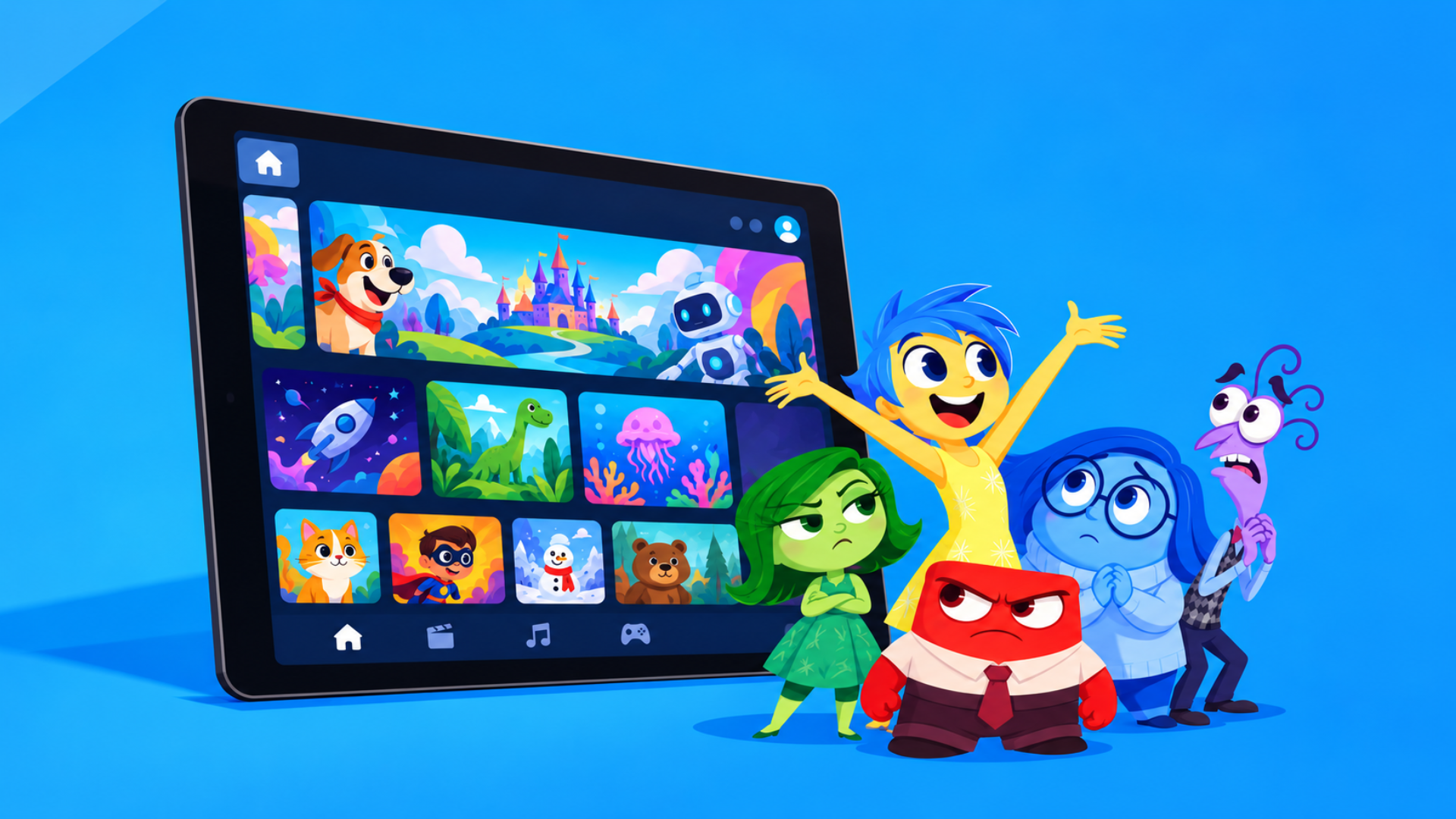
On November 23, 2015, Disney launched DisneyLife in the United Kingdom, a £9.99-per-month subscription streaming service offering hundreds of Disney and Pixar movies, thousands of TV episodes and songs, digital books, and interactive content. Families could explore character-themed collections, download movies, and build personalized profiles. They could even visit an entire section dedicated to Frozen. But they couldn’t stream the actual movie.
Sky had the rights.
Four years before Disney+, Disney had assembled much of the product experience consumers would eventually expect from its flagship streaming service. Its existing distribution agreements determined how much of the library it could actually offer. DisneyLife exposed a commercial conflict that would eventually force the company to rethink how it distributed its most valuable programming.
Disney’s Original Vault Made Scarcity Profitable
Disney had built one of Hollywood’s most effective home-entertainment businesses by controlling when consumers could buy its movies.
Animated classics such as Cinderella, Peter Pan, and The Little Mermaid would receive limited VHS releases before Disney stopped shipping new copies to retailers. Titles could remain unavailable for years before returning with another marketing campaign and another opportunity to sell the same movie to a new generation of families.
In 1991, Disney pulled The Little Mermaid and Peter Pan from home-video distribution after the films had sold millions of copies. The limited-release strategy preserved the promotional value of subsequent rereleases and encouraged consumers to purchase titles while they were available.
Disney controlled the supply, created buying urgency, and turned older movies into recurring retail events.
Subscription streaming rewarded a different behavior. Consumers paid for continued access to a library, and keeping familiar titles available could support retention across multiple billing cycles.
DisneyLife attempted to bring that recurring-revenue model to the company’s historic catalog. But decades of licensing and windowing agreements had already given distribution partners valuable rights to some of its programming.
DisneyLife Packaged the Disney Universe Into One Subscription
DisneyLife offered a more ambitious product than a simple collection of animated movies.
At launch, subscribers could access more than 300 films, over 2,000 TV episodes, approximately 5,000 music tracks, and a substantial library of digital books. The membership also included a rotating selection of Disney apps, with one available to download each month.
Families could create six personalized profiles, register ten compatible devices, download content for offline viewing, and establish parental controls. The service also supported multiple languages, reflecting Disney’s plans for broader international distribution.
The interface organized content around characters and stories rather than relying entirely on conventional movie and TV categories. A child exploring Toy Story could move between the films, short-form programming, music, books, and related extras.
Disney was using its franchises to connect different entertainment formats inside a single subscription relationship. That gave the company opportunities to keep families engaged even when they weren’t watching a full-length movie.
The £9.99 monthly subscription cost more than Netflix’s U.K. entry-level offering at the time. Disney was testing whether the breadth of its family entertainment could support premium pricing.
But the product also came with distribution limitations. Native access centered on mobile devices and tablets, with AirPlay and Chromecast providing routes to the living-room screen. Browser playback relied on Microsoft’s Silverlight technology, which was already losing support.
DisneyLife offered an impressive collection of features, but consumers still faced more friction getting it onto their primary TV than they would with the connected-TV apps that later became standard.
Its content limitations were harder to solve.
Frozen Exposed the Cost of Selling Streaming Rights
DisneyLife’s Frozen collection included the Frozen Fever short, music, character information, and digital books. The full-length movie wasn’t scheduled to arrive until spring 2016.
Sky already carried Frozen through its U.K. movie services.
The timing was especially revealing. On October 12, 2015, just six weeks before DisneyLife launched, Sky announced a renewed multi-year programming agreement with Disney.
The deal covered first-window access to upcoming films, including Inside Out and Star Wars: The Force Awakens, alongside Disney channels, on-demand programming, and an extensive movie library.
These agreements provided Disney with established distribution revenue and access to Sky’s subscriber base. They also placed limitations on what Disney could offer through its own service.
For Sky, premium Disney movies helped support pay-TV subscriptions. For Disney, licensing produced revenue without requiring the company to acquire every viewer directly or operate the underlying distribution infrastructure.
DisneyLife introduced a competing destination for those same rights.
A parent paying Disney directly could encounter a missing movie while Sky customers could watch it through their existing subscriptions. Even a catalog containing hundreds of titles couldn’t substitute for the specific film a child wanted.
Disney’s ownership of the intellectual property didn’t automatically translate into immediate streaming availability.
Disney Chose Britain Because Its American Business Was Too Valuable to Disrupt
DisneyLife’s U.K. debut was a calculated market test.
During Disney’s November 5, 2015 earnings call, CEO Bob Iger explained that the company selected Britain partly because of the strength of Disney’s brand in the market. Existing distribution agreements also allowed Disney to assemble a viable product alongside its relationship with Sky.
Iger acknowledged that licensing commitments could “encumber us from gaining access to the product to sell on our own.”
The United States presented a much larger commercial conflict.
Disney’s American pay-TV carriage agreements generated more than $10 billion annually for its channels at the time. ESPN, Disney Channel, ABC-related distribution, and other established relationships supported a highly profitable business built around pay-TV bundles.
A broad American direct-to-consumer launch could threaten those relationships, particularly if distributors believed Disney was preparing to compete directly for their subscribers.
Disney also had valuable film licensing agreements, including a Netflix arrangement covering new Disney theatrical releases beginning in 2016.
The company faced a rational financial calculation. Established distributors offered contracted revenue and enormous reach. A standalone Disney streaming service would require substantial spending on technology, marketing, customer acquisition, and ongoing operations, with no guarantee that subscription revenue could replace its existing licensing economics.
The U.K. provided an opportunity to learn about direct subscriptions, content discovery, interface design, and family engagement while limiting disruption to its largest market.
Disney could experiment with the consumer relationship without immediately dismantling the distribution business supporting its earnings.
Disney+ Required a More Expensive Commitment
By August 2017, Disney was prepared to make a much larger direct-to-consumer investment.
The company announced a $1.58 billion deal to acquire another 42% of BAMTech, increasing its ownership to 75%. The transaction provided greater control over technology supporting video distribution, commerce, analytics, and subscription operations.
Disney also announced that it would end its Netflix agreement for subscription streaming of new theatrical releases beginning with its 2019 film slate.
Those decisions fundamentally changed the economics of Disney’s streaming ambitions.
Retaining movies for Disney+ meant foregoing some licensing revenue. Building a global service required Disney to assume the costs and risks that established distributors had previously absorbed.
When Disney unveiled Disney+ in April 2019, the service combined Disney, Pixar, Marvel, Star Wars, and National Geographic, along with an extensive library and exclusive originals. It launched that November at $6.99 per month in the United States.
The wider franchise offering, investment in proprietary streaming infrastructure, and availability across connected-TV devices distinguished Disney+ from its earlier experiment.
DisneyLife eventually expanded into additional international markets before shutting down on April 23, 2020, as Disney+ replaced it.
Disney never publicly established DisneyLife’s commercial failure as the reason for its closure. The company had developed a broader streaming strategy and a new product capable of serving significantly larger markets.
DisneyLife’s underlying proposition survived. The company reorganized its distribution and technology strategy to support it at scale.
Disney Now Has More Freedom to Sell the Windows It Once Needed
Disney’s more recent licensing decisions show how much its distribution position has changed.
In October 2026, Disney licensed the first two seasons of Percy Jackson and the Olympians and five Ice Age films to Netflix for three-month windows, ahead of new franchise installments on Disney+ and in theaters.
Those agreements give Disney additional licensing revenue while retaining the opportunity to monetize future releases through its own services and theatrical distribution.
The contrast with DisneyLife is significant. Disney now operates an established subscription business capable of generating value from exclusive programming, while also selectively licensing titles when the economics justify broader distribution.
The company has more flexibility to evaluate a film’s contribution to subscription retention against the revenue available from a third-party buyer. DisneyLife operated within rights schedules largely developed to serve the company’s traditional distribution relationships.
The strategic challenge has shifted from assembling an available library to deciding which titles deserve exclusivity and when outside distribution produces a better financial return.
The Streaming Wars Take
Owning intellectual property provides limited direct-to-consumer leverage when existing distribution commitments prevent a company from offering the programming its subscribers expect.
DisneyLife demonstrated that problem while Disney was still collecting substantial revenue from pay-TV operators and streaming licensees. The company could experiment with a direct subscription, but fully committing to the model required a much larger decision about where its content would generate the most value.
Disney+ eventually gave Disney another source of demand to consider when negotiating rights agreements. Keeping a movie exclusive can support subscriber acquisition and retention. Licensing that same movie can generate guaranteed revenue without additional marketing or distribution expense.
Those competing economics now shape the value of the company’s library.
Disney’s original vault strategy encouraged consumers to purchase films during limited retail windows. DisneyLife attempted to convert that catalog into recurring subscription revenue while many of the rights remained committed elsewhere.
Disney+ gave Disney a larger direct-to-consumer business against which to evaluate those licensing decisions.
The cost of exclusivity is the revenue a studio could earn by selling its rights elsewhere. The cost of licensing is the subscription value it potentially gives up by allowing another distributor to carry the programming.
DisneyLife showed what happens when those decisions are made primarily for the licensing business before a direct subscription has the scale to compete for the same content.
The Streaming Wars is intentionally ad-free
We don’t run display ads. Not because we can’t, but because we don’t believe in them.
They interrupt the reading experience. They cheapen the work. And they burn advertisers’ money on impressions nobody actually wants.
So we chose a different model.
We say the things people in this industry are already thinking but don’t say out loud. We connect the dots beyond the headline and focus on explaining why things matter to the people working in this business.
If you believe industry coverage can exist without clutter and interruption, you can support it here → SUPPORT TSW.
Support is optional. But it directly funds research and continued coverage — and helps prove this model can work.
Support TSW →