

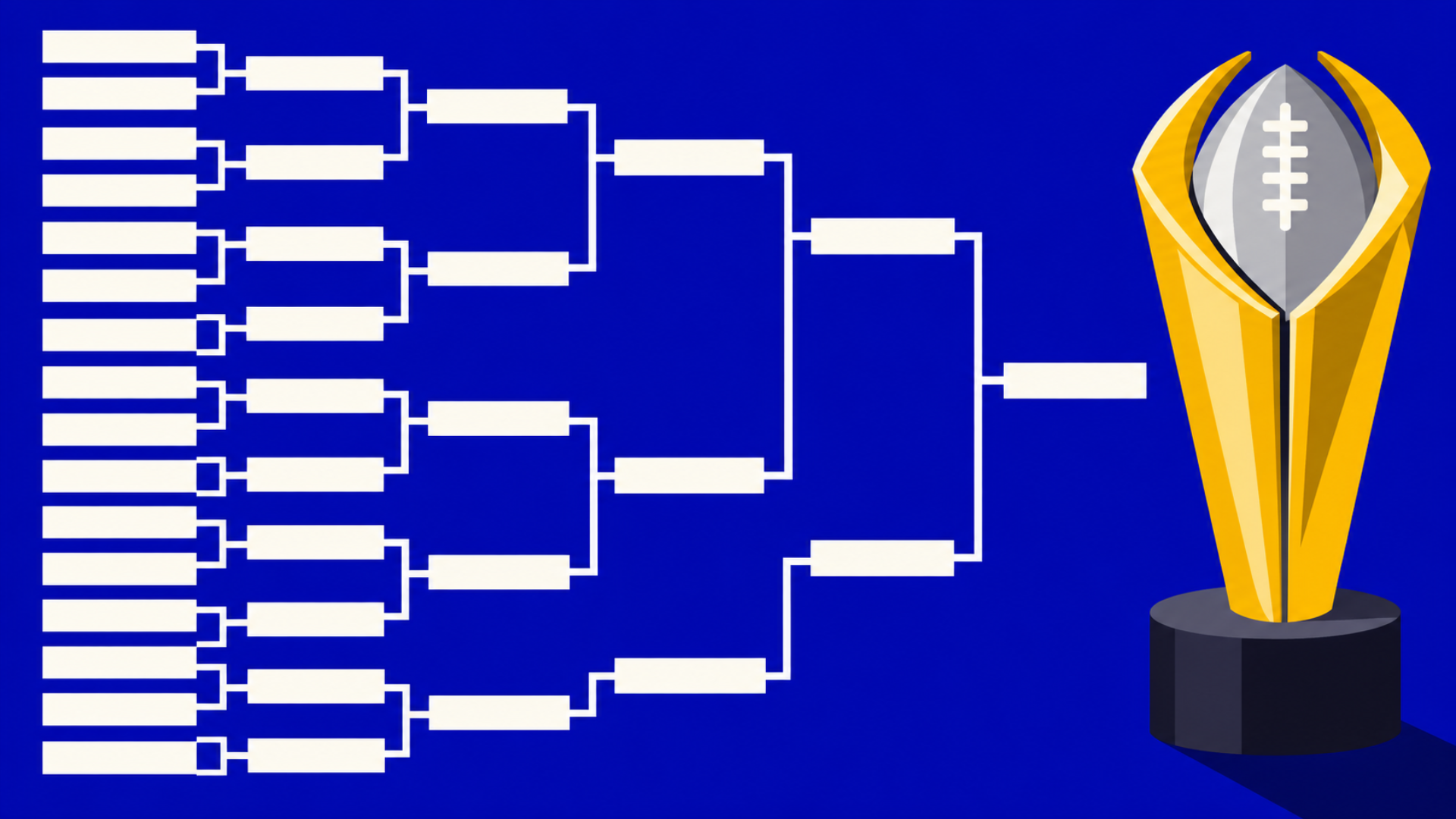
ESPN is adding 12 College Football Playoff games through a reported nearly $1.7 billion agreement, doubling the field to 24 teams beginning in 2027 while the Power Four conferences eliminate their championship games. The deal increases ESPN’s playoff inventory from 11 to 23 games through the 2031-32 season, concentrating more of college football’s most valuable postseason rights inside Disney.
The expansion adds approximately $345 million annually to ESPN’s CFP payments, with an estimated $140 million in savings from canceled conference championships reducing its net incremental rights spending to roughly $205 million per year. Fox gets an expected $50 million annual rights adjustment for losing the Big Ten championship, which drew 18.3 million viewers in 2025.
ESPN gains more postseason inventory and the ability to sublicense selected games to competitors. Rival broadcasters lose established championship events, while Disney gains control over a larger share of the games that determine college football’s national champion.
The $140 Million Cushion
ESPN already pays an average of $1.3 billion annually for CFP rights under its six-year agreement through the 2031-32 season. The expansion adds approximately $345 million per year over the final five seasons, increasing its annual CFP rights bill by roughly 26%.
Playoff inventory grows 109%, from 11 games to 23.
The reported financial terms weren’t disclosed by ESPN or the CFP, but the estimated rights savings from eliminating conference championships substantially reduce ESPN’s additional spending.
ESPN currently controls the SEC, ACC and Big 12 championship games. Their cancellation is expected to remove approximately $140 million in annual rights obligations, leaving an estimated $205 million net increase across ESPN’s affected college football agreements.
That estimate excludes lost advertising revenue from the discontinued championships, additional production costs and potential sublicensing income. It also doesn’t capture the sponsorship, ticketing, hospitality and host-city revenue attached to the four conference title games.
The conferences must replace those revenue streams through the expanded playoff and other arrangements. Their schools gain more postseason opportunities, but additional CFP distributions must cover the economic value of the events being retired.
ESPN’s inventory trade is more favorable. It surrenders three conference championship games and gains 12 playoff games, adding nine net postseason games across those rights packages.
Across college football, four Power Four championships disappear while the CFP adds 12 games. The sport gains eight net postseason games across those properties, with all 12 new CFP games falling under ESPN’s exclusive rights agreement.
Fox Loses Its Showcase
Fox’s 2025 Big Ten championship between Indiana and Ohio State averaged 18.3 million viewers, setting a conference championship record. ABC’s SEC championship between Georgia and Alabama drew 16.9 million.
Both exceeded the 14.9 million viewers for the most-watched first-round CFP game that season.
The departing conference championships are proven national TV properties. Their elimination changes the postseason inventory available to competing broadcasters.
Fox will carry its final Big Ten championship in December 2026. Beginning in 2027, the network loses a marquee December event that delivered one of college football’s largest audiences.
The expected $50 million annual rights adjustment reduces Fox’s spending obligation. It also removes a premium advertising window and a postseason event that gave its Big Ten package a nationally relevant conclusion.
ESPN loses valuable programming as well, including the SEC championship. Its advantage comes from controlling the replacement inventory.
The 24-team playoff creates 16 campus elimination games, up from four under the current format. Seeds nine through 16 host first-round games against seeds 17 through 24. The top eight seeds receive byes and host second-round games.
The quarterfinals and semifinals remain within the Cotton, Fiesta, Orange, Peach, Rose and Sugar bowl rotation.
Fox retains substantial regular-season college football rights, but it won’t own a comparable piece of the national championship tournament. Any opportunity to acquire CFP games through the 2031-32 season would require a sublicensing agreement with ESPN.
That gives Disney bargaining power over broadcasters seeking to replace the postseason inventory they’ve lost.
Nine Games on ABC
Disney is expanding the CFP’s broadcast reach alongside its paid sports business.
Beginning with the 2027 season, at least three first-round games and three second-round games will air on ABC. One quarterfinal, one semifinal and the national championship are also committed to the broadcast network.
That puts at least nine of the 23 playoff games on ABC annually, including games simulcast across ESPN networks.
Disney can use those broadcasts to reach a larger national audience while directing additional football demand toward ESPN Unlimited, traditional pay-TV distribution and its broader streaming bundles.
ABC also provides more valuable inventory for advertisers seeking national reach. Disney Advertising remains the exclusive seller of the CFP’s Official Sponsor Program, giving the company additional games and broadcast windows to package across the tournament.
The expansion strengthens ESPN Unlimited’s role in Disney’s subscription and bundling strategy.
More elimination games give ESPN additional premium programming during December and January, when college football can create strong subscription demand. The direct service provides access to ESPN’s networks without a traditional pay-TV subscription, while authenticated distribution through participating providers preserves ESPN’s existing wholesale relationships.
ESPN also retains the ability to sublicense selected games beyond its existing TNT Sports agreement.
The final distribution schedule hasn’t been announced, and sublicensed games aren’t guaranteed to appear within ESPN Unlimited. Disney will determine how much of the expanded inventory it retains for its own networks and how much it sells to other broadcasters.
That flexibility creates another source of revenue while preserving ESPN’s control of the underlying CFP rights.
Twelve Games, Unequal Value
The larger playoff creates more advertising inventory, but the commercial value of individual games will vary.
The 2025-26 CFP averaged 16.3 million viewers across 11 games, led by a national championship that drew 30.1 million.
First-round results showed a much wider range.
The two games carried on ABC and ESPN averaged 14.9 million and 14.8 million viewers. TNT Sports’ two first-round games averaged 6.2 million and 4.4 million.
Matchups, distribution and scheduling contributed to those differences. The TNT games also faced substantial NFL competition, including a Fox doubleheader that averaged 18.4 million viewers.
The expanded format adds games involving lower-ranked teams and places the first two rounds into Thursday-through-Saturday windows in December. Some of those windows will compete with NFL programming.
ESPN must monetize the new inventory through a combination of advertising, sponsorships, distribution revenue and sublicensing.
Games featuring nationally prominent programs can attract large audiences and premium advertisers. Less compelling matchups may generate smaller audiences, particularly when they compete directly with the NFL.
The sublicensing option gives ESPN another way to recover its investment. TNT Sports or another buyer can acquire selected games, providing Disney with revenue that doesn’t depend entirely on the advertising performance of those broadcasts.
ESPN must decide whether an individual game generates more value through its own networks and streaming distribution or through a payment from another broadcaster.
The larger schedule increases the number of times Disney gets to make that decision.
More Bids, Cheaper Losses
The 24-team field includes the four Power Four champions, the highest-ranked team from the Group of Six and 19 at-large selections.
More programs will remain in contention through November, creating additional regular-season games that broadcasters can promote around playoff qualification.
The expanded bracket also makes early-season losses less damaging.
Established contenders can absorb more defeats without losing their championship opportunities. The top eight seeds still receive valuable advantages through first-round byes and home games in the second round, preserving incentives to finish higher in the rankings.
The CFP is also adopting scheduling standards requiring Power Four schools to play at least 10 qualifying regular-season games against conference opponents, other Power Four programs or Notre Dame.
Those requirements encourage stronger schedules. They don’t restore the same elimination risk attached to a smaller playoff field.
The declining stakes of college football’s regular season become more pronounced when 19 at-large selections give established programs additional paths into December.
More fan bases remain engaged later in the season, while individual losses become less likely to end a championship campaign.
The remaining bowls also lose access to more prominent teams. Twelve additional programs enter the CFP, reducing the pool available for traditional postseason matchups and moving more national attention toward the expanded tournament.
The Power Four championships disappear entirely. Those conferences will determine their champions without staging separate title games, with some still finalizing their selection procedures.
The expanded CFP concentrates more high-stakes games inside ESPN’s rights package while reducing the postseason value available across other conference agreements and bowl properties.
The Streaming Wars Take
ESPN’s most consequential commercial decision now involves how it divides the expanded playoff between its own distribution business and potential sublicense partners.
Keeping premium games supports ESPN Unlimited subscriptions, pay-TV distribution revenue and Disney’s advertising business. Sublicensing produces a direct rights payment but transfers the audience and advertising opportunity for that game to another broadcaster.
The larger bracket makes those choices more complicated. ESPN must determine which matchups justify broad ABC exposure, which strengthen its paid networks and which produce a better return through sublicensing.
The reported $205 million net annual rights increase sets a useful benchmark for evaluating those decisions, but the actual return will depend on audience performance, advertising sales, production spending and sublicensing revenue.
Fox faces a different calculation.
Its expected $50 million rights adjustment reduces costs without replacing the Big Ten championship’s audience or advertising inventory. The network must find other programming to fill that December window or accept a smaller postseason presence.
ESPN can potentially supply replacement CFP games through a sublicense, but Disney controls the inventory available and the terms of any agreement.
That changes the commercial relationship between the networks. Fox could become a buyer of CFP inventory from the company it competes against for college football audiences and advertising dollars.
The conferences face a longer-term consequence. Their regular-season media packages lose the standalone championships that previously gave broadcasters additional premium programming. Future rights negotiations will take place with more of college football’s postseason value concentrated inside the CFP.
Disney holds the exclusive rights to that tournament through the 2031-32 season.
Rival broadcasters can continue buying valuable regular-season football. Access to the expanded national championship tournament now runs through ESPN.
The Streaming Wars is intentionally ad-free
We don’t run display ads. Not because we can’t, but because we don’t believe in them.
They interrupt the reading experience. They cheapen the work. And they burn advertisers’ money on impressions nobody actually wants.
So we chose a different model.
We say the things people in this industry are already thinking but don’t say out loud. We connect the dots beyond the headline and focus on explaining why things matter to the people working in this business.
If you believe industry coverage can exist without clutter and interruption, you can support it here → SUPPORT TSW.
Support is optional. But it directly funds research and continued coverage — and helps prove this model can work.
Support TSW →