
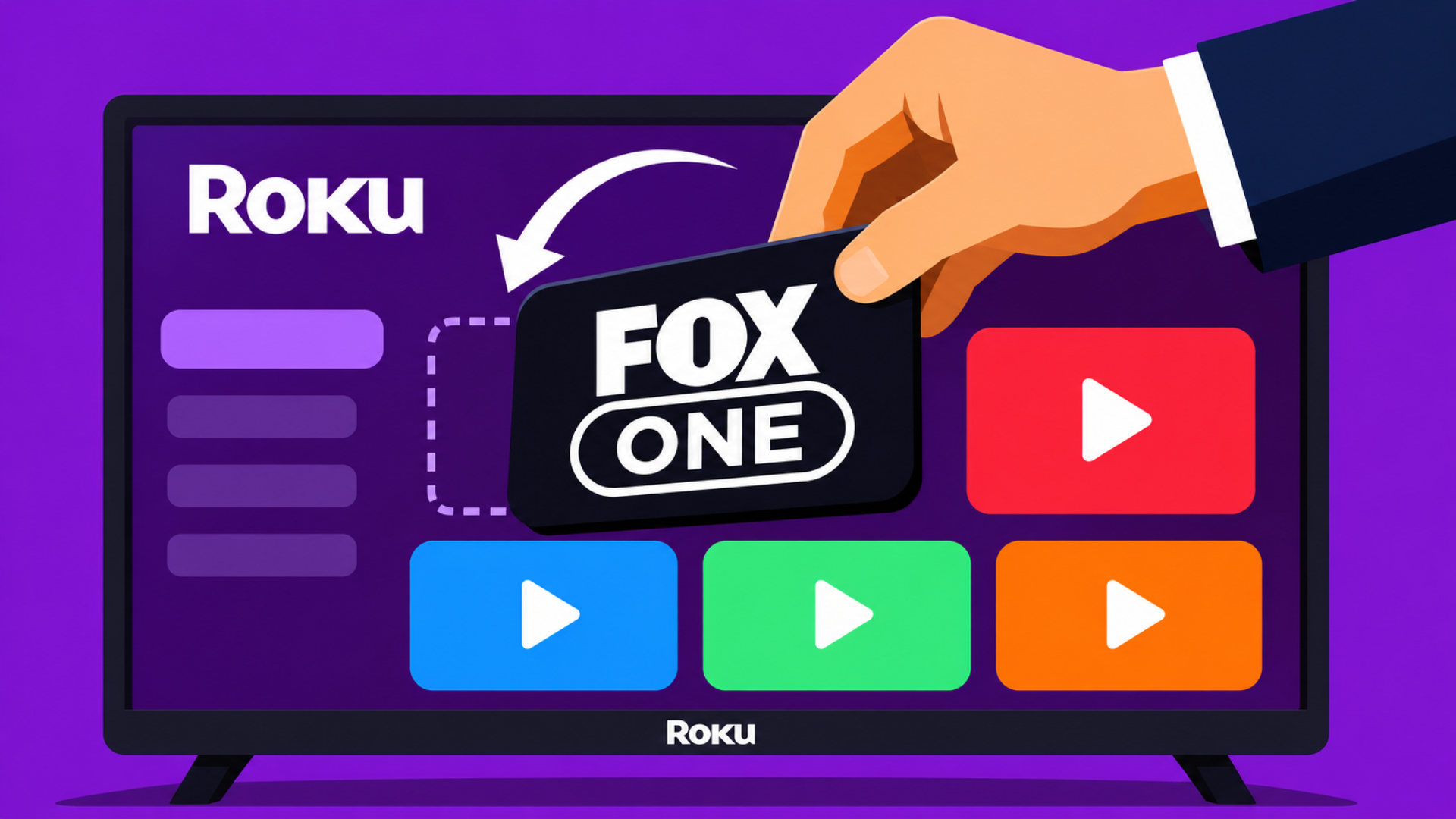
Fox completed its $22 billion acquisition of Roku on November 6, taking control of a TV operating system reaching more than 100 million households worldwide. The deal gives Fox ownership of Roku’s home screen, advertising business, subscription storefront and The Roku Channel alongside Tubi, FOX One and its broader programming portfolio.
Fox can use Roku to promote its programming, acquire subscribers and coordinate advertising across its streaming businesses. Roku’s existing revenue depends heavily on selling advertising, subscriptions and distribution access to companies competing with those same services.
The Department of Justice closed its antitrust investigation after Fox committed to keeping Roku open to competitors, including at least three years of protections for third-party content carriage and sensitive data.
Fox now controls more of the streaming discovery process. The financial return depends partly on whether competing services continue paying for access to it.
The Rivals Pay Rent
Roku generated $1.3 billion in platform revenue during Q3, including $727.4 million from advertising and $580.9 million from subscriptions. Both businesses grew 23% year over year.
Advertising generated $113.9 million of Roku’s $149.3 million increase in platform gross profit, accounting for roughly 76% of the growth. Advertising gross margin reached 63.2%, compared with 40.9% for subscriptions.
Roku’s advertising profitability gives Fox a strong financial incentive to preserve demand from outside advertisers.
Media and entertainment advertising recorded its strongest year-over-year revenue growth in four years during Q3 as studios and streaming services increased promotional spending. Roku also began testing a performance-based home-screen advertising unit designed for those buyers.
Competing streaming services purchase access to Roku’s audience, while Roku’s discovery tools help those companies attract viewers before they enter an app.
The subscription business creates another revenue stream from competitors.
Roku’s World Cup Sports Experience generated more than one million subscription sign-ups across services including Peacock, Paramount+, FOX One and ViX. Roku can monetize those transactions without financing the underlying sports rights.
Its wholesale subscription business extends that relationship into billing, account management and recurring revenue.
Fox now owns a retailer that earns money selling its competitors’ products. Favoring FOX One in subscription merchandising may generate more revenue for Fox’s streaming service, but the incremental profit has to justify any distribution revenue lost from competing offers.
House Ads Aren’t Free
Fox can promote FOX One through Roku’s discovery experience and surface more Tubi programming through recommendations. Those promotions carry an opportunity cost whenever they replace advertising inventory another company would purchase.
A home-screen placement sold to a competing streaming service produces advertising revenue. Giving that position to FOX One makes financial sense when the additional subscription contribution exceeds the advertising profit Fox gives up.
Tubi introduces a different calculation. More viewing can produce additional advertising impressions, but those impressions need to generate enough revenue to justify the promotional exposure used to acquire them.
Fox also owns two major free streaming services competing for viewing within the same company.
The Roku Channel was Roku’s second-most-engaged app during Q3, both in the U.S. and globally. It works with more than 250 content partners, including Disney, Paramount and NBCUniversal.
Moving viewing from The Roku Channel to Tubi could improve Tubi’s performance without increasing the combined company’s audience or advertising profit.
Subscription promotions require the same financial discipline.
A FOX One subscriber generates revenue for Fox’s owned streaming business, while a competing subscription sold through Roku can produce distribution revenue without Fox financing that service’s programming.
Fox needs to measure the incremental contribution of each transaction across the combined company. Subscriber growth at FOX One or additional Tubi viewing won’t necessarily produce a corresponding increase in consolidated profit.
Access Has Limits
The DOJ examined whether Fox could use Roku to disadvantage competing free streaming services or make rival programming harder to discover.
The agency concluded that significant competitive harm was unlikely, partly because Roku depends on programming from competing services to attract viewers. Degrading that experience could damage Roku financially and encourage consumers to use another TV operating system.
Fox made four commitments.
For at least three years, Roku will continue carrying non-Fox content consistent with historical practices. Fox will also maintain existing contractual firewalls protecting competitors’ sensitive data, including information derived from clicks, searches, viewing and voice activity, for at least three years.
Fox separately committed to avoiding discrimination against non-Fox content in search results, preserving viewers’ ability to rearrange home-screen apps and continuing to offer third-party data products on commercially reasonable terms.
The DOJ specified three-year minimums for content carriage and data firewalls. Its statement doesn’t establish the same expiration for search neutrality, app configuration or third-party data products.
The commitments also don’t prescribe how Roku must allocate every paid promotional position or subscription merchandising opportunity.
A streaming service can remain available on Roku while finding that its promotional spending generates fewer subscriptions or that acquiring viewers through Roku has become more expensive.
Competing services will evaluate those economics when negotiating advertising, distribution and subscription agreements. Maintaining access to Roku is valuable only if the platform continues delivering customers at an acceptable cost.
The $400 Million Squeeze
Fox expects approximately $400 million in annual run-rate cost savings within two years of closing. It also expects the acquisition to increase free cash flow per share by the second full year after the transaction.
Fox hasn’t disclosed how much of the savings target will come from corporate overhead, technology consolidation, sales operations, staffing or other changes.
Roku founder Anthony Wood has joined Fox’s board and will co-chair Fox Digital Platforms with Paul Cheesbrough, who also serves as the division’s CEO. The division includes Roku, Tubi, FOX One and Red Seat Ventures.
Management now has to consolidate operations without weakening the products generating Roku’s advertising and subscription revenue.
Roku recorded a $48.6 million gross loss on devices during Q3. Hardware sales and operating-system licensing help expand the household footprint that its higher-margin businesses monetize.
Reducing investment in discovery, advertising technology or third-party integrations could undermine the revenue needed to support that footprint.
The integration also creates potential tension between Fox’s streaming goals and Roku’s existing commercial relationships.
Promoting Fox-owned programming can reduce customer acquisition spending for Tubi and FOX One. Giving that programming preferential exposure at the expense of paying advertisers could reduce Roku’s advertising revenue.
Fox needs to capture the $400 million in savings while preserving the advertising demand, subscription activity and partner relationships that support the acquisition’s economics.
The Streaming Wars Take
Fox has a financial incentive to assign an internal price to the Roku inventory it uses to promote Tubi and FOX One.
Valuing those placements against what outside advertisers would pay would help management determine whether its own promotions generate enough incremental profit to justify the exposure.
That discipline becomes more important as Fox integrates its advertising sales operations and measures the performance of its streaming businesses.
Competing services can also shift promotional spending away from Roku without removing their apps.
A streaming company can maintain Roku distribution while purchasing its next home-screen campaign or subscriber acquisition opportunity through Amazon Fire TV, Google TV, Samsung or another CTV environment.
Advertising budgets can move faster than households replace their streaming devices.
Fox could retain Roku’s audience reach and third-party app availability while losing promotional spending from competing services. Those partners could also seek discounts, stronger placement guarantees or more favorable subscription revenue-sharing terms.
Each concession would put pressure on the margins Fox expects to preserve through the acquisition.
Third-party advertising demand, promotional renewals, Roku-billed subscription activity and platform gross profit will help establish whether Fox is generating incremental revenue or redirecting existing business toward its owned services.
Higher Tubi viewing and FOX One subscription growth can improve Fox’s streaming performance. Reduced advertising spending or weaker distribution economics elsewhere in Roku could offset those gains.
Fox controls the home screen, but its largest streaming customers still control where they allocate their promotional budgets. The price Fox has to charge, or concede, to keep those customers spending will help determine how much profit the $22 billion acquisition actually produces.
The Streaming Wars is intentionally ad-free
We don’t run display ads. Not because we can’t, but because we don’t believe in them.
They interrupt the reading experience. They cheapen the work. And they burn advertisers’ money on impressions nobody actually wants.
So we chose a different model.
We say the things people in this industry are already thinking but don’t say out loud. We connect the dots beyond the headline and focus on explaining why things matter to the people working in this business.
If you believe industry coverage can exist without clutter and interruption, you can support it here → SUPPORT TSW.
Support is optional. But it directly funds research and continued coverage — and helps prove this model can work.
Support TSW →