

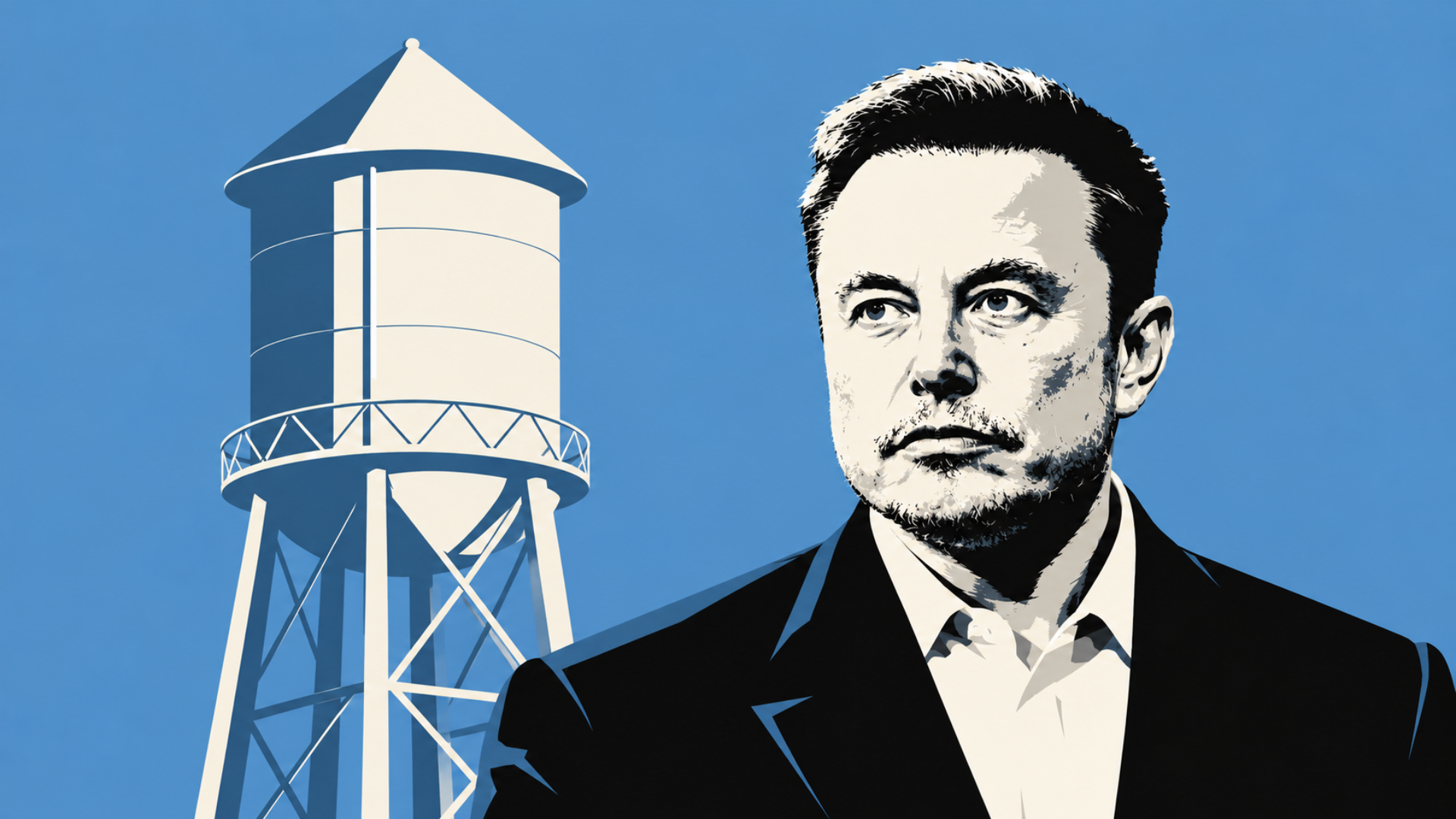
Elon Musk has reportedly invested roughly $1 billion in Skydance less than three weeks after David Ellison completed the $110 billion acquisition of Warner Bros. Discovery. People familiar with the transaction told Semafor the investment came alongside additional equity commitments from existing backers, including board member Laurene Powell Jobs.
The reported investment gives Ellison another potential source of financing as Skydance works toward eliminating at least $6 billion in recurring annual costs within three years and reducing net leverage to three times adjusted EBITDA by the end of 2029.
Fresh equity could help fund integration or reduce borrowing. Skydance hasn’t disclosed whether Musk acquired newly issued shares, purchased an existing stake or received another security. The structure determines how much capital reaches the company, how existing shareholders are affected and what influence Musk receives.
Ellison’s New Equity Backers Expand Skydance’s Financing Options as Its Debt Load Demands More Cash Flow
Skydance’s Warner acquisition required $47 billion in new equity financing alongside a substantial debt package. Management’s original transaction model projected approximately $79 billion in net debt at closing.
That figure was a financing projection, rather than a subsequently reported debt balance. It nevertheless establishes the scale of Skydance’s financial obligations.
A $1 billion equity injection would represent approximately 2% of the original $47 billion equity raise. Even if Skydance received the entire amount and applied it toward debt repayment, it would offset only about 1.3% of the originally projected net debt.
The financing terms determine whether the reported investment produces that benefit.
Issuing new shares can increase corporate cash without adding interest expense, although it dilutes existing shareholders’ economic ownership. Purchasing shares from another investor transfers ownership without supplying new capital to Skydance.
The company hasn’t disclosed Musk’s purchase price, ownership percentage or the proceeds available for debt reduction and integration spending.
Skydance’s financial plan depends far more heavily on recurring operating improvements. Management expects at least $6 billion in annual run-rate savings within three years, primarily from technology, procurement, corporate integration, marketing and real estate.
Its original leverage projections already incorporated those savings. The $6 billion integration plan underpins the company’s path toward its targeted debt ratios.
Additional equity can reduce the amount of cash Skydance needs to borrow or free up resources for integration. Recurring savings increase the earnings available to support borrowing and generate cash for repayment.
Musk’s investment arrives while management must accomplish both.
Kreiz Must Merge Paramount+ and HBO Max Without Sacrificing the Streaming Margins Skydance Needs for Debt Reduction
Skydance has committed to eventually combining Paramount+ and HBO Max into a single streaming service. Co-CEO Ynon Kreiz is responsible for daily operations and integration, placing the streaming consolidation within his broader operating mandate.
Combining the services offers substantial opportunities to eliminate duplicated cloud infrastructure, billing systems, advertising technology, customer identity systems and product development.
It also creates pricing and retention risks that could offset those savings.
Skydance entered the merger with more than 200 million streaming subscriptions across its services. Management hasn’t disclosed how many represent distinct paying households or how much revenue comes from customers subscribing to both Paramount+ and HBO Max.
A combined subscription could replace two payments from an overlapping household with one. Raising the price to preserve revenue could increase cancellations among subscribers who primarily watch one service.
The economics depend on the price of the combined offering, customer overlap, advertising yield and the amount of technology spending management can remove.
HBO Max enters the integration with meaningful earnings momentum. Warner’s streaming business generated $512 million in adjusted EBITDA during the second quarter of 2026, with a margin approaching 17%.
That growth in streaming profitability gives Skydance an expanding earnings source that already contributes to its debt-reduction capacity.
Combining technology can improve margins further. A poorly executed migration could erode the subscription revenue and advertising economics supporting those margins.
Skydance also inherits different customer relationships across the two services, including direct subscribers, wholesale distribution partners and ad-supported customers.
A unified service would give management more programming to merchandise, more viewing behavior to analyze and potentially more advertising inventory to sell through common technology. Those benefits require integration spending before the associated savings are fully realized.
Fresh capital could help finance that work. The financial return will depend on lower operating costs per paying household and the retention of subscription and advertising revenue.
Regulators Protect Skydance’s Film Spending and Cable Negotiations, Concentrating Cost Pressure on Technology and Corporate Operations
Skydance’s merger settlement limits some of the spending reductions and commercial combinations management might otherwise pursue.
The company must release at least 30 theatrical films annually during the first two years of its five-year commitment, increasing to 32 films annually for the following three years. It also committed to at least $1.5 billion in additional domestic film production spending over five years compared with the companies’ combined 2025 spending.
Films counted toward those commitments must observe a theatrical window of at least 45 days and remain unavailable on subscription streaming services for at least 90 days after theatrical release.
Those requirements preserve theatrical distribution and impose a minimum delay before qualifying films can reach the combined streaming service.
The settlement also requires Paramount and Warner’s basic-cable portfolios to negotiate affiliate agreements separately for five years, subject to specified exceptions. Skydance therefore faces restrictions on combining the bargaining power of those networks during distributor negotiations.
Technology, procurement, marketing and corporate overhead provide more immediate opportunities to remove duplicated expenses without violating those commitments.
The additional capital associated with Musk’s investment could support that restructuring if Skydance receives the proceeds. The company’s $6 billion savings obligation still requires management to consolidate systems and organizations while maintaining the production and distribution commitments attached to the acquisition.
Skydance’s Voting Structure Separates Financial Ownership From Control, Putting Musk’s Investment Rights Under Scrutiny
The reported investment also raises questions about who can influence Skydance’s decisions as it restructures two major studios, streaming services, sports operations and national news organizations.
At the Warner acquisition’s October 6 closing, the Ellison family and RedBird Capital held all of Skydance’s voting Class A shares. The $47 billion in transaction equity was issued through Class B shares priced at $12 apiece.
That structure allowed Skydance to raise substantial outside capital while concentrating voting power among its controlling shareholders.
Musk’s investment terms remain undisclosed. Skydance hasn’t identified his share class, voting rights, potential board representation or any separate approval rights.
Those provisions would determine whether Musk has a passive financial position or contractual influence over corporate decisions.
The relationship between Musk and the Ellison family predates this investment. Larry Ellison committed approximately $1 billion toward Musk’s 2022 acquisition of Twitter and previously served on Tesla’s board.
Musk is now reportedly investing a similar amount in the media company led by Larry Ellison’s son.
The connection also introduces potential commercial opportunities involving Musk’s businesses. Starlink could serve as a distribution partner, while X could provide another outlet for video content and advertising.
John Malone publicly speculated about a substantially larger SpaceX investment and accompanying content arrangement before news of Musk’s reported $1 billion commitment emerged.
Skydance hasn’t announced a Starlink distribution agreement, an X content license or an xAI technology contract.
Any eventual commercial agreement would carry its own financial terms, including licensing payments, distribution fees, subscriber ownership and control of customer billing. Those economics would determine whether a partnership improves Skydance’s monetization or shifts part of the customer relationship to a Musk-controlled business.
Ownership terms also carry implications for CNN and CBS News.
The Warner merger settlement requires Skydance to establish a five-member News Editorial Independence Board within 180 days of closing. Its responsibilities include establishing editorial principles and handling specified disputes involving newsroom independence, including independence from company shareholders.
Musk’s reported investment hasn’t been accompanied by disclosed editorial or governance authority. Skydance’s next meaningful disclosure would establish his actual financial and corporate rights.
The Streaming Wars Take
Skydance’s first major capital-allocation decisions will reveal whether management considers debt reduction or integration spending the more urgent use of additional equity.
If Musk’s investment supplies new corporate cash, directing those proceeds toward borrowing would lower debt and potentially reduce interest expense. Applying the money toward streaming technology consolidation could accelerate the elimination of recurring costs, although that strategy carries execution risk and depends on retaining subscribers through the transition.
Those choices affect different parts of the company’s leverage calculation. Paying down debt reduces the numerator. Improving operating earnings increases the denominator.
The timing also affects competitiveness. Skydance needs to maintain investment in HBO programming, Paramount franchises, sports and international distribution while reducing the operating expense attached to delivering that content.
Cutting technology expenses faster can improve streaming margins. Reducing investment too aggressively could weaken the service experience, advertising performance and customer retention that support those margins.
The reported investment also expands the number of financially connected investors around the Ellison family. Whether that relationship develops into additional financing or commercial distribution agreements remains an open question.
Skydance’s upcoming financial disclosures will need to establish how much new capital it actually received, how that capital affects leverage and whether the integration is generating measurable savings.
The operating results will ultimately carry more weight than the size of Musk’s investment. Skydance has committed to combining two streaming businesses while reducing debt and protecting a substantial content operation.
If subscription revenue weakens during that process, Skydance will have less EBITDA available to support its borrowing and a longer path toward its targeted leverage ratio. That puts subscriber retention, streaming margins and integration spending at the center of the financial return on the Warner acquisition.
The Streaming Wars is intentionally ad-free
We don’t run display ads. Not because we can’t, but because we don’t believe in them.
They interrupt the reading experience. They cheapen the work. And they burn advertisers’ money on impressions nobody actually wants.
So we chose a different model.
We say the things people in this industry are already thinking but don’t say out loud. We connect the dots beyond the headline and focus on explaining why things matter to the people working in this business.
If you believe industry coverage can exist without clutter and interruption, you can support it here → SUPPORT TSW.
Support is optional. But it directly funds research and continued coverage — and helps prove this model can work.
Support TSW →