
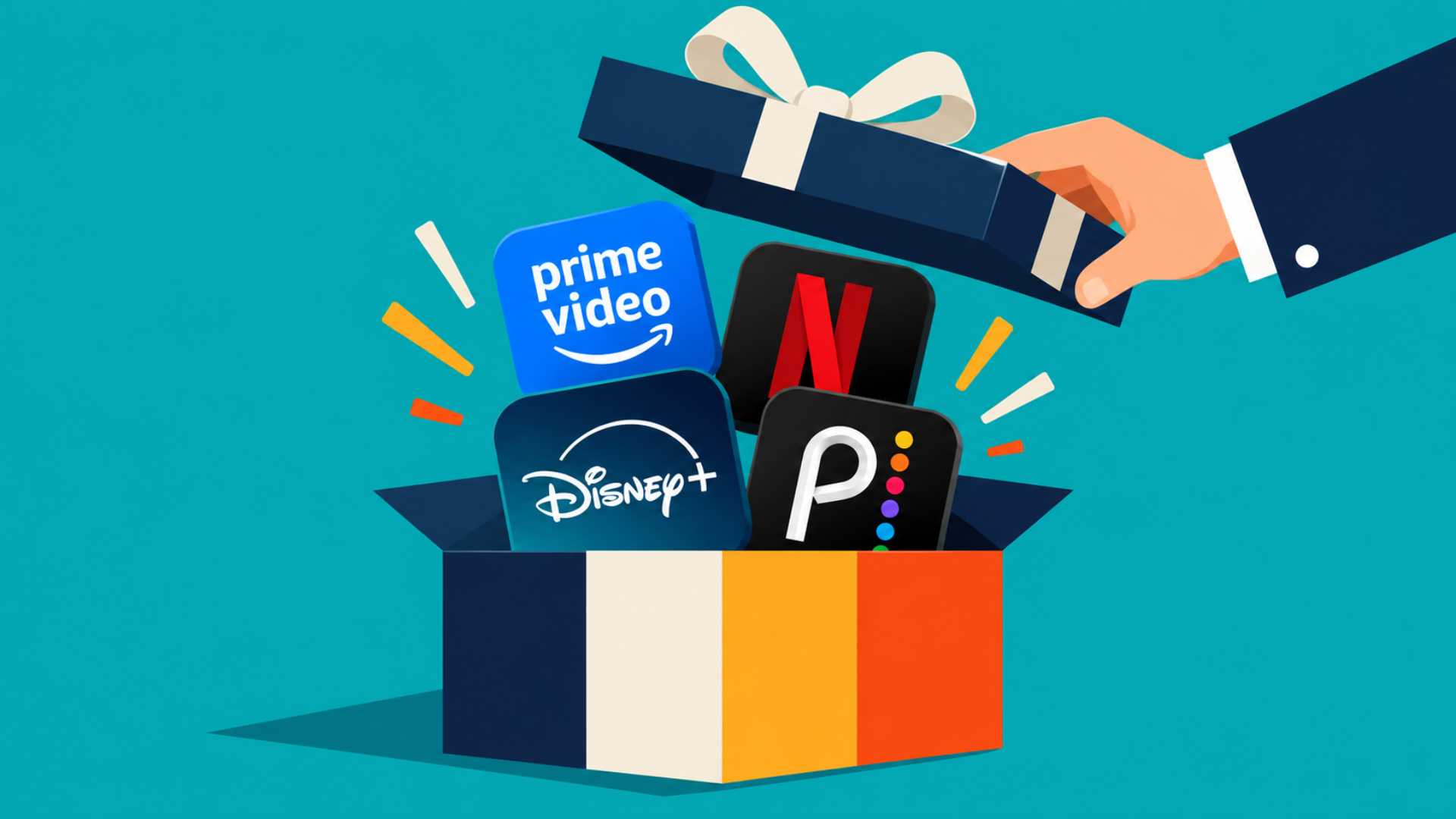
Premium SVOD bundle signups hit 20 million in Q4 2025, up from 4.3 million in Q1 2023. By February 2026, 95% of Disney+ gross additions came through bundled plans, Antenna estimates.
Streaming is getting a lot better at selling subscriptions through companies that already have the customer.
And that’s making subscriber growth a lot more complicated to measure.
Someone entering a bundle might be completely new to the service. They might be a former subscriber coming back. Or they might already pay full price and simply move their subscription to a wireless company, retailer, or marketplace.
All three can generate a bundle signup.
The financial result can be wildly different.
Four Customers, Four P&Ls
Our new TSW Guide to Bundling, released today, breaks bundle gross additions into four categories.
New customers have never subscribed before. The distributor may have reached someone the service couldn’t acquire economically on its own.
Win-backs are former subscribers returning through a bundle. That’s revenue from a customer the service had already lost.
Migrated direct customers already subscribe and move into partner distribution. The service keeps the customer, potentially at a lower wholesale rate.
Migrated third-party customers move between distributors. The subscriber remains, but the revenue share, billing relationship, customer data, and cancellation rights can change.
And there’s another wrinkle. Someone who already subscribes to one service can pick up two more through a discounted package. Those services gain subscribers while the household’s total streaming bill might actually go down.
None of these outcomes makes bundling inherently good or bad business.
A distributor can bring in customers the service would never have acquired directly, lower acquisition and servicing costs, and keep people subscribed longer.
But the origin of each customer changes the calculation.
The 95% Test
Roku dropped an interesting number in its shareholder letter this week.
Approximately 95% of Premium Subscription signups came from customers who had never subscribed directly to the service they purchased, based on a Roku-commissioned Antenna study. That figure covers Roku’s broader Premium Subscriptions business, not just the new bundles it introduced in September.
That’s a good number for Roku. It has the TV home screen, the customer account, the payment method, and a growing subscription storefront.
Roku can sell subscriptions through infrastructure it already operates, saving streaming services the cost of doing some of that work themselves.
But pay attention to how that 95% is defined.
Never subscribed directly.
That could include someone who previously subscribed through another distributor. It could also include a first-time customer who was planning to sign up directly before buying through Roku instead.
Roku has separately shared Antenna research classifying 76% of Premium Subscription signups as incremental to direct transactions. That’s meaningful evidence of the acquisition value Roku can provide, although the two studies use different measures.
The 95% disclosure tells us something useful about customers’ direct-subscription histories. Measuring how many transactions created genuinely incremental business requires additional information.
And even a genuinely new customer isn’t automatically incremental.
If someone was already planning to subscribe, the distributor may have made the purchase easier without creating the underlying demand.
Discovery, checkout, billing, acquisition, and retention are all valuable jobs. Their contribution to the streaming service’s economics can vary from customer to customer.
The $5 Haircut
Here’s a simple hypothetical.
A streaming service has 100,000 direct subscribers paying $15 per month.
Those customers move into a partner bundle that pays the service $10 each.
The service still has 100,000 subscribers. It now collects $500,000 less every month.
That’s $6 million less in annual subscription revenue.
And it already spent money acquiring those customers in the first place.
Of course, the distributor might be worth every penny of that difference.
Maybe it handles payment processing and support. Maybe it reduces failed payments. Maybe the customers stick around longer because their subscriptions are tied to something else they already pay for.
Antenna found that the Disney+, Hulu, and HBO Max bundle had a 59% 12-month survival rate among its 2024 signup cohort. That was an average of 28 percentage points higher than the component services purchased individually.
The cohorts weren’t identical, but the retention results give streaming services a compelling reason to take bundling seriously.
A customer generating less subscription revenue each month can produce more lifetime profit if they stay longer and cost less to acquire and serve.
That’s why a $10 wholesale subscriber can be more valuable than a $15 direct subscriber.
It also explains why an existing direct customer moving into wholesale needs a different financial evaluation from someone the distributor acquired for the first time.
The monthly revenue is only one part of the calculation.
Roku’s subscription marketplace is one example of a much bigger shift in streaming distribution. Our new Guide breaks down how bundling changes CAC, billing, activation, customer data, retention, and control of the subscriber.
Get the Free Guide →Two Different Scorecards
T-Mobile’s new T-Mix plans offer a pretty good example of why the same bundle can mean different things to the companies involved.
Customers can allocate Picks across streaming, gaming, AI, food delivery, wireless features, and phone promotions. They can change eligible selections during designated remix windows.
A customer could start with Netflix and later redirect those Picks toward Paramount+.
Netflix loses the customer’s Pick allocation. Paramount+ gains it.
T-Mobile keeps the wireless account.
The carrier wants customers to stay on their plans, upgrade, and keep paying their wireless bills. Whether a household chooses Netflix, Paramount+, or something outside streaming is a separate part of that calculation.
The individual streaming services have different objectives. They need subscribers who generate enough revenue, viewing, advertising contribution, and retention to justify their wholesale economics.
And as T-Mix makes partners compete for the customer’s Pick allowance, winning distribution will become an ongoing job.
Roku’s latest financial results show another side of the equation.
Its subscription revenue grew 23% year over year to $581 million in Q3. Subscription gross margin fell about 180 basis points to 40.9%, with Roku identifying the shift toward Premium Subscriptions as the biggest factor.
Roku is growing the subscription business while absorbing a different margin mix.
The streaming services selling through Roku have their own economics to measure.
One deal. Different scorecards. And several ways for the relationship to create value.
The Streaming Wars Take
Wholesale negotiations have a lot more room to differentiate between the customers a distributor acquires and the ones it helps retain or serve.
A distributor consistently bringing in incremental customers can make a strong case for its acquisition economics.
One that reduces servicing costs, improves activation, or keeps existing customers from canceling can make a strong case too.
Those contributions become easier to price when the partners can separate new customers, win-backs, and migrations.
But there’s an operational catch.
The distributor might hold the billing relationship while the streaming service holds the account history. The two sides need reliable ways to recognize existing subscribers, measure activation, reconcile payments, and understand what happened when a customer changed channels.
The contract also has to define who counts as a payable subscriber. Some agreements pay on eligibility, others on activation, usage, or revenue. The same consumer offer can produce different economics depending on those terms.
And when the bundle ends, the streaming service needs to know whether it can keep the customer through direct billing or loses the relationship along with the distributor.
As more acquisition moves through bundles, those details start carrying more weight in commercial negotiations.
Distributors have a stronger case for their economics when they can show what they contributed. Streaming services can make better wholesale decisions when they know what changed for the customer and what the relationship generated over time.
A million bundle signups can be terrific business. Knowing which customers were acquired, which were retained, and which simply moved is how the partners figure out what that growth was actually worth.
The Streaming Wars is intentionally ad-free
We don’t run display ads. Not because we can’t, but because we don’t believe in them.
They interrupt the reading experience. They cheapen the work. And they burn advertisers’ money on impressions nobody actually wants.
So we chose a different model.
We say the things people in this industry are already thinking but don’t say out loud. We connect the dots beyond the headline and focus on explaining why things matter to the people working in this business.
If you believe industry coverage can exist without clutter and interruption, you can support it here → SUPPORT TSW.
Support is optional. But it directly funds research and continued coverage — and helps prove this model can work.
Support TSW →