

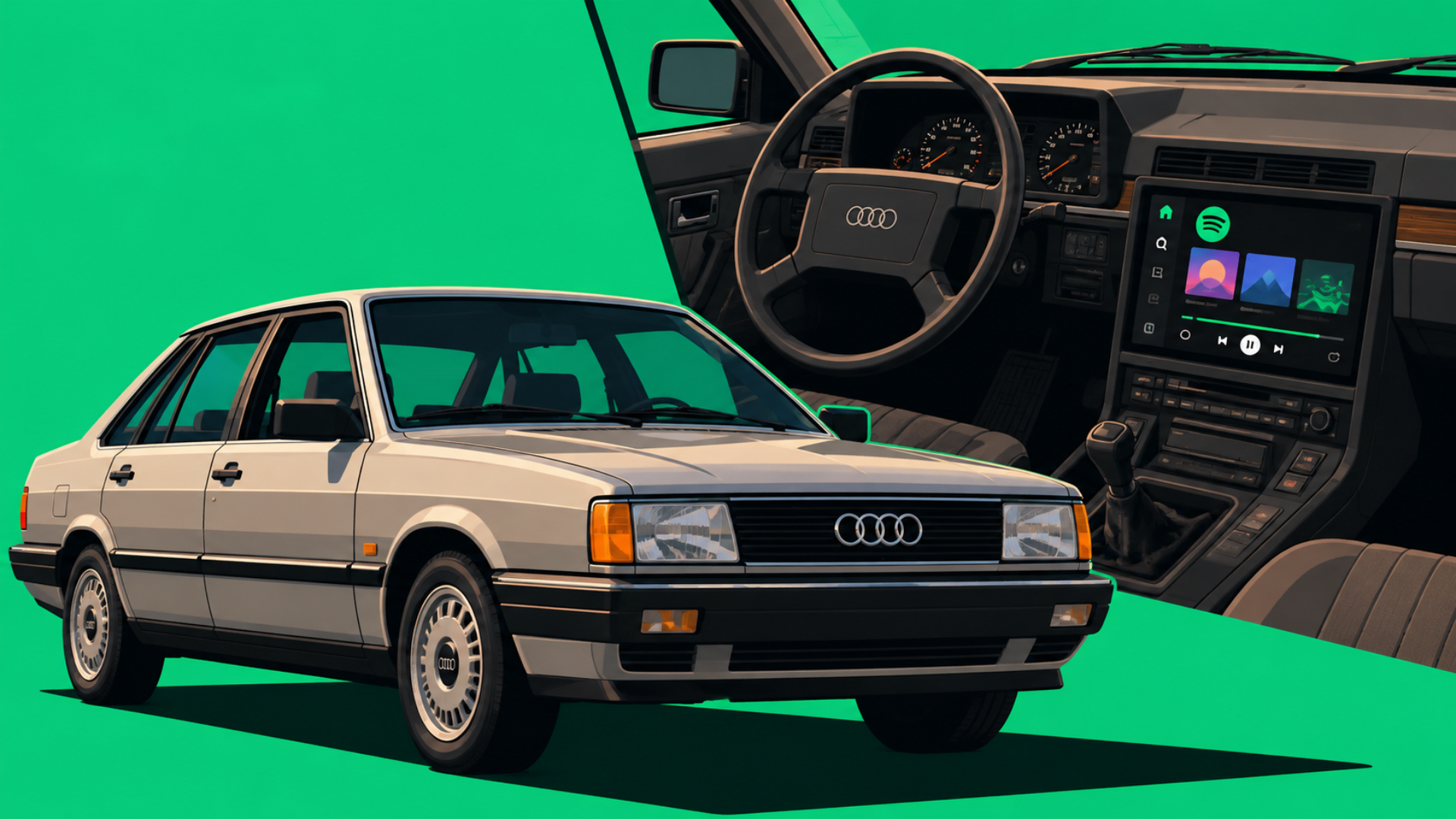
Spotify launched its first fully native automotive app in select Audi vehicles on October 21, giving it direct control over the listening interface without requiring a connected phone. The software runs on Google’s Android Automotive operating system and reaches drivers through Audi’s app store.
The arrangement gives Spotify an alternative to Apple CarPlay and Android Auto’s phone-projection interfaces while shifting more responsibility for native app distribution to automakers. Spotify can now build the experience it wants inside the car, but its ability to expand that experience depends on the manufacturers controlling access to vehicle screens and software.
Spotify Renders Its Own Audi Interface, Raising the Convenience Bar for CarPlay and Android Auto
Spotify’s previous Android Automotive integration supplied the music catalog, playlists, recommendations and account data while Google’s standardized templates determined how that information appeared on the vehicle display.
The new app gives Spotify control over how its own interface is designed and rendered. It can determine how listeners navigate music, podcasts, audiobooks, Spotify DJ and other content without fitting everything into Google’s standard audio templates.
That control extends to when the listening experience begins.
Once drivers sign in, Spotify can resume playback when the vehicle starts. There’s no need to connect a phone through Bluetooth, wait for wireless projection or open the mobile app. Drivers can use Audi’s voice controls or Spotify DJ to manage playback without navigating through a separate phone interface.
Removing those steps gives Spotify another opportunity to become the first audio service a driver uses after entering the car. Repeated listening sessions can reinforce habits that support engagement and subscription retention.
Spotify says 34% of its monthly active users and 77% of Premium subscribers listen in cars. That gives the company a substantial existing audience whose in-car experience is partly shaped by other companies’ software.
CarPlay and Android Auto remain available in Audi vehicles, and Spotify continues to support both. The native app adds another distribution route with greater control over browsing, playback and content presentation.
Phone projection retains the advantage of familiarity and availability across a much larger installed vehicle base. Spotify’s native experience introduces a more direct competitor for listening sessions in cars that support it.
Spotify Moves Past Car Thing’s Hardware Costs, Making OEM Integration the Price of In-Car Reach
Spotify already tested the economics of building its own automotive hardware.
In February 2022, the company launched Car Thing nationally for $89.99. The dashboard accessory offered a dedicated Spotify screen, voice commands and physical controls for vehicles without sophisticated infotainment systems.
It still required a Premium subscription and a connected phone to stream audio.
Spotify stopped manufacturing the device later that year, recording a €31 million charge associated with the decision. It eventually disabled Car Thing entirely in December 2024.
The Audi app eliminates the manufacturing, inventory and physical distribution requirements that made Car Thing expensive to maintain.
Audi supplies the displays, vehicle controls and connectivity infrastructure. Google provides the underlying operating system. Spotify develops and maintains the software.
The app is free to download for Spotify Free and Premium users, although an Audi connect package may be required depending on the vehicle and market.
Spotify can therefore offer a dedicated in-car experience without selling another device or absorbing the working capital tied to physical inventory.
The tradeoff is vehicle compatibility.
Car Thing targeted existing cars, including older models that lacked modern infotainment systems. Spotify’s native app initially reaches supported newer Audis with the hardware and software necessary to run it.
Expanding that audience requires agreements with additional automakers and continued software integration. Those expenses remain, but Spotify no longer needs to manufacture a separate screen for every customer who wants the experience.
Audi Controls Spotify’s Native Distribution, Making Carmaker Partnerships the Scaling Constraint
Audi initially offers the app across 47 markets through its own Application Store.
Eligible vehicles include the A6 e-tron and Q6 e-tron, along with the A5, Q5 and A6 from the 2026 model year. The upcoming Q7 and Q9 will support the app at their respective market launches.
The integration required collaboration among Spotify, Audi and Volkswagen Group software company Cariad.
Audi determines which vehicles support the app and how it operates within the infotainment system. Vehicle safety requirements also govern the features available while driving.
Google remains part of the technology stack because the software runs on Android Automotive.
Spotify controls the experience inside its app, while the operating system and automaker retain control over the broader environment.
That division becomes increasingly important as Spotify expands beyond Audi.
The company plans to bring the native experience to additional automotive partners over the next year. Its development strategy centers on a common Android Automotive application package that can be distributed through multiple automaker stores.
A shared software base reduces the need to build an entirely separate application for every manufacturer. Spotify can maintain common features and interface elements while adapting to each automaker’s screens, controls and operating requirements.
Automakers still determine whether the app is distributed, which vehicles receive it and what integrations are permitted.
That gives manufacturers influence over a distribution relationship previously mediated more heavily through Apple and Google’s phone-projection systems.
For Audi, native Spotify functionality adds another entertainment feature to its infotainment offering. For Spotify, Audi provides access to drivers through hardware and software the automaker already controls.
The commercial opportunity becomes larger as more manufacturers adopt compatible systems, although adding distribution partners still requires coordination beyond shipping the same software package.
Spotify Adds Video to Parked Audis, Expanding Engagement and Pressuring Competing Podcast Apps
Spotify’s native interface also extends its video business into another category of screen.
While an Audi is moving, the center display restricts music videos and real-time lyrics. Drivers retain simplified audio controls and voice functionality.
When the vehicle is parked, including during EV charging, video podcasts, music videos and lyrics can appear on the main display. Supported vehicles also allow front-seat passengers to browse and watch video on a separate screen while the car is moving.
Passengers can join Spotify Jam sessions through a QR code and contribute songs to a shared queue.
These capabilities give Spotify additional ways to serve customers beyond conventional music playback.
The company has already invested heavily in video podcasts and creator monetization. At its May 2026 Investor Day, Spotify said more than 500 million users had streamed a video podcast, an increase of nearly 50% year over year.
Putting video on automotive displays creates another viewing opportunity for content that competes with YouTube and other podcast services for attention.
Charging stops and passenger-screen sessions expand the situations in which Spotify can offer those formats. The commercial opportunity depends on whether that additional usage improves engagement, subscription retention or advertising consumption.
Audiobook listening provides another potential connection between in-car use and revenue.
Spotify has expanded its audiobook business to more than $100 million in annual recurring revenue from Audiobooks+. Additional in-car listening could increase consumption of the audiobook hours included in Premium plans and create demand for paid listening add-ons.
Spotify isn’t introducing a separate subscription fee for its Audi app. Its economic returns would come from making existing customer relationships more valuable through additional consumption, retention and potential spending on paid products.
Native automotive distribution gives the company another way to pursue those returns without adding a new consumer hardware business.
The Streaming Wars Take
Automakers are gaining another opportunity to influence which streaming services receive the most prominent positions inside connected vehicles.
They can determine which native apps appear in their stores, how those apps integrate with vehicle controls and which experiences are available on passenger displays. Those decisions can affect the ease with which listeners access one streaming service over another.
Spotify’s existing audience gives it a strong argument for deeper automotive integration. Its common Android application package also reduces some of the development burden associated with serving multiple manufacturers.
Smaller audio and podcast services may face a more difficult calculation. Building and maintaining native automotive experiences requires engineering resources, integration work and continuing support across vehicle models. Relying exclusively on phone projection avoids some of those expenses while limiting control over the in-car interface.
Spotify also needs evidence that native distribution changes customer behavior.
Audi’s 47-market launch establishes availability across a defined set of vehicles. Customers still need to install or update the app and sign in. The number of supported markets alone doesn’t establish how often drivers choose native Spotify over CarPlay, Android Auto or other listening options.
App installations, repeat native listening sessions and shifts in playback away from phone projection will provide a more useful measure of the strategy’s effectiveness.
Strong adoption would give Spotify additional negotiating leverage with future automotive partners and could justify deeper integration across more vehicle models. Weak adoption would reduce the incentive for automakers to prioritize the experience.
Spotify now has a way to control its in-car interface without absorbing hardware inventory costs. Its next distribution negotiations will determine how prominently that interface appears, how easily drivers can reach it and whether native listening becomes a regular part of the customer relationship.
The Streaming Wars is intentionally ad-free
We don’t run display ads. Not because we can’t, but because we don’t believe in them.
They interrupt the reading experience. They cheapen the work. And they burn advertisers’ money on impressions nobody actually wants.
So we chose a different model.
We say the things people in this industry are already thinking but don’t say out loud. We connect the dots beyond the headline and focus on explaining why things matter to the people working in this business.
If you believe industry coverage can exist without clutter and interruption, you can support it here → SUPPORT TSW.
Support is optional. But it directly funds research and continued coverage — and helps prove this model can work.
Support TSW →