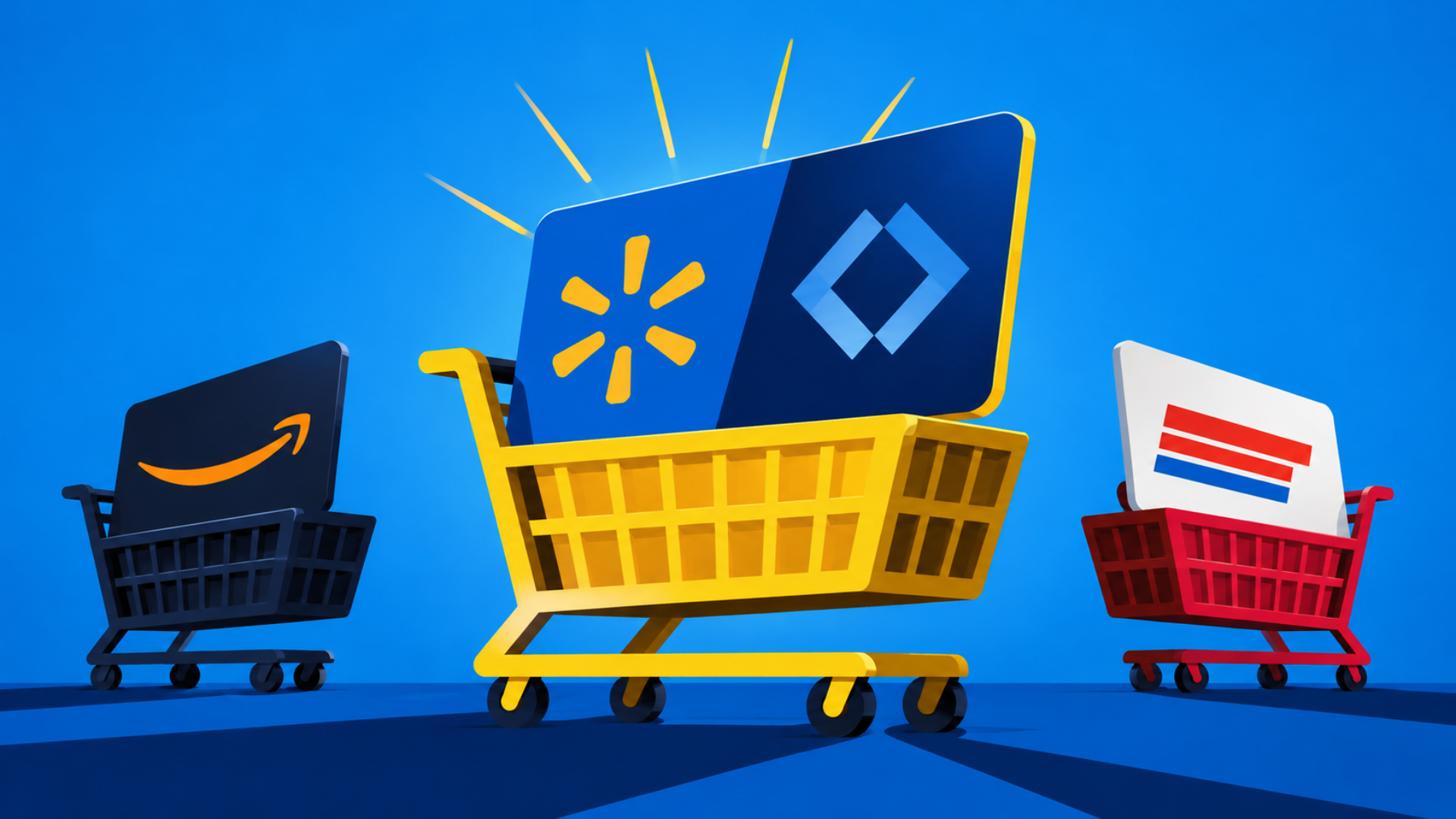
Walmart has combined Walmart+ and Sam’s Club Plus into a $120 annual membership, giving customers access to two retail businesses for the price Sam’s Club Plus already charged on its own.
The offer, launched October 20, costs $98 less than purchasing both memberships separately. Walmart is giving up the opportunity to collect a second membership fee from some households while making it easier to move their everyday orders, bulk purchases and fuel spending between its two businesses.
That puts Amazon and Costco under pressure to defend the purchases their members make, even if those customers keep paying their annual fees.
Walmart Waives the Second Membership Fee to Capture More Shopping Trips
Sam’s Club Plus still costs $120 annually. Walmart+ now comes with it.
Existing Plus members can activate Walmart+ without paying another membership fee. Annual Walmart+ subscribers can add Sam’s Club Plus for $22, while basic Sam’s Club members can upgrade to Plus for another $60. Households already paying $218 for both can link their accounts, with most eligible for a prorated Walmart+ refund.
The pricing creates different financial outcomes for Walmart depending on which membership a customer already holds.
A household paying for both memberships represents a potential $98 reduction in annual fee revenue. A Walmart+ customer who upgrades increases their annual commitment from $98 to $120. A basic Sam’s Club member who upgrades moves from $60 to $120.
For existing Plus members, Walmart is effectively removing the cost of trying its everyday delivery and shopping benefits. Walmart can then pursue additional grocery orders, household purchases, marketplace transactions and renewals from a customer already paying for warehouse access.
The opportunity comes with operating costs. More Walmart+ orders can increase picking and delivery expenses, while the expanded entertainment benefit adds obligations under Walmart’s streaming partnerships.
The economics depend on whether incremental contribution profit, membership upgrades, retention and advertising revenue exceed those additional costs and the membership fees Walmart could otherwise collect.
Walmart said the program isn’t expected to materially affect its fiscal third-quarter or full-year guidance. That provides some near-term cost reassurance without establishing how much additional shopping the bundle will produce.
Walmart Sells Delivery and Warehouse Access for $120, Pressuring Amazon and Costco for Purchases
Amazon Prime costs $139 annually. Costco Executive costs $130. Walmart’s combined membership costs $120 and includes benefits that compete with both.
Against Prime, Walmart offers everyday delivery, shipping, fuel discounts and ad-supported streaming. Against Costco Executive, it offers warehouse access, member pricing and 2% Sam’s Cash on qualifying purchases.
The memberships have different merchandise assortments, delivery capabilities, entertainment offerings and reward structures. Walmart’s competitive advantage in this comparison comes from combining two shopping relationships under one annual fee.
A household that currently pays for Prime and Costco Executive spends $269 annually on those memberships. Walmart can offer everyday retail and warehouse access for $120, leaving customers to decide how much additional value they receive from Prime’s broader digital benefits and Costco’s merchandise selection.
Walmart can gain spending without triggering an outright membership cancellation.
A Prime household might begin ordering groceries and household essentials through Walmart+. A Costco Executive member might redirect selected bulk purchases to Sam’s Club while continuing to shop at Costco for merchandise unavailable elsewhere.
Those incremental purchase decisions can shift revenue before they affect membership renewal rates.
Amazon’s extensive fulfillment network and entertainment operation remain formidable. Costco’s product mix, private-label business and customer loyalty also give members reasons to renew.
Walmart’s price structure raises the value those competitors must deliver to preserve shopping frequency. A customer who already has Walmart delivery and Sam’s Club access under one fee has fewer financial reasons to maintain redundant shopping benefits elsewhere.
Walmart Cross-Sells Existing Members More Cheaply, Threatening Rivals’ Shopping Frequency
Walmart can pursue a larger share of household spending through customers who already have a membership relationship with one of its businesses.
Mizuho estimates approximately 25 million Walmart+ members and 30 million Sam’s Club members, with roughly 10% overlap. Those are estimates rather than Walmart-disclosed membership totals, and the Sam’s Club figure includes membership tiers beyond Plus.
The estimated overlap still points to a sizable audience with an existing commercial relationship that Walmart can approach with another service.
Sam’s Club members already have a reason to visit the warehouse. Walmart+ can capture smaller purchases between those visits, particularly groceries and household essentials that customers otherwise buy elsewhere.
Walmart+ members face a different proposition. For $22 more annually, they can add premium warehouse membership benefits that previously required a separate $120 commitment.
Walmart can promote those opportunities through its apps, membership communications and stores. It already has a payment relationship with the customer, reducing the friction associated with acquiring a completely new household.
That acquisition advantage becomes commercially meaningful when activation leads to repeat shopping.
A Plus member who activates Walmart+ and never places an order adds little incremental retail revenue. A Walmart+ subscriber who upgrades to Sam’s Club Plus and begins purchasing bulk groceries or household products creates another revenue stream from an existing customer.
Walmart’s opportunity extends beyond the number of memberships sold. The company can increase spending across two businesses by giving existing customers fewer reasons to shop elsewhere.
Walmart Can Turn Cross-Shopping Into Ad Revenue, Strengthening Its Challenge to Amazon
Additional spending across Walmart and Sam’s Club can also expand the purchase activity available to Walmart’s advertising businesses.
The company already has meaningful momentum in retail media. In its second fiscal quarter of 2027, global advertising revenue increased 38%, while Walmart Connect in the U.S. grew 43% excluding Vizio. Global membership fee revenue rose 17%.
Walmart is increasingly using its stores, ecommerce business, memberships and CTV properties to sell advertising tied to retail purchases.
In June, the company announced closer alignment between Walmart Connect and Sam’s Club Connect through shared technology, tools and capabilities. The businesses continue to operate separately, but Walmart is making their advertising operations more closely coordinated.
The combined membership introduces another opportunity for members to shop across both retail banners.
An advertiser selling household products may want to understand whether a campaign influenced Walmart grocery purchases, Sam’s Club bulk purchases or both. Additional logged-in shopping activity could expand the transactions available for audience targeting and campaign measurement, subject to Walmart’s ability to connect those signals and permitted data uses.
Walmart hasn’t disclosed whether linking these memberships automatically creates a unified advertising profile.
The company has already invested heavily in connecting advertising exposure with retail behavior. Its Vizio strategy connects TV programming, advertising and measurable shopping activity, giving Walmart another way to sell advertisers access to audiences and purchase outcomes.
If the new membership increases cross-shopping, Walmart Connect and Sam’s Club Connect could gain more transactions against which advertisers can evaluate campaign performance.
That gives Walmart another potential source of revenue from the same household, beyond its $120 membership payment and merchandise purchases.
Walmart Controls the Streaming Checkout, Pressuring Peacock and Paramount+ to Prove Their Value
The new bundle extends Peacock and Paramount+ distribution through Sam’s Club Plus without requiring either streaming service to establish a separate retail membership relationship.
Members can select ad-supported Peacock Premium or Paramount+ Essential and switch between them every 90 days.
Walmart controls the membership offer and the selection process. The streaming partners provide the programming and operate their services. Members who purchase available upgrades to Peacock Premium Plus or Paramount+ Premium are billed through Walmart.
That gives Walmart a role in streaming distribution and paid upgrades without requiring it to own the content.
Peacock and Paramount+ gain access to another pool of potential viewers, including households whose primary reason for paying Walmart is grocery shopping or warehouse access.
The streaming services still have to convert that distribution into economic returns.
A member who activates Peacock and watches regularly can generate advertising impressions. A member who upgrades to a paid tier contributes additional subscription revenue under the partnership’s commercial terms. Someone who leaves the benefit unused contributes considerably less value.
The wholesale economics of Walmart’s agreements with Peacock and Paramount+ haven’t been disclosed.
Paramount’s broader distribution strategy shows how closely streaming services are scrutinizing those economics. In February, the company outlined plans to exit approximately 4 million to 5 million hard-bundle subscribers with unattractive economics. Those subscriptions represented less than 2% of Paramount+ revenue in 2025.
Walmart’s U.S. arrangement is a separate commercial relationship, but both companies face the same fundamental requirement: distribution must generate enough revenue to justify its cost.
Peacock is pursuing more revenue per subscriber through pricing and paid upgrades, consistent with its broader effort to convert streaming scale into sustainable profitability.
For Walmart, Peacock and Paramount+ help retain a retail member who may spend substantially more on merchandise than the streaming benefit costs to provide.
For the streaming services, Walmart offers distribution into households they might otherwise have to acquire directly through marketing or promotional discounts.
As that distribution relationship grows, Walmart can gain bargaining power over partner placement, pricing and the terms of future streaming benefits.
The Streaming Wars Take
The competitive pressure from Walmart’s bundle will appear first in shopping behavior rather than membership cancellations.
Amazon and Costco can retain paying members while losing individual transactions to Walmart. Defending those transactions requires competitive pricing, convenient fulfillment and merchandise that gives customers a reason to keep shopping with them.
Walmart’s performance will depend on whether Plus upgrades, Walmart+ activations and purchases across both businesses produce additional margin after fulfillment and membership benefit costs.
For Peacock and Paramount+, the expanded distribution opportunity creates a different financial test.
Both services can reach customers through Walmart without paying the full cost of acquiring those households directly. Walmart controls access to the membership benefit, the streaming selection and billing for paid upgrades. That gives the retailer a stronger position as the audience becomes more valuable.
Paramount’s withdrawal from uneconomic hard bundles also raises the importance of evaluating these arrangements through revenue and engagement rather than subscriber counts alone.
Walmart can negotiate future entertainment benefits against the measurable value they contribute to membership retention, while streaming partners must assess whether the distribution delivers engaged viewers, advertising revenue and upgrades at an acceptable cost.
Amazon built Prime Video into its retail membership economics through an entertainment business it owns. Walmart is pursuing comparable retention benefits through outside streaming partners while combining everyday retail and warehouse shopping under one fee.
The commercial result will depend on how much additional shopping profit Walmart can capture, and how much of that value it must share with the companies supplying its membership benefits.
The Streaming Wars is intentionally ad-free
We don’t run display ads. Not because we can’t, but because we don’t believe in them.
They interrupt the reading experience. They cheapen the work. And they burn advertisers’ money on impressions nobody actually wants.
So we chose a different model.
We say the things people in this industry are already thinking but don’t say out loud. We connect the dots beyond the headline and focus on explaining why things matter to the people working in this business.
If you believe industry coverage can exist without clutter and interruption, you can support it here → SUPPORT TSW.
Support is optional. But it directly funds research and continued coverage — and helps prove this model can work.
Support TSW →