

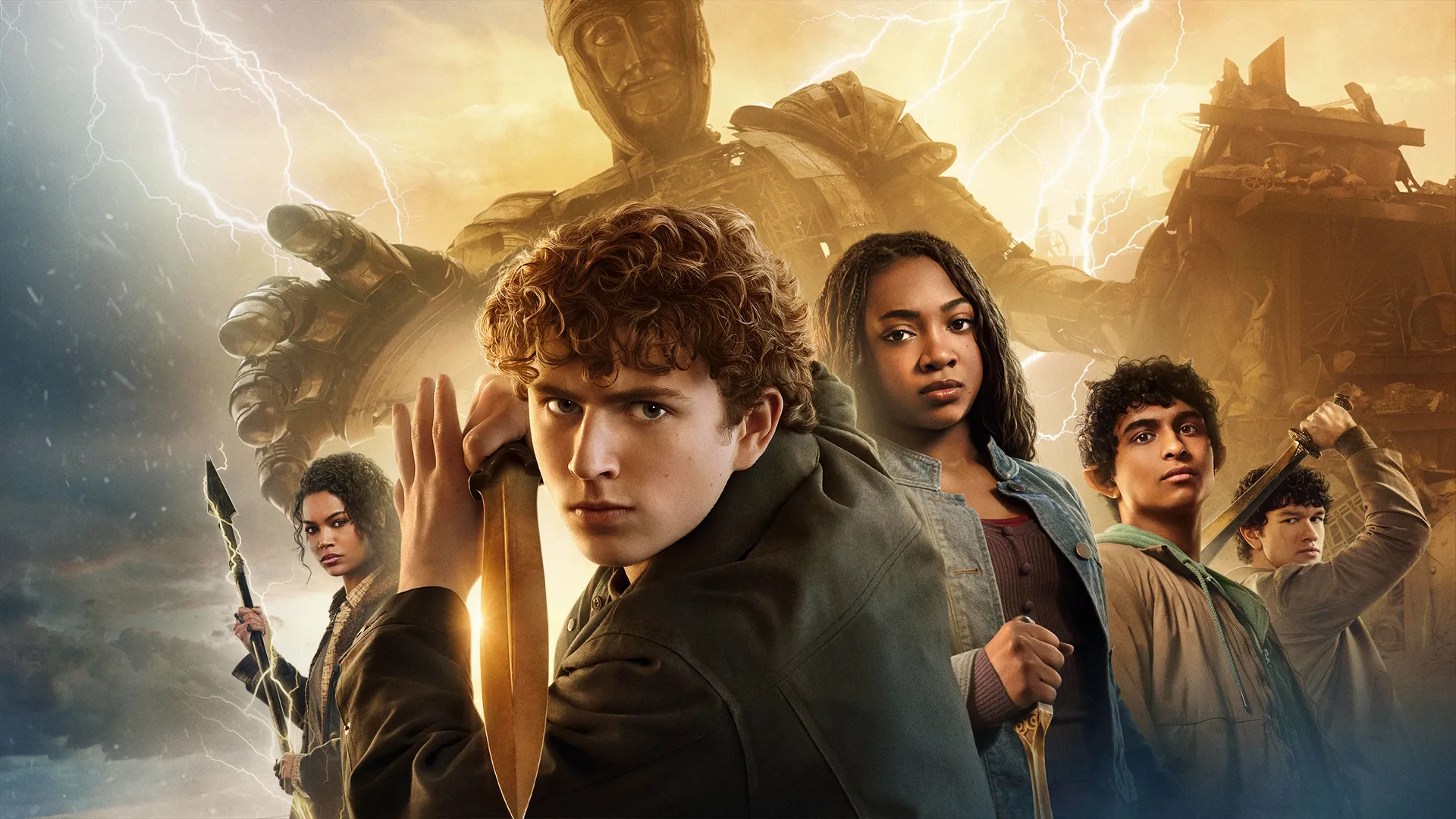
Disney premieres Season 3 of Percy Jackson and the Olympians on Disney+ and Hulu on November 20, 47 days after the first two seasons arrived on Netflix under a three-month global licensing deal.
Disney gets licensing revenue from a direct competitor, keeps the earlier seasons available on its own services, and reserves the new episodes for Disney+ and Hulu.
On Tuesday’s earnings call, CEO Josh D’Amaro called the agreement a “smart bet” that would help inform future licensing decisions. He said Disney would judge similar arrangements by whether they build the franchise and ultimately support Disney+.
The agreement gives Disney revenue from Netflix while testing whether another service’s audience can generate incremental value for a release Disney still controls.
Tomorrow, that second part gets its first major test.
Netflix Funds the Funnel
Disney has found an unusually attractive way to put programming in front of another service’s audience.
Netflix pays for the right to carry two completed seasons of Percy Jackson. Disney retains the opportunity to monetize any additional interest those seasons generate when Season 3 premieres.
A traditional marketing campaign requires Disney to spend money reaching prospective viewers. Here, another distributor pays Disney for programming that can introduce the franchise to households Disney may not otherwise reach.
Netflix has already been promoting Percy Jackson through its own editorial channels, giving the series additional exposure during the run-up to Season 3.
The economics work even if that exposure produces no incremental Disney+ subscriptions, provided the licensing revenue exceeds the value Disney gives up by sharing the earlier seasons.
Disney hasn’t disclosed the license fee, so the net financial return remains unknown. But the arrangement gives Disney two potential sources of value: contracted licensing revenue and whatever additional subscription, viewing, or retention activity the Netflix window produces.
Only the first comes directly from the licensing agreement.
Exclusivity Has a Price
Disney’s co-exclusive structure preserves availability on Disney+ and Hulu while giving Netflix access to Seasons 1 and 2.
That protects existing Disney+ subscribers from losing the programming. It also means Netflix households can watch those seasons without subscribing to Disney+.
Disney has surrendered some exclusivity while preserving the newest installment as a reason to subscribe or remain subscribed.
The trade is central to the newly released TSW Guide to The New Rules of Catalog Licensing: keeping programming exclusive means rejecting whatever another buyer would pay for the same rights during that period.
That opportunity cost changes throughout a franchise’s life.
Earlier seasons may already have reached much of their potential audience on Disney+. Their ability to attract new subscribers can decline even while they retain licensing value elsewhere.
A new season creates another reason to subscribe, particularly for viewers who want to continue watching immediately after finishing the earlier episodes.
Disney has divided those opportunities through the contract.
Netflix receives access to the existing seasons for three months. Disney retains the new release, keeps the older episodes available on its own services, and regains sole control of the licensed streaming window when the agreement expires.
The short term also limits how long Netflix can compete with Disney+ for viewing of those earlier seasons.
Every title has more than one price. The TSW Guide to The New Rules of Catalog Licensing breaks down how timing, exclusivity, territory, prior exposure, business model, and windowing change what a title is worth the next time the rights come up.
Get the Free Guide →47 Days to Convert
The timing puts Netflix’s distribution directly against Disney’s release calendar.
Seasons 1 and 2 reached Netflix on October 4. Season 3 premieres November 20 with two episodes, followed by two episodes weekly through December 11.
Netflix’s three-month window extends beyond both the premiere and the season finale.
That gives viewers time to discover the franchise before the new season starts and lets Netflix continue serving catch-up demand while Disney releases the new episodes.
Disney is using a similar arrangement for all five existing Ice Age films ahead of Ice Age: Boiling Point, which opens in theaters February 5, 2027.
The two franchises offer different measures of commercial success.
For Percy Jackson, the potential return includes Disney+ and Hulu viewing, new subscriptions, reactivations, and retention. For Ice Age, Disney can also examine whether renewed franchise exposure contributes to theatrical demand.
Those outcomes could influence how Disney prices and schedules future licensing windows.
A three-month license becomes more attractive when it can generate revenue during the buildup to a release that the rights owner still controls.
The difficulty is determining how much of that additional demand the outside window actually generated.
Netflix Keeps the Data
Netflix controls the viewing relationship for subscribers watching Percy Jackson on its service.
It can see which members start the series, how far they progress, and what they watch afterward. It can also recommend competing programming to keep those viewers engaged once they finish.
Disney can measure Season 3 viewing, subscriber activity, and retention on its own services. But Disney’s internal data alone can’t identify which Netflix households discovered the franchise there and subsequently became Disney+ customers.
The companies haven’t publicly established a viewer-level attribution arrangement for this licensing deal.
That leaves Disney measuring the effect through its own performance data and comparisons with expected viewing and subscriber behavior.
An increase in Season 3 starts could reflect Netflix exposure. It could also reflect Disney’s existing marketing, returning fans, or demand that would have materialized without the licensing agreement.
The economics also differ by household.
A Netflix viewer who already subscribes to Disney+ may generate additional franchise engagement without creating a new subscription. A viewer who subscribes specifically for Season 3 provides a clearer acquisition benefit. A viewer who finishes Season 2 on Netflix and moves to another Netflix series creates no direct downstream Disney+ return.
Netflix benefits from the licensed viewing in each case.
Disney still receives licensing revenue, but its ability to justify similar promotional windows depends partly on understanding what that exposure adds to its own business.
Marvel Has a Higher Bar
D’Amaro specifically identified Marvel, Lucasfilm, and Pixar as brands Disney would treat selectively in future licensing decisions.
Those properties introduce a different opportunity-cost calculation.
A recognizable franchise with a major upcoming release may command an attractive outside licensing fee. It may also retain substantial value inside Disney+ through repeat viewing, subscriber retention, and interest in new installments.
The stronger that internal value, the more Disney potentially sacrifices by allowing a competing service to carry the same programming.
A short co-exclusive deal for earlier Percy Jackson episodes doesn’t establish the right price or window for a Marvel movie, a Lucasfilm series, or a Pixar library title.
The economics depend on how much of the audience has already seen the programming, how much exclusivity the next release needs, and which rights Disney can keep available for another transaction.
Disney also has to consider the additional bargaining power it may give Netflix by demonstrating that Netflix distribution can help build demand for Disney franchises.
That makes the results of Percy Jackson useful beyond the performance of one series.
The Streaming Wars Take
If Disney demonstrates that Netflix exposure produces meaningful incremental Disney+ activity, future licensing negotiations gain another economic variable.
Disney would have a stronger case for using short, co-exclusive windows around franchise releases. Netflix could gain bargaining power of its own.
If Netflix can show that its distribution helps Disney acquire subscribers or generate theatrical interest, it could argue that the promotional benefit should influence the next licensing fee.
The same arrangement that makes Netflix an attractive buyer for Disney could give Netflix more leverage over what it pays.
Disney’s protection lies in how narrowly it sells the rights.
The company can limit the term, preserve availability on Disney+, retain new installments, and restrict which franchises receive outside exposure. Each condition determines how much competitive value Disney transfers alongside the programming.
A weak downstream result doesn’t automatically make the Percy Jackson license a bad deal. The licensing revenue could still justify the temporary loss of exclusivity. A strong result would give Disney a reason to consider more agreements tied to specific franchise releases, with greater attention to the value of the audience those windows produce.
For Marvel, Lucasfilm, and Pixar, the threshold should rise with the amount of subscriber, theatrical, and franchise value Disney risks giving a competitor.
Disney’s next licensing decision will therefore depend on two prices: what Netflix is willing to pay for the existing programming and what Disney gives up by making that programming available outside its own services.
The premiere begins to test whether Netflix’s reach can increase the value Disney keeps after the rights are sold.
The Streaming Wars is intentionally ad-free
We don’t run display ads. Not because we can’t, but because we don’t believe in them.
They interrupt the reading experience. They cheapen the work. And they burn advertisers’ money on impressions nobody actually wants.
So we chose a different model.
We say the things people in this industry are already thinking but don’t say out loud. We connect the dots beyond the headline and focus on explaining why things matter to the people working in this business.
If you believe industry coverage can exist without clutter and interruption, you can support it here → SUPPORT TSW.
Support is optional. But it directly funds research and continued coverage — and helps prove this model can work.
Support TSW →