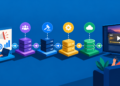
Apple is opening a new chapter in App Store subscriptions by allowing developers to bundle their services together for the first time. Announced at WWDC 2026, the change lets developers partner with one another to offer subscription packages that combine multiple apps at a discounted price, creating a model that looks increasingly familiar to anyone following the streaming business.
The move extends Apple’s existing App Bundles program beyond a single developer’s portfolio and introduces a new mechanism for app makers to improve retention, increase subscriber value, and reach customers through partnerships instead of pure acquisition spending.
Every Subscription Market Eventually Finds the Bundle
For years, streaming companies have used bundles to solve two persistent problems: customer acquisition costs and churn.
Disney packages Disney+, Hulu, and ESPN. Wireless providers bundle streaming services into larger consumer packages. Media companies increasingly view subscriptions as products that work better together than they do alone.
Apple is now giving app developers access to the same strategy.
The economics are straightforward. If two subscription apps serve similar audiences, offering them together at a discounted rate can create more value for consumers while increasing the likelihood that subscribers remain within both ecosystems.
The result is a larger subscription relationship instead of a collection of smaller ones.
The New App Store Growth Hack Is Retention
Most subscription businesses spend enormous amounts of energy trying to acquire users. The harder challenge is keeping them.
The average consumer regularly evaluates which subscriptions deserve a place on their monthly credit card statement. Every standalone service faces the same question: is this worth paying for another month?
Bundles change that equation.
A productivity app paired with a calendar service becomes more difficult to cancel. A creative suite that combines photo editing, video creation, publishing tools, and cloud storage becomes more deeply integrated into a user’s workflow.
The more value attached to a subscription relationship, the less likely users are to leave.
That’s why bundling has become one of the most important tools across streaming, software, telecommunications, and digital media.
Apple Is Turning Developers Into Distribution Partners
The announcement also creates a new category of partnership opportunities inside the App Store.
Historically, subscription developers have competed aggressively for visibility, downloads, and customer attention. Apple’s new framework creates incentives for collaboration.
Developers with complementary products can now market together, share customer acquisition opportunities, and build packages that neither company could offer independently.
A task management app might bundle with a note-taking service. A fitness app could partner with a nutrition platform. A photography tool could join forces with a social publishing product.
Those partnerships effectively create new distribution channels without requiring developers to build entirely new products.
Suites Could Be the Real Land Grab
Apple also introduced a new concept called “Suites,” subscription packages that aren’t available as standalone purchases.
That may prove more important than the bundles themselves.
Suites give developers the ability to package products together as entirely new offerings rather than simply discounting existing subscriptions. Instead of asking consumers to evaluate individual apps, developers can create broader subscription experiences designed around specific use cases or customer needs.
Streaming companies have increasingly moved in this direction as well. Consumers are buying entertainment packages, sports packages, and premium bundles rather than thinking about every individual service separately.
The same behavior could emerge within software.
As subscription markets mature, category-based packages often become easier to sell than individual products.
The App Store Is No Longer Just a Store
The broader significance of Apple’s announcement is that it pushes the App Store further away from its origins as a download marketplace and deeper into subscription commerce.
Growth across mobile software increasingly depends on recurring revenue, customer lifetime value, and retention rather than one-time purchases. Apple’s latest changes give developers another lever to improve those metrics while encouraging a more interconnected ecosystem of subscription products.
The strategy mirrors what has already happened across streaming. As markets mature and customer acquisition becomes more expensive, companies look for ways to increase value through packaging.
Apple is now giving app developers a framework to do exactly that.
The Streaming Wars Take
Apple’s new bundling system isn’t really about discounts. It’s about retention.
Streaming services discovered years ago that bundles reduce churn, increase customer lifetime value, and make subscriptions harder to cancel. Apple is now extending that playbook to the broader App Store economy.
Developers gain a new acquisition and retention tool. Consumers get more value from subscription spending. Apple strengthens the economics of recurring revenue across its ecosystem.
The companies that move first won’t be the largest developers. They’ll be the ones that identify overlapping audiences and build packages that solve multiple customer needs at once.
That’s exactly how the streaming bundle evolved, and Apple is betting the same dynamics will reshape the App Store.
The Streaming Wars is intentionally ad-free
We don’t run display ads. Not because we can’t, but because we don’t believe in them.
They interrupt the reading experience. They cheapen the work. And they burn advertisers’ money on impressions nobody actually wants.
So we chose a different model.
We say the things people in this industry are already thinking but don’t say out loud. We connect the dots beyond the headline and focus on explaining why things matter to the people working in this business.
If you believe industry coverage can exist without clutter and interruption, you can support it here → SUPPORT TSW.
Support is optional. But it directly funds research and continued coverage — and helps prove this model can work.
Support TSW →