
People Inc. grew licensing and other revenue 49% to $52.7 million in the third quarter, helping offset a nearly 70% decline in Google search referrals over the past several years. Digital revenue still increased 2% to $288.5 million despite a 26% drop in core website sessions.
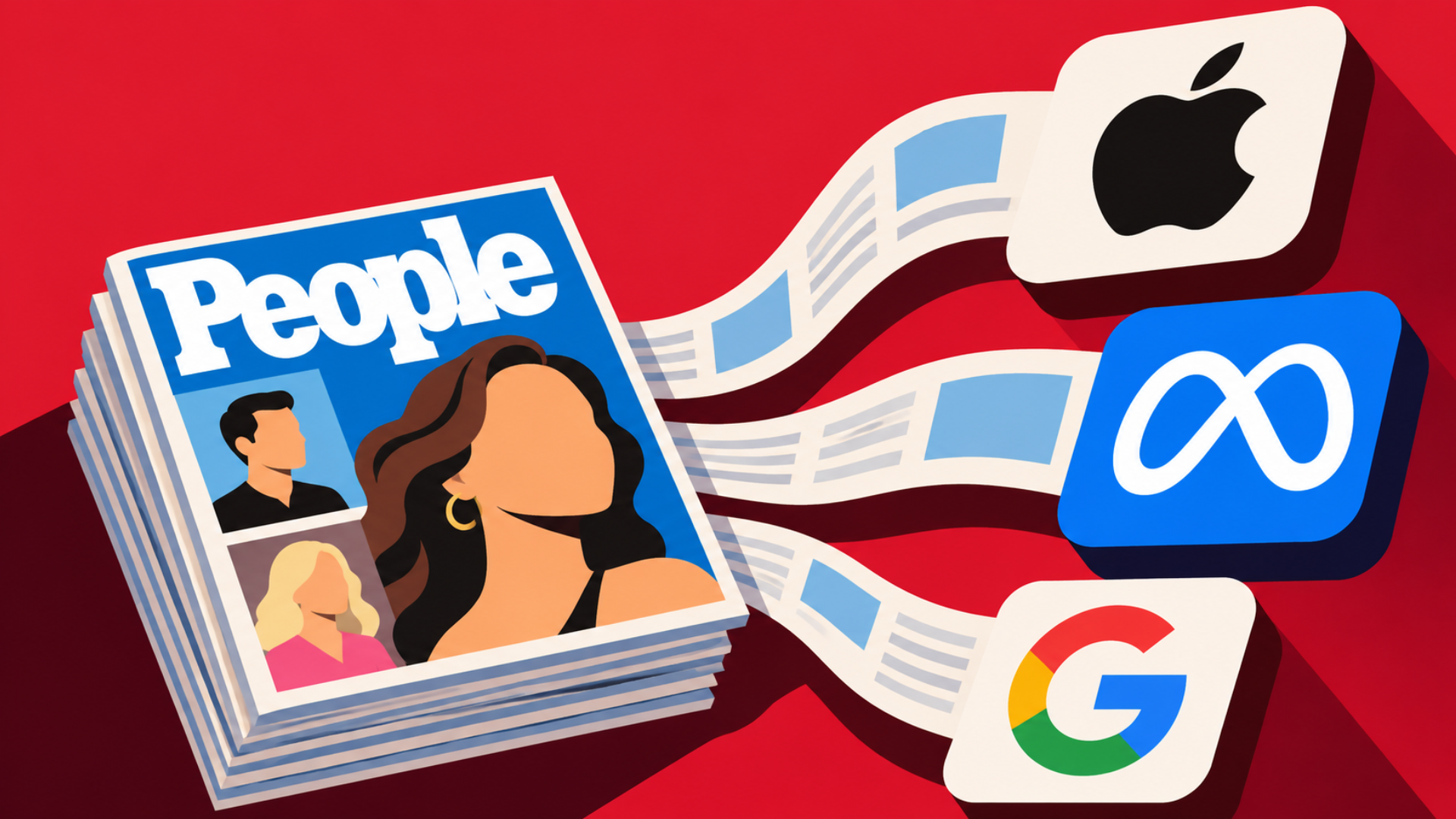
People is replacing lost search-driven revenue through content syndication, AI licensing and advertising that doesn’t depend on website visits. The shift reduces its exposure to Google while making commercial relationships with Apple, Meta and other distributors increasingly important. Those companies can pay for content while retaining control over how audiences discover and consume it.
Google Keeps the Click
Google’s AI Overviews now appear on more than 90% of the search queries that historically referred readers to People’s websites, CEO Neil Vogel told investors. Core sessions fell 26% to 1.61 billion in Q3, contributing to an 8% decline in digital advertising revenue to $161.9 million.
Higher advertising rates partially offset the loss of impressions, but session-based revenue still declined 6% to $163.6 million. That business accounts for 57% of People’s digital revenue.
Google can increasingly answer searches for recipes, entertainment news and financial information without sending users to the publishers supplying that content. Fewer visits mean less advertising inventory, fewer affiliate opportunities and fewer chances to convert readers into registered users.
The company has been planning around an internal scenario it calls “Google Zero.” Vogel expects search referrals to keep declining, although the absolute losses should moderate as the remaining referral base shrinks.
People’s financial strategy now assumes the traffic isn’t coming back.
43% Beyond the Website
Non-session revenue increased 15% to $125 million, representing 43% of People’s digital business.
That growth added approximately $16 million in quarterly revenue, more than enough to absorb the $10.6 million decline in session-based revenue.
Licensing and other revenue accounted for $17.3 million of the increase, rising from $35.4 million to $52.7 million. The remaining non-session businesses collectively declined by approximately $1.3 million, making licensing the primary source of growth in the category.
The licensing figure includes content syndication, AI agreements and traditional brand royalties. CFO Tim Quinn said most of the increase came from content licensing, particularly Apple News and other syndication relationships, alongside the Meta agreement signed in December 2025.
Growth will become harder to sustain as those agreements mature. People expects fourth-quarter licensing growth to moderate to approximately 20% as it reaches the anniversary of the Meta deal.
Management expects non-session businesses to approach half of digital revenue by late 2027. That would leave the publisher considerably less dependent on website traffic, with more revenue tied to licensing contracts, sponsorships and advertising sold beyond its owned properties.
Apple Owns the Meter
Apple News has become an important contributor to People’s licensing growth.
The arrangement uses a revenue share tied to time spent and content consumed. People can also sell advertising within the Apple News experience.
That gives the publisher a way to earn more as audiences engage with its content. Apple, however, controls the application, content presentation and consumption environment that determine those payments.
People distributes content from approximately 15 brands through its broader syndication relationships, giving it multiple sources of engagement beyond any single publication.
The company doesn’t disclose Apple News revenue separately, making it difficult to determine how much licensing income depends on Apple or what People earns relative to the engagement its content generates.
As licensing becomes a larger share of revenue, those economics take on greater importance.
An owned-site visit can produce advertising impressions, affiliate commissions, registrations and subscription opportunities. Apple News pays People through a commercial arrangement in which the distributor controls the consumption experience.
Future negotiations will increasingly depend on revenue-sharing rates, consumption measurement, advertising rights and access to audience information.
People gains distribution and revenue without having to acquire every reader directly. Apple retains control over where that consumption takes place and how much of its value flows back to the publisher.
Meta Keeps the Customer
People’s multiyear agreement with Meta gives Meta AI access to current content from brands including People, Allrecipes, Better Homes & Gardens, Food & Wine and Investopedia.
The December 2025 agreement includes attribution and links to the publisher’s websites. Financial terms remain undisclosed.
Meta gets professionally produced information across entertainment, food, health and personal finance. People gets paid for making that content available.
When someone consumes an answer entirely within Meta AI, Meta retains the user relationship. Attribution may generate a referral, but it doesn’t automatically create an advertising impression, registration or subscription opportunity for the publisher.
People also has AI licensing relationships with OpenAI and Microsoft, giving it multiple buyers for its content.
The economics depend on the rights granted, payment structure, usage and opportunities for readers to reach the publisher’s properties.
The same pressure is spreading across publishing. Google’s paid AI news agreements with more than 400 publishers create additional licensing revenue while Google retains control over how that content appears in its products.
As AI services incorporate more licensed material, publishers have an incentive to negotiate usage reporting, clearly defined rights and compensation that reflects growing consumption.
People has multiple buyers for its content. Its negotiating power will depend on what those distributors are willing to pay, which rights they need and how easily they can replace the material.
Reach Isn’t Revenue
People recorded 26 billion off-platform views during Q3, spanning activity across social media, syndication and other distribution channels.
Vogel described the figure as directional because the activity supports different business models. Some consumption generates revenue based on views, while other activity supports sponsorships and broader advertising packages.
The publisher now operates more than 50 social-video series across its brands, creating programming that can attract audiences who may never visit its websites.
InStyle’s The Intern offers season-long branded-content sponsorships alongside related social placements and events. The People magazine franchise Sexiest Man Alive generated 50% more revenue this year as the company expanded it across video, podcasts, apps and other distribution outlets.
People is also selling advertising beyond its own properties through D/Cipher. More than half of that business recently came from connected-TV targeting, according to management.
That gives advertisers access to People’s audience and content information across CTV inventory, generating advertising opportunities independent of website traffic.
These businesses monetize different assets. Social programming generates sponsorship revenue, licensing sells content rights and D/Cipher extends the publisher’s advertising capabilities into distribution environments it doesn’t own.
The 26 billion views don’t carry a common advertising rate. Their financial value depends on how each format earns revenue, what it costs to produce and distribute, and how much People retains after its partners take their share.
Six Million to Monetize
MyRecipes and People VIP have generated more than 6 million combined app downloads or registrations, giving the company a growing audience for its direct consumer products.
People has introduced paid subscriptions around both properties but hasn’t disclosed how many users have converted into paying customers.
A registered user creates opportunities for personalized services, recurring payments, commerce and direct communication without relying on a Google referral or third-party content feed.
Paid conversion and retention will determine how much recurring revenue those relationships produce.
The pressure to establish identifiable audiences extends across digital media. Reddit’s plan to restrict logged-out access as Google referrals decline reflects the growing economic value of direct customer relationships.
For People, subscription growth would also strengthen its position in licensing negotiations. A publisher generating more revenue from customers it controls has greater flexibility when evaluating distribution agreements.
Six million downloads or registrations establish a potential subscription audience. The financial return will depend on how many users pay, how long they stay and what it costs to retain them.
Fewer Clicks, Fewer Jobs
People eliminated 195 positions on October 29, approximately 6% of its workforce, with most reductions affecting print and legacy web operations.
The company expects $15 million to $20 million in fourth-quarter severance and employee-separation expenses. Management also said it had added 320 employees earlier in 2026 as investment shifted toward subscriptions, social video, licensing, events and other growth areas.
The pressure extends beyond declining search traffic.
Print revenue fell 16% to $127.6 million in Q3, while total publishing revenue declined 5% to $409.9 million. Publishing adjusted EBITDA dropped 7% to $70.4 million.
Digital adjusted EBITDA also declined 2% despite digital revenue increasing 2%.
Licensing has helped stabilize revenue, but the investment required to develop new products and distribution channels is still weighing on digital profitability.
The publisher needs journalists, editors, producers and commercial teams to maintain the brands attracting licensing partners, sponsors and subscribers.
Reductions in legacy operations can protect margins as traffic declines. People must preserve enough investment in content to sustain the intellectual property and editorial brands supporting its newer revenue streams.
The Streaming Wars Take
Licensing renewals will carry greater financial weight as more of People’s revenue comes from distributors that control the audience relationship.
Apple News provides a revenue share connected to consumption. Meta’s financial terms haven’t been disclosed, leaving open whether compensation increases with usage or follows another contractual structure.
That difference changes the economics for content owners.
A fixed licensing fee provides predictable revenue but may limit participation in growing consumption. Usage-based agreements can offer additional upside, provided both parties agree on how activity is measured, verified and paid.
Publishers also have to account for the advertising, affiliate and subscription opportunities they surrender when audiences consume their content entirely within another company’s product.
Those considerations extend across streaming, content syndication and third-party distribution. A rights owner licensing programming into an aggregator faces similar questions about compensation, audience data, discovery and the value of direct customer access.
People’s portfolio gives it negotiating advantages. Its brands reach audiences across entertainment, food, finance, health and lifestyle categories, creating multiple commercial relationships with advertisers and distributors.
That breadth offers alternatives, although Apple, Meta and other large technology companies can also license competing content.
The financial consequences will become clearer as non-session businesses approach half of digital revenue. Renewals will test pricing power, direct subscriptions will test the value of owned audiences, and digital margins will show whether the newer revenue streams can support the investment required to sustain them.
People has shown it can grow digital revenue while Google search referrals decline. Maintaining that growth profitably will require stronger licensing economics and a larger base of customers it can reach directly.
Apple and Meta control their consumer experiences. People’s ability to negotiate payment for the value its content creates will determine how much of that business it can retain.
The Streaming Wars is intentionally ad-free
We don’t run display ads. Not because we can’t, but because we don’t believe in them.
They interrupt the reading experience. They cheapen the work. And they burn advertisers’ money on impressions nobody actually wants.
So we chose a different model.
We say the things people in this industry are already thinking but don’t say out loud. We connect the dots beyond the headline and focus on explaining why things matter to the people working in this business.
If you believe industry coverage can exist without clutter and interruption, you can support it here → SUPPORT TSW.
Support is optional. But it directly funds research and continued coverage — and helps prove this model can work.
Support TSW →