
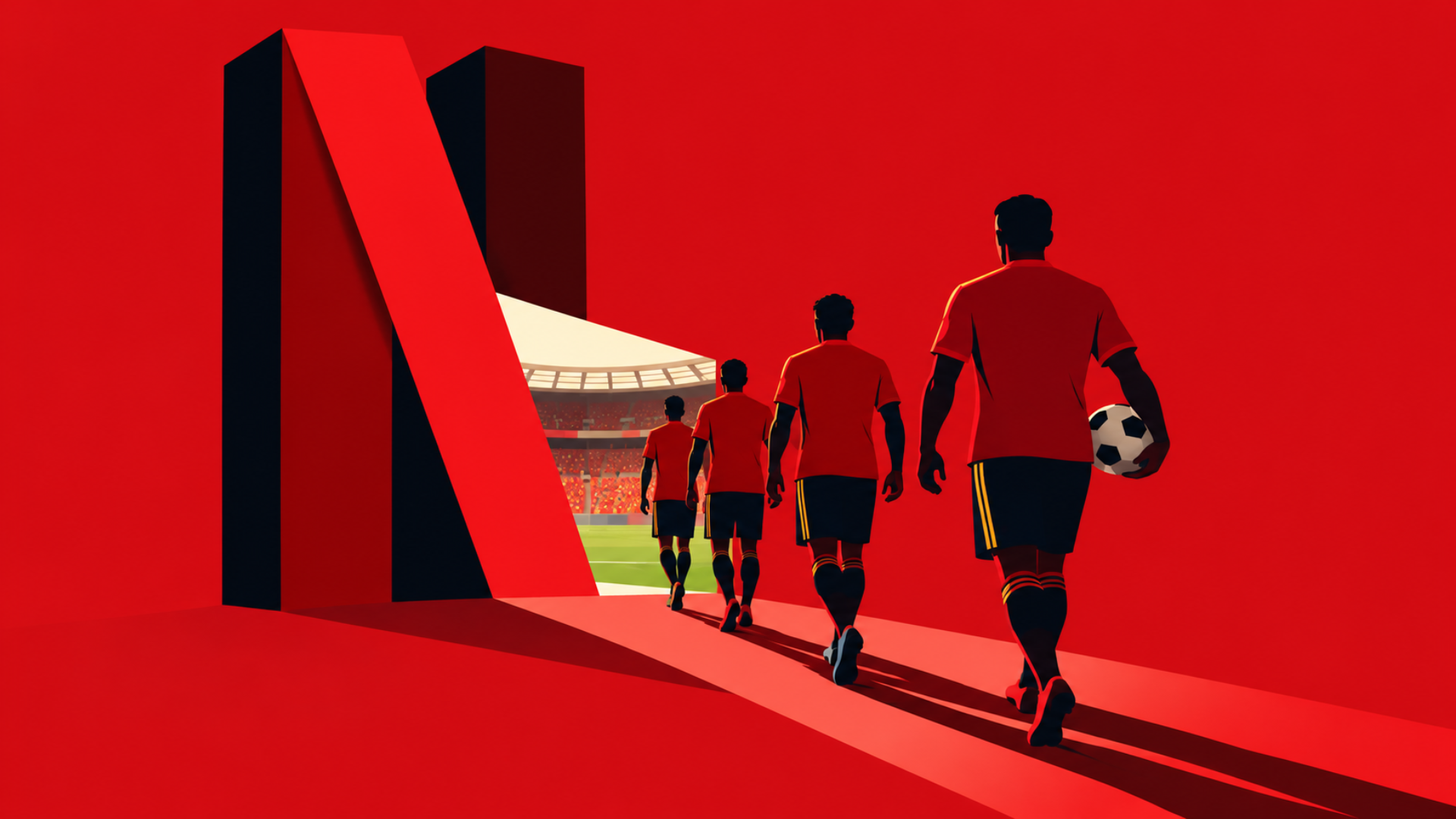
Netflix has acquired exclusive rights to the 2030 FIFA World Cup in Spain and Andorra, taking the full-tournament streaming position DAZN occupied in Spain in 2026. Netflix will carry all 104 matches live, while selected games remain available free in Spain through an arrangement that includes a national free-to-air broadcaster.
The deal moves the tournament’s complete paid viewing offering into a general-entertainment streaming service. Netflix can use the event to attract subscribers, reactivate former customers, sell advertising and promote its existing programming without building a separate sports subscription business.
Netflix Takes Over DAZN’s World Cup Distribution Role With a Broader Subscription Business
Spain’s 2026 World Cup coverage already combined complete paid streaming access with selected free broadcasts.
DAZN carried all 104 matches through a channel produced by GRUP MEDIAPRO, while RTVE showed a selection of games free, including Spain’s matches and the tournament’s biggest rounds.
The 2030 agreement preserves that basic division. One match per matchday will be available free in Spain. Netflix will also make a package containing every Spain match, both semifinals and the final available to a national free-to-air broadcaster. The broadcaster hasn’t been named.
Netflix takes the valuable position DAZN held in 2026: the only single service where fans can watch the complete competition.
The subscription economics surrounding those rights are different.
DAZN distributes live sports throughout the year, including domestic and international soccer competitions. Its World Cup offering gave sports customers another reason to subscribe or purchase additional access.
Netflix already has an established entertainment catalog and billing relationships with Spanish households. Some World Cup viewers will already subscribe for films and series, giving the company an opportunity to monetize existing members alongside new customers.
That broader customer base changes how Netflix can justify its rights investment. The company can evaluate acquisition, retention, advertising and engagement across its entire entertainment business rather than requiring tournament subscriptions alone to cover the cost.
Spain’s Title Defense Gives Netflix Four Years to Convert National Interest Into Subscriptions
Spain enters the 2030 tournament as the 2026 world champion and one of three main host countries alongside Portugal and Morocco. Argentina, Paraguay and Uruguay will stage centenary celebration matches.
Netflix has almost four years to connect its service with an event that will generate national attention long before kickoff.
Qualifying, venue decisions, squad selections and the tournament draw give the company recurring promotional opportunities. Spain’s title defense adds a local reason for audiences to follow those developments.
Netflix can distribute that promotion alongside programming Spanish households already watch.
The company’s soccer documentaries include LALIGA: All Access, Captains of the World, Beckham and The Figo Affair. Those titles provide opportunities to connect viewers interested in the sport with the upcoming live event.
Netflix can also promote the tournament through its broader Spanish and international entertainment catalog, reaching members who don’t regularly seek out live soccer.
The existing app, subscription infrastructure and CTV distribution eliminate the need to establish a new consumer service before the tournament.
The remaining challenge is converting World Cup interest into incremental revenue. Households that subscribe only for the competition may cancel after the final, while existing members might watch the matches without generating additional subscription revenue.
Netflix Can Justify Live Sports Spending Through Signups, Retention and Advertising
Netflix’s own engagement data explains why it continues buying premium live events.
During its second-quarter 2026 earnings discussion, co-CEO Greg Peters said live programming was expected to account for approximately 5% of the year’s content budget while generating roughly 1% of total viewing hours.
He also disclosed that six of Netflix’s 10 biggest new-member signup days over the previous five years came from live events.
The economics of Netflix’s live programming investment depend on customer acquisition, monetization and retention alongside viewing time.
A World Cup offers dozens of scheduled events over approximately six weeks. Each game creates an opportunity to attract viewers, promote subsequent matches and direct customers toward programming outside the tournament.
Spain’s participation also creates concentrated subscription demand. Fans know when the competition starts, when the national team plays and when the elimination rounds begin.
That concentrated interest can support acquisition campaigns with a defined deadline.
Netflix hasn’t disclosed the rights fee, so the acquisition and retention needed to justify the investment can’t yet be calculated. The company’s existing subscriber base also means some of the tournament’s largest audiences may come from households already paying Netflix.
Free TV Keeps Spain’s Biggest Matches Accessible While Netflix Sells the Full Tournament
The free-to-air arrangement gives Spanish audiences access to the national team’s games and the tournament’s decisive rounds without requiring a Netflix subscription.
That reduces the pressure on casual viewers to pay for the full competition.
A household interested primarily in Spain’s title defense can follow the national team through the free package. Fans who want every group-stage matchup, simultaneous fixtures and additional knockout games will need access to Netflix’s complete schedule.
Netflix is selling the breadth of the competition.
Its experience with the 2026 World Baseball Classic in Japan offers evidence that national-team interest can extend into other matches.
Netflix said 55% of the tournament’s viewers in Japan watched at least one game that didn’t involve Japan. The Japan-Australia matchup also became the most-watched title in Netflix’s history in that country.
Those results don’t establish how Spanish fans will behave in 2030, but they demonstrate why a complete tournament package has commercial value beyond the host country’s fixtures.
The full schedule creates opportunities to retain viewers between national-team games and increase consumption across the tournament.
Free distribution also preserves broad public exposure while Netflix retains the exclusive complete offering. The eventual free-to-air partnership will determine how the audiences for those two products overlap.
Netflix Gets 104 Live Matches to Expand Its Advertising Business
Netflix hasn’t disclosed its World Cup advertising structure, available inventory or commercial terms.
The tournament nevertheless creates opportunities across live matches, shoulder programming and related content.
Netflix plans pregame, halftime and postgame coverage, a daily recap on matchdays and additional programming ahead of the competition. These shows provide potential advertising and sponsorship opportunities beyond the matches themselves.
The company already operates an advertising-supported subscription plan in Spain and has expanded its targeting, programmatic buying and measurement capabilities.
Netflix has also been developing dynamic ad insertion for live programming, allowing advertisers to purchase inventory through more automated channels.
How those capabilities apply to the World Cup will depend on the commercial terms attached to the rights and the advertising arrangements Netflix establishes before 2030.
The free-to-air package adds another consideration. Broad access to Spain’s biggest matches increases the tournament’s overall reach, but the distribution arrangements will determine which audiences Netflix can monetize directly.
Subscription pricing, advertising inventory and the free-match schedule will therefore shape the commercial return from the rights.
Netflix’s Regional Sports Deals Limit Rights Costs While Targeting Local Demand
Netflix’s sports portfolio continues to vary substantially by territory.
It holds the 2027 and 2031 FIFA Women’s World Cup rights in the United States and Canada, carried the 2026 World Baseball Classic in Japan and now controls the complete 2030 men’s World Cup package in Spain and Andorra.
The 2026 World Baseball Classic’s regional rights structure illustrates how one event can support different distributors in different countries.
Netflix can concentrate its investment in markets where national interest, existing membership and advertising opportunities justify the rights cost.
Spain’s home World Cup creates a different commercial opportunity from the baseball tournament in Japan or the Women’s World Cup in North America.
Territory-specific acquisitions also limit Netflix’s exposure to large global sports commitments. The company can establish a complete offering for selected events while keeping its broader entertainment business intact.
The tradeoff is that viewers in different countries receive substantially different sports catalogs. Netflix gains flexibility in rights spending without creating a uniform global sports service.
The Streaming Wars Take
Netflix’s next decision is how directly to charge for the complete World Cup schedule.
Including every match in existing subscription plans would reduce purchase friction and could expand viewing and advertising reach. A tournament-specific premium offering could generate more revenue from committed soccer fans while making access more expensive.
Netflix hasn’t announced which approach it will take.
The company’s broad entertainment catalog creates another opportunity after the tournament ends. Viewers who join for soccer can be directed toward series, films and other programming, giving Netflix additional ways to retain them.
DAZN can make a different retention argument through its continuing portfolio of live sports. Its 2026 World Cup viewers had access to a service built around recurring sports consumption.
Netflix will have to determine whether its entertainment catalog can retain enough event-driven subscribers to support the rights investment.
The competitive pressure extends beyond DAZN. Premium sports rights sellers now have a potential buyer that can evaluate the same tournament against an existing entertainment subscription business, advertising operation and global distribution infrastructure.
Sports-focused services may need to justify bids against competitors with additional ways to recover their investment.
For the 2030 World Cup, Netflix will control the complete viewing offering in Spain and Andorra. Its ability to turn a short tournament into lasting subscription and advertising revenue will determine how aggressively that model can compete for future regional sports rights.
The Streaming Wars is intentionally ad-free
We don’t run display ads. Not because we can’t, but because we don’t believe in them.
They interrupt the reading experience. They cheapen the work. And they burn advertisers’ money on impressions nobody actually wants.
So we chose a different model.
We say the things people in this industry are already thinking but don’t say out loud. We connect the dots beyond the headline and focus on explaining why things matter to the people working in this business.
If you believe industry coverage can exist without clutter and interruption, you can support it here → SUPPORT TSW.
Support is optional. But it directly funds research and continued coverage — and helps prove this model can work.
Support TSW →