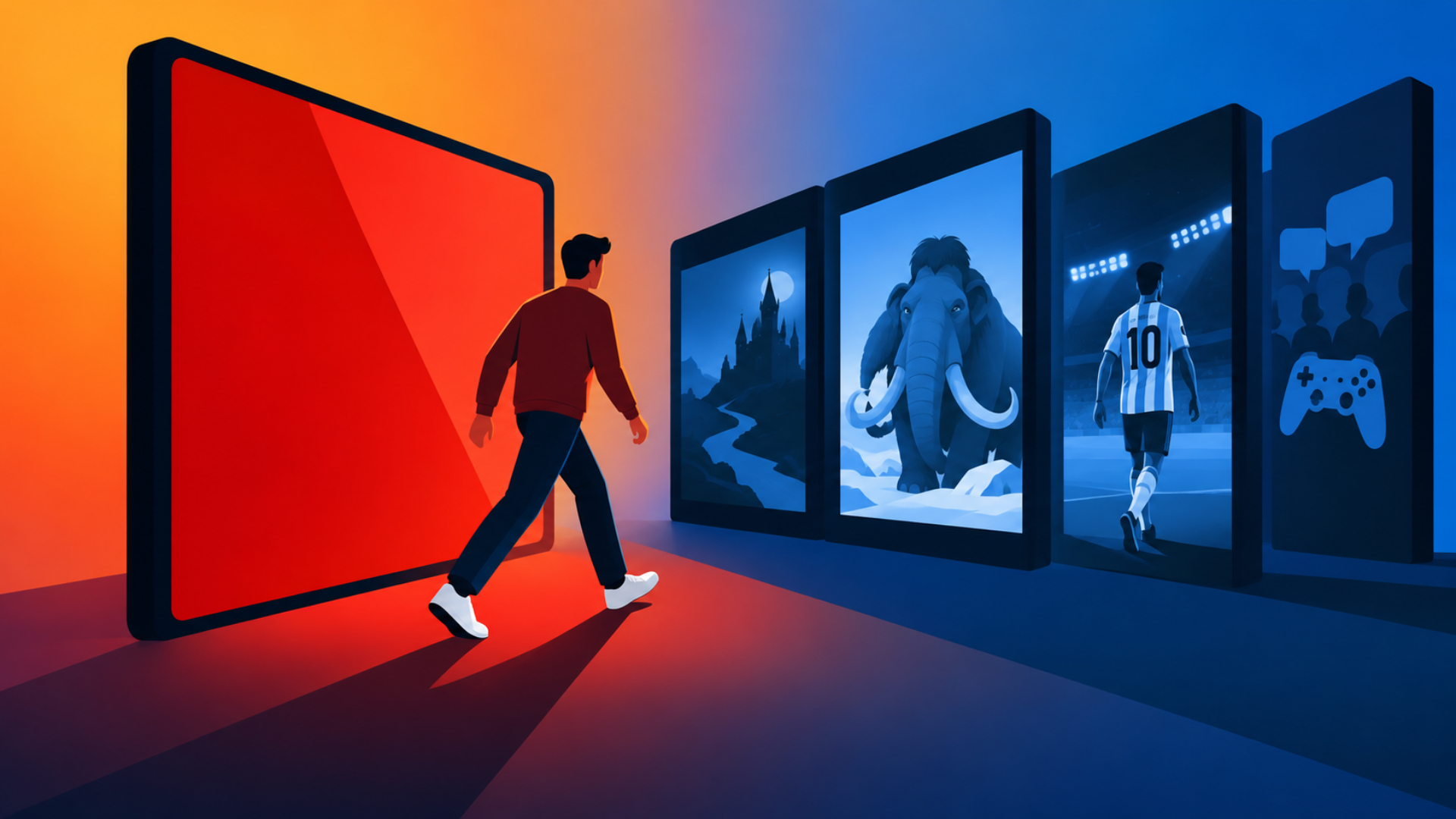
Disney is getting paid to put Percy Jackson on Netflix. Spotify just renewed Joe Rogan’s deal even though millions of people watch him on YouTube. And ViX carried Messi’s Argentina farewell, the kind of event that can send fans scrambling for a subscription they’ll probably cancel before the next billing cycle.
These companies are finding different ways to make money from audiences they can’t necessarily count on keeping. Disney gets a licensing fee. Spotify sells advertising around a show distributed well beyond its own service. ViX has several ways to monetize a soccer fan whose interest may last exactly 90 minutes.
The economics get interesting when the customer has no intention of sticking around. A viewer can be valuable without becoming a reliable monthly subscriber. The question is whether the company selling the programming has a way to collect that value before the audience moves on.
Disney Gets Netflix’s Money Before It Gets Netflix’s Viewers
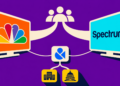
Disney’s new licensing arrangement with Netflix puts the first two seasons of Percy Jackson and the Olympians on Netflix for three months, starting October 4. Season 3 premieres November 20 on Disney+, which means Netflix gets 47 days to introduce people to the show before Disney has a new season to sell them.
The five existing Ice Age films are getting the same treatment ahead of Ice Age: Boiling Point, which arrives in theaters February 5.
It’s a pretty good arrangement for Disney. Netflix pays for programming that’s already been produced, and Disney gets to put familiar franchises in front of an enormous audience without spending another pile of money trying to reach those households directly.
The obvious hope is that some of those viewers eventually follow the franchise to Disney+ or the theater. But Disney has already created a licensing transaction before any of that happens.
The Netflix audience might become Disney’s next group of customers. It might also finish Percy Jackson, watch something else and never think about Disney+ again. The licensing fee doesn’t require Disney to win that second transaction.
Netflix has a pretty nice arrangement, too. It gets recognizable programming without financing the original production. It doesn’t need permanent access to those titles to generate viewing during the window.
That logic extends to gaming, where Netflix’s decision to license Jackbox’s party games shows how much a distributor can get without buying the underlying business. Netflix gets Drawful 2, Fibbage 4 and Quiplash 3, while Jackbox keeps its studio, catalog and growing smart-TV ambitions. Netflix gets proven games inside its subscription without taking on the cost of running another development studio.
For Disney, the licensing revenue is contractual. The Disney+ upgrades and extra movie tickets are potential upside. Disney can justify the deal through the fee it collects while leaving room for additional returns if Netflix exposure makes the next release more valuable.
That gives the licensing window two possible payoffs, and only one of them depends on the audience following the franchise somewhere else.
ViX Doesn’t Need Every Messi Fan to Stick Around
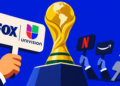
Messi’s Argentina farewell gave ViX the kind of acquisition opportunity most streaming services would love to have. An enormous amount of fan interest concentrated around a specific event, with a hard start time and a clear reason to sign up.
It also came with an obvious challenge. A lot of those fans were looking for one match, not another monthly streaming bill.
That makes the economics of ViX’s event-driven audience especially interesting. A fan who signed up for the match and canceled immediately afterward may have behaved exactly as expected. Spending heavily to convince that person to become a year-round subscriber could make the acquisition less profitable.
ViX already has a product that acknowledges this behavior. Its Premium Passes offer three, seven, 14 or 30 days of access in supported markets. They provide a way to sell a limited period of entertainment without asking somebody to sign up for a subscription that automatically renews.
Sports availability depends on licensing and regional restrictions. It’s unclear whether Messi’s farewell qualified for a Premium Pass. But the existence of the product raises a pretty important commercial question: why force a customer who wants one event into a monthly subscription when there’s potentially a more natural transaction to sell?
A three-day pass won’t automatically make more money than a month of ViX Premium. Some viewers who would have paid for a full month might buy the cheaper option instead. But others may pay for a pass who wouldn’t have subscribed at all.
The way those customers arrive also changes how much they’re worth.
Someone who signed up for ViX directly can cancel Premium and remain connected through ViX Gratis. That gives ViX another chance to engage them through free programming, advertising and future sports promotions.
A viewer who subscribed through Prime Video Channels has a different relationship. Amazon handles billing and renewal, and ViX doesn’t automatically inherit that customer inside its own app when the subscription ends. Amazon gets paid for reducing the friction of signup, while ViX gives up some margin and customer control.
Both can be perfectly reasonable ways to acquire a sports fan. Their profitability depends on what each customer costs to acquire and how much revenue remains after that cost.
A fan who pays once, watches the match and disappears might produce a positive return. Another who stays for several months after an expensive acquisition campaign might contribute less profit than expected. And a direct customer who cancels Premium but keeps watching ViX Gratis can still generate advertising revenue and potentially return when the next big match comes along.
ViX’s actual acquisition numbers from Messi’s farewell haven’t been disclosed. But the event demonstrates why the usual subscriber metrics can miss an important part of the business. Customers who arrive with very specific viewing intentions shouldn’t automatically be evaluated against the same retention expectations as people who subscribe for year-round programming.
That puts sports rights packaging squarely into the acquisition equation.
If a contract doesn’t allow limited-duration access, ViX loses the ability to test whether selling the event directly produces better economics than pushing everyone into a recurring subscription.
The rights holder might prefer a minimum monthly subscription price. ViX might make more money offering a three-day pass. Those incentives need to be worked out before the rights agreement is signed, because the product ViX is allowed to sell can be just as important as the audience the event attracts.
Spotify Can Sell Rogan Without Making Everybody Use Spotify
Spotify’s renewed Joe Rogan agreement offers another way to separate audience monetization from subscriber ownership.
The company has signed a new multiyear deal that keeps The Joe Rogan Experience available on Spotify, YouTube, Apple Podcasts, Amazon Music and other services.
Spotify originally paid for exclusivity when it brought Rogan onto the service in 2020. That arrangement gave listeners a reason to use Spotify if they wanted the show.
The 2024 agreement opened distribution back up. The latest renewal keeps that model in place, with Spotify retaining its licensing and advertising-sales relationship.
Rogan has more than 18 million Spotify followers and over 21 million YouTube subscribers. Those audiences overlap, but they demonstrate how far the show reaches across competing services.
Spotify can participate commercially in that broader audience through its advertising business. It doesn’t need every Rogan listener to consume the show inside Spotify to have a relationship with the advertisers buying access to it.
YouTube gets the viewing activity, recommendation opportunities and audience relationships created when people watch Rogan there. Spotify pays to maintain a commercial relationship around a show that also makes competing services more attractive to their users.
And Rogan has plenty of bargaining power. His audience is already established across multiple destinations, so Spotify has to offer enough commercial value to justify maintaining the relationship without exclusive distribution.
The financial terms of the renewal haven’t been disclosed. Spotify’s return will depend on how much advertising and sponsorship revenue it can generate from the show relative to the cost of securing those commercial rights.
There’s a pretty straightforward tradeoff here. Spotify gives up exclusive control over where people consume Rogan in exchange for the opportunity to monetize a larger, more widely distributed audience.
That also puts more pressure on Spotify’s advertising operation. The company has to prove that its sales infrastructure, advertiser relationships and ability to package inventory are valuable enough to justify the deal. If advertisers can reach Rogan’s audience through several different channels, Spotify needs to give them a compelling reason to buy through its commercial relationship.
Rogan benefits from preserving access to audiences on services they already use. Spotify benefits when that broader reach generates advertising revenue. YouTube gets a popular show that keeps people watching.
The financial return for each party comes from a different part of the relationship. Spotify can earn money from the show’s commercial rights even when someone else controls the screen.
The Streaming Wars Take
A sports contract that prohibits short-duration passes can eliminate a potentially profitable way to serve occasional fans. A licensing agreement that permits temporary outside distribution can create revenue from programming that’s already been financed. And an advertising agreement that allows broad distribution can preserve a commercial relationship with audiences who prefer someone else’s service.
Those permissions affect what the underlying rights are worth. They belong in the financial model alongside license fees, guarantees and distribution commitments.
The same thinking should apply to audience acquisition.
A customer who subscribes for one event and cancels isn’t automatically a bad customer. If the revenue exceeds acquisition, distribution, rights and servicing costs, the transaction worked. If that customer later watches free programming, generates advertising impressions or returns for another paid event, the economics improve further.
Keeping a subscriber around can get expensive, too. Discounts, promotional offers, additional programming and win-back campaigns all cost money. A longer subscription is worth pursuing when the extra revenue justifies what the company spends to maintain it.
That has consequences for the next budget meeting. Marketing teams shouldn’t get credit for acquiring subscribers without accounting for the cost of keeping them. Rights teams need to understand which transactions their packaging restrictions prevent. And distribution teams should be able to show whether access to another company’s audience produces enough incremental revenue to justify the economics they’re giving up.
There’s still tremendous value in a customer who pays every month and sticks around for years. But a lot of media consumption doesn’t work that way. People show up for a game, a particular show, a creator or a franchise, then move on to something else.
For those audiences, a profitable short-term transaction may be worth more than an expensive attempt to manufacture long-term loyalty.
The commercial opportunity is to sell something that matches the demand people have actually demonstrated.
If a fan is willing to pay for one night, a rights agreement that only lets the company sell a month can leave money on the table.
The Streaming Wars is intentionally ad-free
We don’t run display ads. Not because we can’t, but because we don’t believe in them.
They interrupt the reading experience. They cheapen the work. And they burn advertisers’ money on impressions nobody actually wants.
So we chose a different model.
We say the things people in this industry are already thinking but don’t say out loud. We connect the dots beyond the headline and focus on explaining why things matter to the people working in this business.
If you believe industry coverage can exist without clutter and interruption, you can support it here → SUPPORT TSW.
Support is optional. But it directly funds research and continued coverage — and helps prove this model can work.
Support TSW →