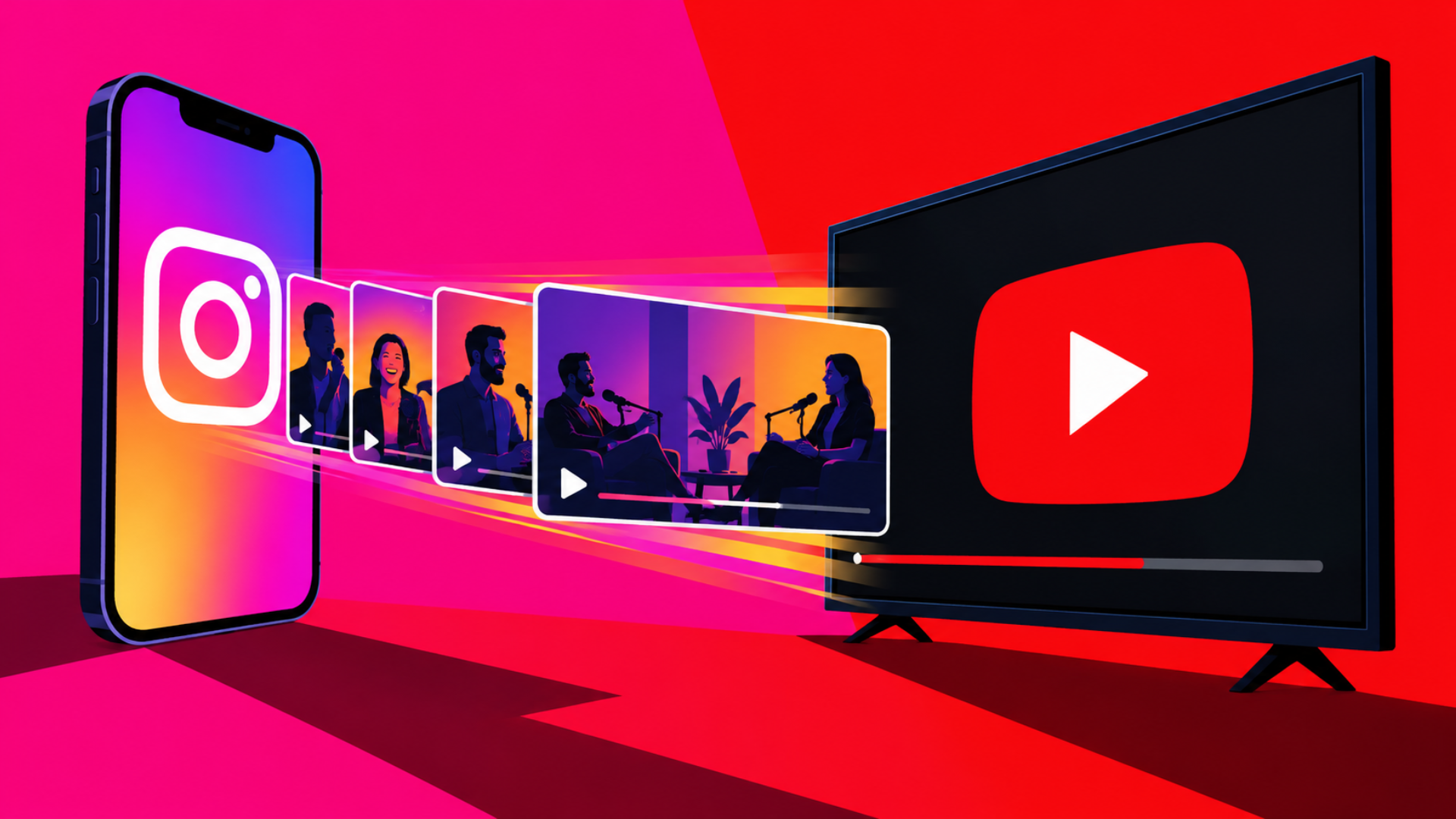
Instagram is testing 90-minute horizontal videos that connect full episodes to Reels while expanding its CTV distribution. The format gives Meta a way to retain viewing time that currently flows from Instagram clips to YouTube, creating opportunities for longer advertising sessions. Instagram still lacks the established creator revenue-sharing model that makes producing and distributing long-form video economically attractive on YouTube.
The new format, called Features, is being tested with select creators in the US and Brazil. It supports podcasts, interviews, comedy specials and other longer programming. Instagram is also testing tools that link up to eight short clips to a full video, along with Series labels for organizing episodic Reels.
Meta is combining short-form discovery, full-length programming and TV distribution inside Instagram. Its ability to turn that distribution into a sustainable advertising business depends on creators supplying the programming and audiences staying long enough to watch it.
Instagram Turns Reels Into Full-Episode Referrals, Threatening YouTube’s Off-App Viewing Traffic
Instagram already supplies discovery for long-form programming that creators monetize elsewhere.
Podcasters, comedians and interview hosts publish short clips through Reels to attract new viewers. Audiences who want the full episode often move to YouTube, where the creator can monetize the longer viewing session through advertising, sponsorships and other commercial arrangements.
Instagram generates the initial engagement while another service captures the extended viewing time.
Features gives Meta a way to keep those viewers inside Instagram. Creators can publish full horizontal episodes and attach short Reels that direct viewers to the complete program. Instagram can also recommend Features through its main feed and Explore page.
The interview series Subway Takes illustrates the opportunity. The show built an Instagram following of roughly 2.4 million while expanding its longer videos to YouTube and Tubi. Keeping even a portion of that extended viewing inside Instagram would give Meta additional audience time and potential advertising inventory.
The integration also addresses a weakness in Instagram’s previous long-form attempt. IGTV launched in 2018 as a separate product before Instagram discontinued the standalone app in 2022.
Features connects longer programming to the discovery system creators already use. Series provides a separate way to organize episodic Reels, while Clips as Reels links short videos directly to longer content.
For Meta, the opportunity is to reduce the audience traffic Instagram sends to competitors while increasing the amount of programming available for advertising.
For YouTube, the exposure is concentrated among creators whose Instagram audiences currently function as a source of referrals to their full-length videos.
Instagram Expands Across Four TV Systems, Putting Its Ability to Convert Reels Fans Into Viewers to the Test
Instagram for TV now reaches Amazon Fire TV, Google TV, Samsung TVs and Apple TV in the US. Features gives that distribution a format designed for longer viewing sessions.
Podcasts, interviews and episodic shows can sustain TV viewing without requiring audiences to scroll continuously through short videos. Longer sessions could eventually support pre-roll and mid-roll advertising, allowing Meta to compete for spending associated with full-length creator programming.
YouTube already has substantial advantages in the living room.
In August 2026, YouTube accounted for a record 15.8% of total US TV viewing, with usage increasing 6% despite a decline in overall TV consumption. Its growth among adults 50 and older has also strengthened Google’s position in the competition for traditional TV advertising budgets.
Instagram has to establish that its mobile audience will follow creators into longer TV sessions.
The company is still testing the viewing experience. Features currently lacks automated transcripts and subtitles, picture-in-picture viewing and background playback, although Meta plans to add some of those capabilities.
Those limitations create friction for podcasts and interviews, where viewers frequently listen while using other apps or completing other activities.
Meta also faces a tradeoff within Instagram itself. Adam Mosseri previously resisted long-form video because extended viewing could reduce the sharing, messaging and other interactions generated by shorter content.
The commercial return on Features will depend on whether longer sessions produce additional valuable viewing and advertising opportunities without unnecessarily displacing engagement that Instagram already monetizes through Reels.
YouTube Pays Creators 55% of Watch-Page Ad Revenue, Raising Instagram’s Cost of Attracting Full Episodes
YouTube gives eligible creators 55% of net advertising revenue from monetized watch-page video under its Partner Program. Creators can also generate revenue through sponsorships, subscriptions, fan payments and other commercial arrangements.
In September 2025, YouTube said it had paid more than $100 billion to creators, artists and media companies over the preceding four years.
Instagram offers subscriptions, branded-content arrangements and limited performance-based incentives. It hasn’t announced a comparable advertising revenue-sharing program for Features.
Mosseri has discussed potential pre-roll and mid-roll advertising that could support payments to creators, although Meta hasn’t established a broad program, payment rate or launch date.
The financial challenge is substantial.
Mosseri acknowledged that Instagram’s previous attempts at broad creator payments cost significantly more than they generated. Those payments failed to produce enough additional content or improvements in quality to justify the spending.
Long-form programming introduces another economic calculation. A creator producing a weekly interview or comedy show must cover production costs, editing, talent, distribution and promotion. YouTube provides an established way to recover part of those expenses through advertising revenue.
Instagram can offer access to an existing audience, particularly for creators with large followings. The potential revenue from that audience remains less certain.
Meta must determine whether additional advertising from longer viewing sessions can fund meaningful creator payments while covering the costs of serving and distributing the videos.
Without that arrangement, creators have a financial incentive to continue treating YouTube as their primary long-form business.
Instagram Tests Nonexclusive Creator Deals, Leaving Meta to Prove Incremental Returns
Instagram is working on individual arrangements with creators participating in the early Features test. Those agreements don’t require creators to make their programming exclusive to Instagram.
Existing sponsorships and branded-content placements can carry over into Features, and Instagram is exploring opportunities to connect creators with advertisers.
That approach can give Meta programming without requiring it to finance every episode.
It also allows creators to distribute the same show through Instagram, YouTube and other services. A creator can test whether an Instagram audience produces additional consumption while retaining the advertising revenue, search discovery and established subscriber relationships available through YouTube.
For Instagram, nonexclusive distribution reduces the initial cost of recruiting programming. It also limits the amount of exclusive content available to change viewing habits.
YouTube can continue carrying the same episodes while paying creators through its established advertising system.
The early deals may help Instagram demonstrate how full-length video performs with audiences already following the creators. Sustained investment from creators will require evidence that Instagram generates enough additional viewing, sponsorship demand or direct compensation to justify allocating production and promotional resources to the service.
The strongest initial opportunity may come from creators who already finance their shows through brand partnerships. They can distribute existing programming through Features without depending on a new advertising revenue split to cover production costs.
That gives Instagram a practical way to build its catalog while it tests the economics of longer viewing.
The Streaming Wars Take
Nonexclusive distribution gives established creators considerable flexibility in negotiating with Meta. They can keep their YouTube revenue while testing Instagram as an additional destination, reducing the incentive to grant Instagram exclusive programming or preferential release windows.
Meta’s commercial challenge is to demonstrate incremental returns from that additional distribution.
The relevant measures extend beyond uploads and total views. Instagram needs to establish how frequently Reels viewers start full episodes, how much programming they complete, whether they return for subsequent episodes, and how much advertising revenue those sessions can support.
Creator earnings must also justify the production and promotional resources required to build an audience for the longer format.
Individual sponsorship arrangements can help Instagram establish an initial programming supply without immediately committing to broad advertising revenue sharing. Scaling beyond those arrangements will put greater weight on the economics of pre-rolls, mid-rolls and performance-based payments.
YouTube’s existing creator relationships give it an advantage in those negotiations. Its revenue-sharing system allows creators to earn from additional viewing without securing an individual commercial agreement for every show.
Instagram can offer creators another distribution outlet with a large built-in audience. Securing a greater share of their programming investment will require Meta to demonstrate recurring revenue that creators can reasonably expect to earn.
Until that economics case is established, nonexclusive distribution favors the creators: they can expand their reach through Instagram while keeping YouTube at the center of their long-form business.
The Streaming Wars is intentionally ad-free
We don’t run display ads. Not because we can’t, but because we don’t believe in them.
They interrupt the reading experience. They cheapen the work. And they burn advertisers’ money on impressions nobody actually wants.
So we chose a different model.
We say the things people in this industry are already thinking but don’t say out loud. We connect the dots beyond the headline and focus on explaining why things matter to the people working in this business.
If you believe industry coverage can exist without clutter and interruption, you can support it here → SUPPORT TSW.
Support is optional. But it directly funds research and continued coverage — and helps prove this model can work.
Support TSW →