

Editor’s note: This article was updated on September 8, 2026, to include new Ampere Analysis data on U.S. streaming ad loads.
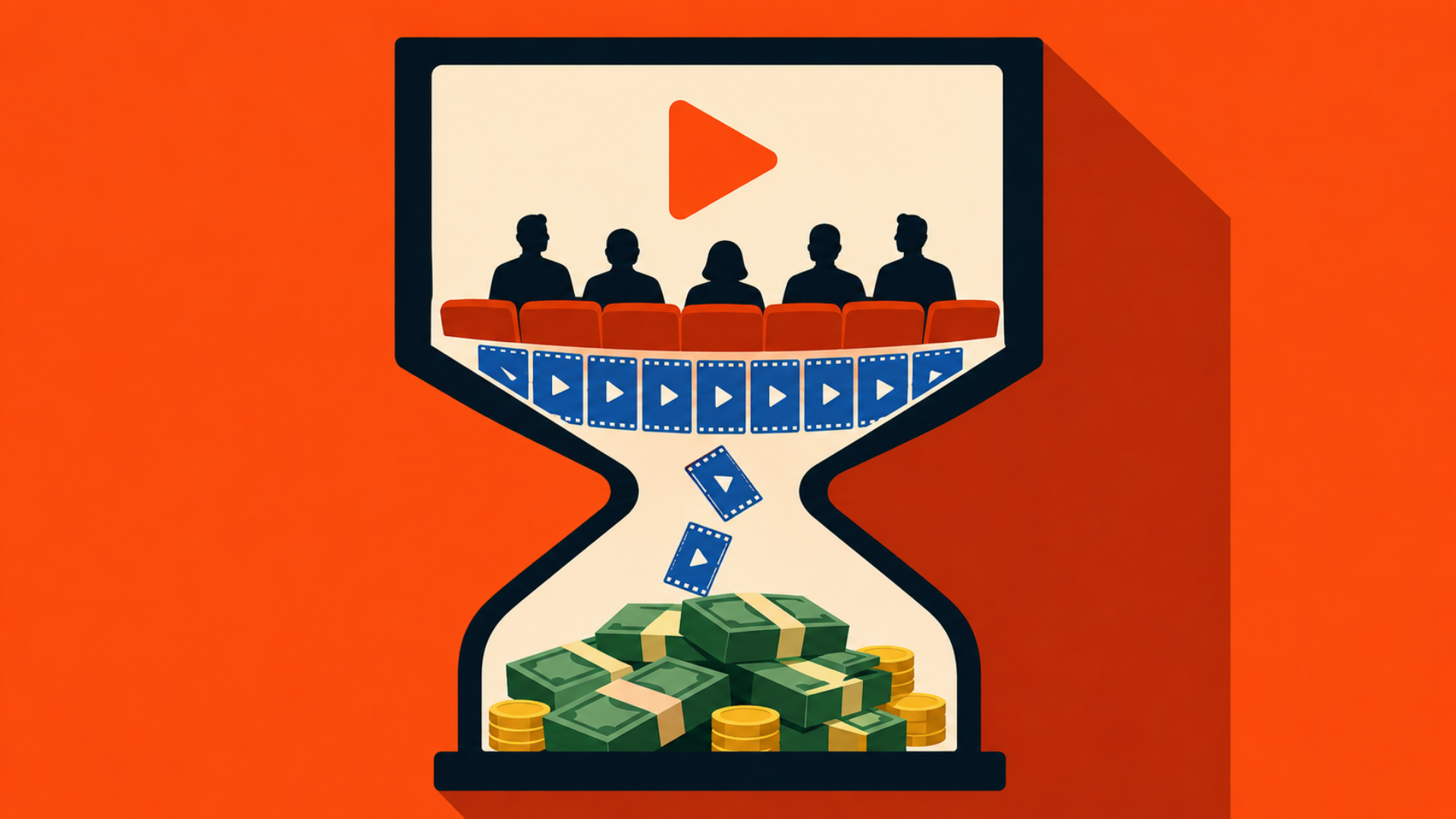
Every streaming ad break is a small market with a hard expiration date.
A service has a limited amount of commercial time. Advertisers have budgets constrained by audience, geography, content, frequency, campaign pacing, creative length, and other rules. The ad system has to match the two before the break passes. Any commercial opportunity that doesn’t monetize is gone.
CPM is only one input into that business. The larger economic question is yield: how much revenue a service actually extracts from the commercial inventory its viewing creates.
IAB projects U.S. digital video advertising, which includes CTV, online video, and social video, to surpass $80 billion in 2026, up 11% year over year. Streaming services compete for CTV budgets inside that broader video market while creating more inventory as ad-supported viewing grows.
Audience growth creates the supply. Monetized fill, pricing, advertiser demand, sales costs, technology fees, and the viewer experience determine what that supply is worth.
An Ad Break Begins With a Right to Sell Time
Streaming advertising starts with an avail, a commercial opportunity that a seller has the right to monetize.
A two-minute break might contain four 30-second ads, eight 15-second ads, or some combination. The exact structure can be predetermined or assembled dynamically.
OpenRTB 2.6 added pod-bidding capabilities designed for CTV. Sellers can communicate information such as total pod duration, acceptable creative lengths, maximum ad counts, and pod positions. Eligible buyers can respond against those constraints, allowing the supply side to assemble a commercial break while maintaining rules around duration and placement.
Every viewing hour can therefore create a finite amount of potential inventory. If a service generates 1 million ad-supported viewing hours and schedules eight impression opportunities per hour, the example produces 8 million potential impressions.
Only a portion may become paid impressions.
Campaigns can exclude certain countries, devices, programs, audiences, or dayparts. Frequency caps can make a household ineligible after enough exposures. Competitive-separation rules can prevent rival brands from appearing together. Creative-duration requirements can eliminate a campaign from a particular slot.
Available inventory measures what could be sold. Revenue comes from what can actually be matched with eligible paid demand.
Price and Monetized Fill Determine What Inventory Earns
CPM measures the price of 1,000 impressions. Monetized fill measures how much available inventory actually clears with paid advertising.
The two variables have to be read together.
Take 1 million available impressions at a hypothetical $30 CPM. At 60% monetized fill, 600,000 paid impressions produce $18,000 in gross advertising revenue before sales costs, technology fees, revenue shares, and other expenses.
At a $25 CPM and 90% monetized fill, the same amount of available inventory produces $22,500.
The lower-priced scenario generates more gross revenue because substantially more inventory monetizes.
That is the basic yield problem. A service can command an attractive CPM while leaving enough inventory unsold to weaken the overall economics. It can also accept lower-priced demand if doing so increases total revenue from inventory that would otherwise expire.
HBO Max illustrates how geography affects this equation. At the end of Q2 2026, approximately 40% of global HBO Max subscribers were on the ad-supported tier. Warner Bros. Discovery also identified lower international fill rates as an opportunity to improve monetization.
The subscriber can arrive before the advertising market develops enough demand to monetize that subscriber efficiently.
Eligibility Rules Reduce the Demand Available for Each Impression
Advertiser demand is only valuable when the campaign is eligible for the impression currently available.
A campaign may want adults in a particular market but exclude certain programming. Another may target a specific device type. A third may have already reached its frequency cap for the household. Campaign pacing may intentionally preserve budget for later in the week.
Ad pods add another layer. Two competing automakers may need separation. A 30-second creative can’t fill a slot requiring 15 seconds. A sponsorship may reserve a particular position.
Direct-sold and guaranteed campaigns can also carry delivery commitments that affect which advertising takes priority. Streaming ad decisioning therefore involves more than accepting the highest bid. The system has to balance price with campaign obligations, eligibility, pod construction, and viewer-experience rules.
Two viewers watching the same program at the same time can consequently generate different advertising revenue because different demand is eligible to reach each one.
More Viewing Can Dilute the Marginal Impression
Additional ad-supported viewing creates additional inventory. Advertiser demand doesn’t automatically increase at the same rate.
Roku demonstrated that relationship in Q2 2026. Video ad impressions increased 40% year over year, driven by higher engagement and streaming hours. Advertising revenue increased 25%, while the average price per impression declined 12% because of changes in product and country mix.
Disney saw a similar supply-and-price interaction in fiscal Q3. Entertainment SVOD advertising revenue increased 3%. More impressions contributed an 8% increase, while lower rates created a 4% offset. Disney also pointed to continued marketplace supply growth and a softer demand environment compared with the previous quarter.
When inventory expands faster than advertiser demand, incremental impressions tend to clear at lower prices or remain unmonetized.
A service can improve those economics by attracting additional buyers, making more campaigns eligible, packaging audiences more effectively, improving contextual signals, creating premium formats, or opening inventory through additional buying channels.
Streaming services are creating more inventory by increasing the number of commercials viewers receive. Ampere Analysis found that average ad minutes across nine major U.S. services increased 18% between January and August 2026, reaching slightly more than five minutes per hour. Netflix made the largest increase but remained below 2.5 minutes, while Paramount+ reached approximately nine minutes. Prime Video was the only service measured that reduced its ad load. More available impressions can increase revenue when advertisers buy them, but heavier loads also increase the risk that the viewing experience deteriorates faster than revenue improves.
The Ad Tier Has to Earn Back the Subscription Discount
Paid ad-supported tiers add another variable to the yield calculation.
Where the ad-supported plan costs less than the ad-free plan, advertising revenue helps offset the subscription discount. The relevant customer economics combine the monthly subscription fee with net advertising revenue, then account for the incremental costs of selling and delivering ads and the effect of the experience on retention.
Heavy viewers generate more impression opportunities than light viewers, but those additional impressions don’t necessarily monetize at the same rate or price. Geography, content, audience composition, frequency exposure, and advertiser demand can make one viewing hour more valuable than another.
Ad load therefore has diminishing economic returns.
Adding another minute of commercials produces more potential inventory. If demand can’t absorb it at acceptable prices, the marginal value falls. A heavier commercial load can also make the consumer proposition less attractive and increase pressure on engagement or retention.
The financially useful ad load is the one that maximizes customer contribution, not the one that produces the largest possible impression count.
Better Demand Raises Yield Without Adding More Ads
Expanding the number of advertisers able to buy an impression can improve yield without adding another commercial break.
Netflix has been reducing transactional friction by extending programmatic access to Pause Ads and live inventory while expanding its Netflix Ads Suite and automated advertising workflows. The company expects approximately $3 billion in advertising revenue during 2026, roughly double its 2025 total.
Lowering the operational barriers for advertisers also addresses a broader CTV advertiser acquisition problem: large amounts of premium streaming inventory need a sufficiently large and active buyer base to maintain pricing and fill as supply grows.
Audience and contextual intelligence can change the value buyers assign to an impression as well. Amazon markets Prime Video advertising with more than 315 million monthly ad-supported viewers globally and first-party signals spanning entertainment and commerce.
Reliable program-level metadata can make inventory easier to classify for contextual targeting, suitability, reporting, and measurement.
All of those mechanisms work on the demand side of the equation. They increase the number of buyers that can participate, improve how inventory is described, or create a more valuable product from commercial time that already exists.
The Technology Behind Ad-Break Yield
Streaming ad monetization requires different systems to create inventory, insert advertising, connect with buyers, classify audiences, manage campaigns, and support differentiated ad products.
Amagi operates around ad delivery and inventory monetization. THUNDERSTORM provides server-side ad insertion and controls around ad-break length, placement, and frequency, while ADS PLUS connects CTV inventory with programmatic demand. Those capabilities influence how consistently available inventory can be converted into monetized impressions.
ThinkAnalytics works on audience intelligence. ThinkAdvertising uses first-party viewing data and content intelligence to create behavioral, contextual, and addressable audience segments. Better audience packaging can increase the number of campaigns eligible for inventory and give advertisers more information when determining what an impression is worth.
BrightLine operates at the ad-product layer with interactive CTV formats. Differentiated formats give streaming services another way to increase the value of available commercial time without relying entirely on additional ad minutes.
Together, these companies illustrate three separate yield levers: converting available inventory into delivered advertising, improving the information attached to an impression, and creating higher-value products from the commercial time already available.
For a deeper look at the companies building the future of streaming technology, visit our Industry Directory, which spotlights the operators driving the next phase of streaming.
Want your company listed in the TSW Industry Directory? Email us to learn more about eligibility, profile options, and how to get included.
The Streaming Wars Take
Ad-supported tiers give advertising economics a larger role in determining what a viewing hour is worth.
Programming that attracts scarce advertiser demand, supports strong monetized fill, or creates valuable audience segments can produce greater financial contribution than programming generating the same number of hours against weaker demand. International expansion creates the same divergence: equal subscriber growth can produce different economics when local advertising markets have different levels of buyer demand.
That puts net advertising contribution per viewing hour alongside subscription revenue, content cost, and retention as a useful way to evaluate the business. CPM alone can’t show whether the service monetized enough available inventory, how expensive that revenue was to generate, or whether additional commercial load improved customer economics.
Higher yield creates more room to keep consumer pricing attractive, maintain lighter ad loads, or support additional programming investment. Weak yield reduces that flexibility even when viewing hours continue to rise.
As ad-supported viewing grows, the quality of monetization becomes increasingly important alongside the quantity of engagement. The service has already created the viewer and the commercial opportunity. The advertising business determines how much of that opportunity reaches the P&L.
The Streaming Wars is intentionally ad-free
We don’t run display ads. Not because we can’t, but because we don’t believe in them.
They interrupt the reading experience. They cheapen the work. And they burn advertisers’ money on impressions nobody actually wants.
So we chose a different model.
We say the things people in this industry are already thinking but don’t say out loud. We connect the dots beyond the headline and focus on explaining why things matter to the people working in this business.
If you believe industry coverage can exist without clutter and interruption, you can support it here → SUPPORT TSW.
Support is optional. But it directly funds research and continued coverage — and helps prove this model can work.
Support TSW →


