

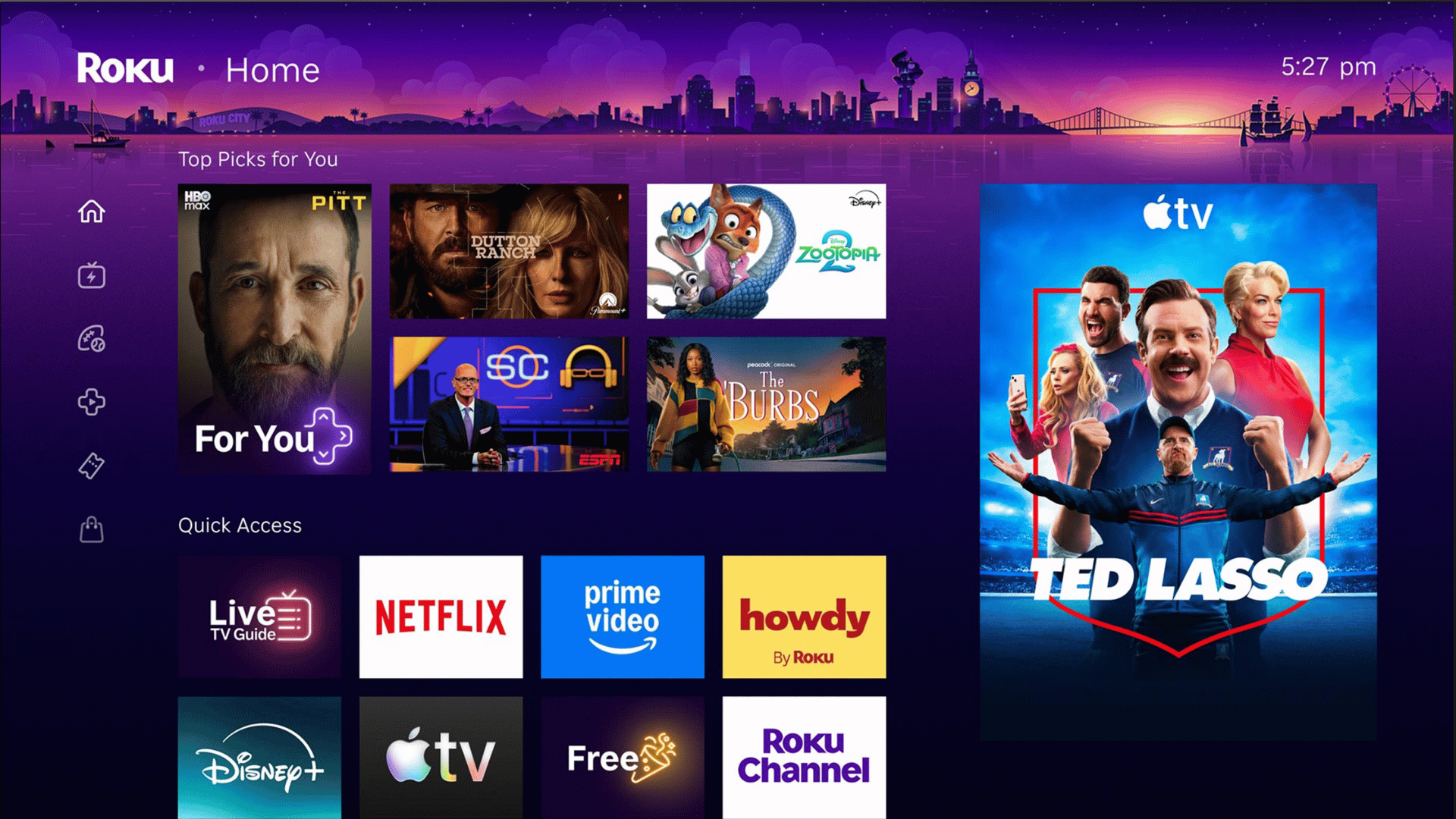
Roku is rolling out the biggest redesign of its TV home screen in more than a decade, introducing personalized recommendations, subscription prompts, search modules, shortcuts, and interactive content directly into the operating system layer for users across the United States.
The update arrives as Roku surpasses 100 million streaming households worldwide and raises its 2026 financial outlook on the strength of advertising growth and subscription sign-ups. The redesign isn’t simply about improving navigation. It’s about increasing control over streaming discovery, viewer engagement, and monetization at the exact moment connected TV economics are shifting toward aggregation, advertising, and recommendation-driven viewing behavior.
Roku spent years positioning itself as the neutral gateway to streaming services. That neutrality helped it scale. Now the company is leveraging that scale to become a more active participant in how audiences choose content, where they watch it, and which services gain visibility.
Roku Wants to Control the First Decision Viewers Make
The most important real estate in streaming isn’t inside Netflix, Disney+, or Max anymore. It’s the moment a consumer turns on the television.
That’s the strategic logic behind Roku’s redesign.
Streaming services have spent years optimizing engagement after users enter their apps. Roku sits one layer above that ecosystem. It controls the starting point. By redesigning the home screen around personalized recommendations and content merchandising, Roku is trying to shape viewing decisions before consumers ever open a streaming service.
That creates enormous commercial leverage.
If Roku becomes the primary discovery layer, the company gains more influence over which services get surfaced first, which shows drive engagement, which subscriptions convert, which advertisers gain premium placement, and which partners receive promotional inventory.
The redesign effectively turns Roku’s operating system into a programmable recommendation marketplace.
That’s a much bigger business than selling hardware.
The Economics Behind the Redesign Are Advertising Economics
Roku’s updated guidance tells the story more clearly than the product announcement itself.
The company expects platform revenue to reach roughly $5 billion in 2026, up 21% year over year. Device revenue is projected to remain comparatively small at around $535 million.
That gap matters because it reveals Roku’s actual business model.
Devices are customer acquisition tools. The operating system is the monetization engine.
Every new recommendation row, search module, or interactive tile creates another opportunity for sponsored content placement, subscription upsells, ad targeting, affiliate commerce, viewer retention, and behavioral data collection.
The company isn’t redesigning the home screen because the old interface stopped working. It’s redesigning it because passive navigation leaves money on the table.
Streaming operating systems are becoming media businesses in their own right.
Roku Is Responding to Streaming Fatigue and Fragmentation
The redesign also reflects a broader change in consumer behavior.
Viewers are overwhelmed by subscription fragmentation. They don’t want to bounce between apps searching for content. They want immediate recommendations and faster access to something worth watching.
That shift benefits aggregation layers like Roku.
As streaming services multiply, consumers rely more heavily on operating systems to simplify discovery. Roku understands that convenience increasingly matters more than brand loyalty. The company is positioning itself as the entity that reduces friction across an increasingly chaotic streaming ecosystem.
That’s especially important as ad-supported streaming continues to expand and subscription growth slows across the industry. The faster Roku can move users from device activation into viewing sessions, the more valuable its advertising inventory becomes.
The operating system itself is now part of the content funnel.
Roku Is Quietly Expanding Its Power Over Streamers
There’s also a deeper strategic tension emerging underneath this redesign.
Streaming services want direct relationships with viewers. Roku wants ownership over discovery.
Those goals eventually collide.
As Roku’s recommendation systems improve, streaming services risk becoming interchangeable content suppliers competing for visibility inside someone else’s ecosystem. The operating system starts determining audience flow while individual services lose some control over how users enter their environments.
This mirrors what happened in mobile apps, digital commerce, and music streaming. Platforms initially position themselves as neutral distributors, scale creates leverage, discovery becomes monetized, and distribution power shifts upstream.
Roku is entering that phase now.
The company no longer wants to simply connect viewers to streaming services. It wants to influence viewing behavior itself.
The Streaming Wars Take
Roku’s home screen redesign is fundamentally about increasing monetization density across its ecosystem.
The company already controls one of the largest connected TV footprints in the world. The next stage of growth comes from extracting more value from attention, recommendations, and engagement occurring before viewers enter third-party apps.
That’s why the redesign matters.
Roku is building a future where the operating system becomes the primary interface for streaming discovery, subscription conversion, and advertising distribution. In that model, streaming services still own content, but Roku increasingly owns audience flow.
The companies that control discovery layers typically gain the strongest negotiating leverage over time.
Roku understands that, and this redesign is built to capitalize on it.
The Streaming Wars is intentionally ad-free
We don’t run display ads. Not because we can’t, but because we don’t believe in them.
They interrupt the reading experience. They cheapen the work. And they burn advertisers’ money on impressions nobody actually wants.
So we chose a different model.
We say the things people in this industry are already thinking but don’t say out loud. We connect the dots beyond the headline and focus on explaining why things matter to the people working in this business.
If you believe industry coverage can exist without clutter and interruption, you can support it here → SUPPORT TSW.
Support is optional. But it directly funds research and continued coverage — and helps prove this model can work.
Support TSW →


