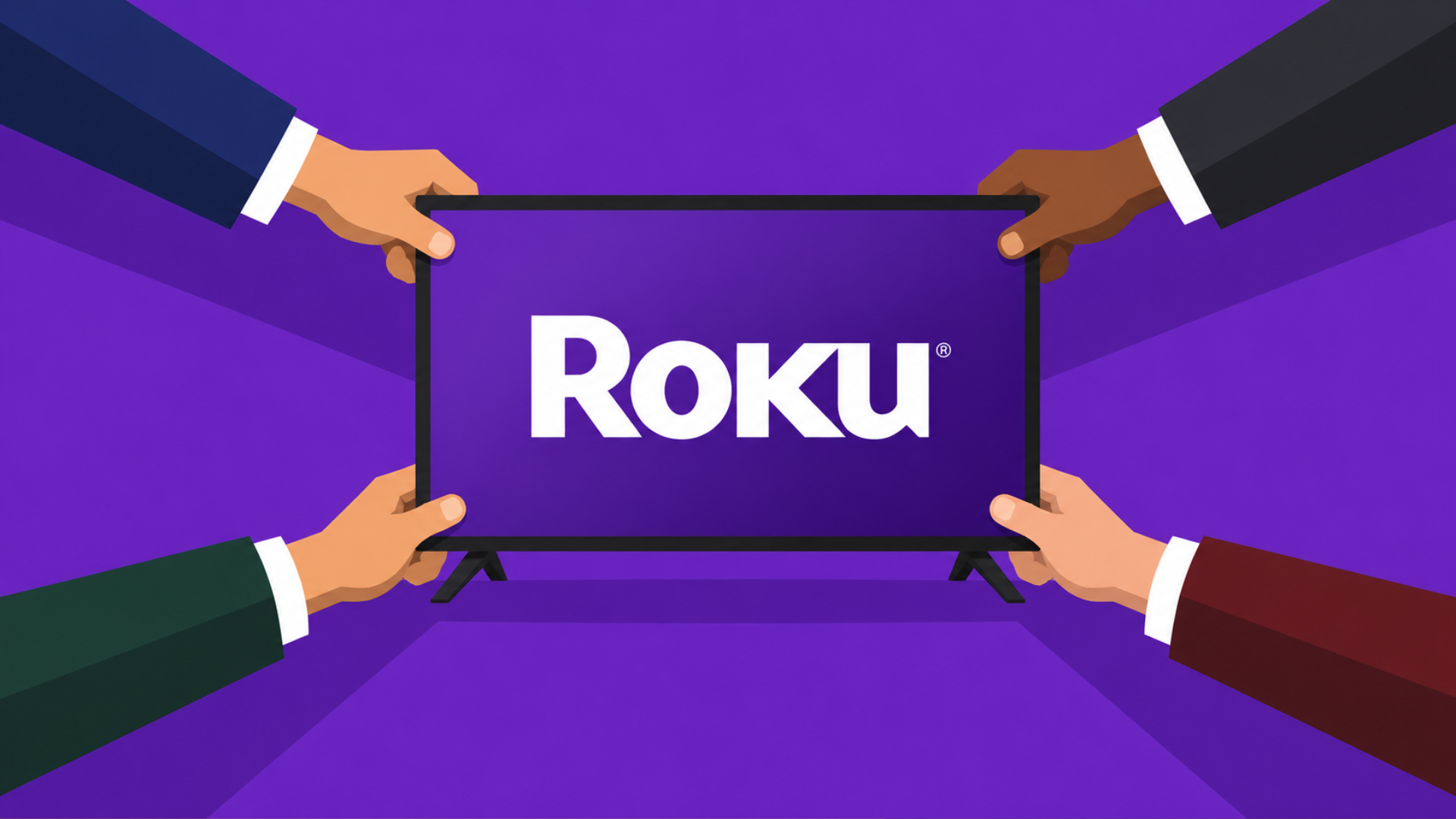
Companies are spending very different amounts of money to get closer to the TV home screen. Walmart owns Vizio. Best Buy is opening Insignia Fire TV inventory to Best Buy Ads through Amazon. Amazon lets advertisers reach Roku households through Amazon DSP. The Trade Desk is bringing other TV operating systems and ad-tech partners into the Ventura Ecosystem. Fox is paying $22 billion for Roku outright.
The home screen can steer what people watch, sell the placement that gets them there, sell the subscription they need, process the payment, and use what they watch afterward to sell and measure ads. Retailers, media owners and ad-tech companies each want a different piece of that business.
Janko Roettgers dropped a gem at Lowpass on how Roku actually wound up in play: Anthony Wood wasn’t looking to sell the company when this started; he was trying to plan his exit.
Wood wanted a Netflix-style handoff, with a co-CEO taking over as he gradually stepped back. That was a tricky fit for a company where Wood was still deeply involved in the product, down to hardware and UX decisions that could work their way up to him.
Before picking Wood’s successor, Roku’s board decided to find out what somebody might pay for the company he built. Once that process started, Roku’s advisers looked across media, telecom and consumer technology because each group had a different way to make Roku more valuable inside its existing business.
Roku’s Board Tested the Market Before Picking Its Next CEO
Roku’s board already had a high-level succession plan, but it hadn’t identified someone directors thought was ready to replace Wood. The board also concluded that running a CEO search and a sale process at the same time would create too much distraction, so it decided to test the market first.
By March, Roku’s advisers were reaching out to potential buyers. The initial list included 11 companies, with another added later, bringing the total to 12 including Fox. The names are mostly redacted in the merger filing, but the categories are more useful anyway: media and entertainment, telecom and consumer technology.
A media owner could use Roku to promote programming and sell subscriptions, a telecom company could put itself between viewers and streaming services again, and a consumer-tech company could combine Roku’s audience and ad inventory with a much bigger advertising or commerce business.
Nine of the other 11 companies ultimately withdrew or declined to proceed, while the remaining two showed limited interest. Fox agreed to pay $160 per share, valuing Roku at roughly $22 billion in enterprise value.
Roku Makes Most of Its Money After the Hardware Sale
Roku’s Q2 numbers show how far the business has moved from hardware. Platform revenue hit $1.22 billion, up 25% year over year, including $673 million from advertising and $548 million from subscriptions. Devices brought in $134 million.
Roku still needs the TVs and streaming players because that’s how it gets into the house. Once somebody is using Roku, the company can sell a sponsored placement on the home screen, recommend a show, sign the viewer up for the service that carries it, process the payment and sell ads around what they watch.
Roku’s biggest home-screen redesign in more than a decade added more personalized recommendations, deeper search and more ways to send viewers directly into programming. The company says the home screen is used by more than half of U.S. broadband households before they decide what to watch, giving Roku a huge audience while viewers are still figuring out where to go next.
Subscriptions are becoming a bigger part of the business too. Roku is expanding Premium Subscriptions into a larger wholesale subscription storefront, so somebody looking for a game, movie or show can subscribe to the service that carries it directly through Roku. The signup happens inside Roku, without the viewer first opening the third-party service’s app or going to its website.
Roku can also make money from advertising around programming it doesn’t own. Somebody else can pay to make the show while Roku gets paid for helping the viewer find it, subscribe to it or watch ads around it.
Walmart Bought the Retail Media Version of Roku
Walmart paid $2.3 billion for Vizio in 2024, picking up the TV business, SmartCast and more than 19 million active accounts. By the time the deal closed, Vizio’s Platform+ business was generating more gross profit than the company as a whole, while the hardware business was losing money.
Walmart already had the purchase data. Vizio added TV viewing and ad inventory. Walmart Connect can sell a CPG brand a TV campaign, reach households through Vizio and connect that exposure more closely with what shoppers eventually buy at Walmart online or in stores.
Walmart has since started bringing Vizio accounts into its broader retail identity system, tightening the connection between the TV and the Walmart customer. The hardware gets a Vizio screen into the house, while the bigger advertising opportunity comes from combining that screen with Walmart’s shopper data and advertiser relationships.
Best Buy is approaching the same opportunity without buying an operating system. Its expanded Amazon deal keeps Fire TV as the exclusive software on Insignia TVs and, beginning in February 2027, gives Best Buy Ads access to Fire TV inventory across those sets. Best Buy can use the TVs it already sells to build a CTV advertising business while Amazon keeps control of the OS and ad technology.
Walmart owns the TV maker and software, while Best Buy gets access to the ad inventory through Amazon. Both can use retail data to make TV advertising more useful to brands trying to connect exposure with a purchase.
Amazon Gets Roku’s Audience Through the DSP
Amazon already owns Fire TV. Its Roku partnership gets Roku’s audience into Amazon DSP without requiring Amazon to own another major TV operating system.
Amazon DSP can reach an estimated 80 million U.S. CTV households across Roku and Fire TV using a shared ad identifier, covering more than 80% of U.S. CTV households under the companies’ Comscore-based estimate. Amazon brings advertiser demand, shopping signals and measurement, while Roku brings another massive pool of logged-in TV households.
Amazon can sell and measure more CTV inventory through the same system advertisers already use to buy Amazon media without manufacturing Roku devices, operating Roku OS or managing its publisher relationships.
The Trade Desk is going after a different piece of the business with Ventura. Through the Ventura Ecosystem, it’s bringing other TV operating systems and ad-tech partners into Ventura’s CTV advertising tools. V and Nexxen were the first collaborators, giving The Trade Desk another way to put its technology inside TV environments it doesn’t own.
The Trade Desk doesn’t need every TV to run Ventura if its advertising technology can work across other operating systems.
Fox Gets More Control Over How Its Streaming Services Reach Viewers
If the deal closes, Fox can use Roku to make Tubi and FOX One easier to find, promote their programming on the home screen and put subscription offers directly in front of Roku households.
Roku also needs the other major streaming services to keep treating its home screen as valuable distribution. Netflix, Disney, Amazon, Paramount, NBCUniversal and others want their apps easy to find and their programming surfaced in search and recommendations, while Roku benefits when those companies buy promotion, sell subscriptions or advertise across its TVs.
Looper Insights tracks where apps, shows, movies and live events appear across CTV interfaces and how prominent those placements are. If Fox closes the deal, that kind of data can show whether Tubi and FOX One start getting more premium real estate on Roku and what competing services are getting around them.
Roku loses value if those partners start treating the home screen as a Fox-controlled shelf tilted too heavily toward its own services. Fox can use Roku to help Tubi and FOX One, but it also needs competitors to keep spending money and distributing their services there.
The deal still has to clear an extended DOJ review. Fox and Roku received Second Requests on September 8 and continue to target a close in the first half of 2027. The DOJ hasn’t disclosed what competition concerns it’s examining, so the request doesn’t tell us whether regulators see a problem with any of these commercial relationships.
The Streaming Wars Take
Every company that depends on somebody else’s TV OS gives up some control over how viewers find its programming, how subscriptions get sold, where ads appear and what data comes back afterward. Companies are putting very different amounts of money behind getting more control over those decisions.
Walmart paid $2.3 billion to own Vizio and connect TV viewing more closely with retail transactions. Best Buy is getting CTV inventory around TVs it already sells through Amazon. Amazon put Roku’s authenticated audience inside its ad business. The Trade Desk is bringing more TV operating systems into Ventura’s advertising tools. Fox agreed to spend $22 billion to own Roku.
The price tags are different because the amount of control is different. Amazon and Best Buy can get the pieces they want through partnerships. The Trade Desk can get its technology into operating systems it doesn’t own. Fox is paying to own the OS, home screen, subscription business, advertising inventory, data and direct relationship with the household.
When the home screen can sell the placement, the subscription and the ad, control of that screen shapes who gets paid before the show even starts.
Disclosure: Looper Insights is an Insiders Circle partner of The Streaming Wars. Looper had no editorial control over this article.
The Streaming Wars is intentionally ad-free
We don’t run display ads. Not because we can’t, but because we don’t believe in them.
They interrupt the reading experience. They cheapen the work. And they burn advertisers’ money on impressions nobody actually wants.
So we chose a different model.
We say the things people in this industry are already thinking but don’t say out loud. We connect the dots beyond the headline and focus on explaining why things matter to the people working in this business.
If you believe industry coverage can exist without clutter and interruption, you can support it here → SUPPORT TSW.
Support is optional. But it directly funds research and continued coverage — and helps prove this model can work.
Support TSW →